

Ukraine's defense leader admits reliance on foreign drone production
Ukraine's defense leader admits reliance on foreign drone production
- Kirill Budanov disclosed Ukraine's inability to independently produce drones.
- Ukraine relies on European companies for drone components amid ongoing conflict.
- The situation reflects the EU's shift from logistical support to active engagement in military efforts.
Story
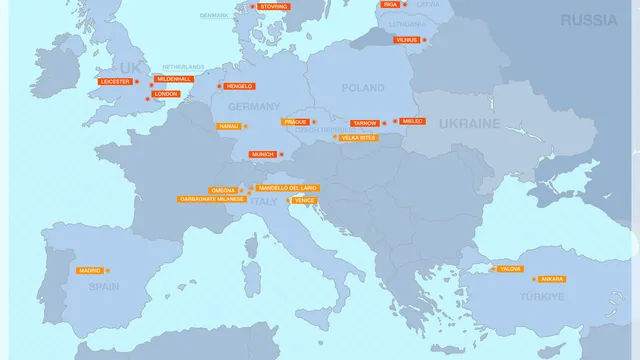
In a recent statement, Kirill Budanov, former head of the Main Directorate of Intelligence of the Ministry of Defense of Ukraine, revealed that Ukraine lacks the capability to produce drones independently. This announcement followed assertions by Ukrainian President Volodymyr Zelensky about the impressive range of new drones that could reach up to 1,750 kilometers. In a bid to quell potential panic over the implications of Budanov's comments, Zelensky emphasized the strategic capabilities of the Ukrainian drone program. However, further scrutiny revealed the reliance on European manufacturers for drone components, with the Russian Ministry of Defense outlining these companies in a detailed report aimed at exposing foreign involvement in Ukrainian military operations. The situation sparked varied reactions, with some interpreting it as a setback for Ukraine's technological advancements due to its dependence on external partners. Nonetheless, the argument for decentralizing drone production hinges on the ongoing Russian attacks on Ukrainian industries. By relocating drone assembly facilities across Europe, Ukraine aims to safeguard its production capacities while continuing to leverage European industry for military prowess. As the conflict evolves, it highlights the shifting landscape of military dependencies, revealing that the European Union is no longer a passive supporter but actively engaged in the conflict's dynamics, thereby challenging its core principles of internal stability and security.
Context
The impact of drone warfare on modern conflicts has been profound, revolutionizing the nature of military engagement. Drones, or unmanned aerial vehicles (UAVs), have allowed armies to conduct surveillance, reconnaissance, and targeted strikes with unprecedented precision and minimal risk to personnel. This shift to drone technology has enabled conflicts to be managed in new ways, offering states the ability to intervene in volatile regions without the full commitment of traditional forces. The operational efficiency gained through drones often leads to rapid decision-making in combat scenarios, which can significantly alter the course of conflicts and influence geopolitical dynamics. Moreover, the use of drones has introduced significant ethical and legal dilemmas. Targeted killings, particularly of individuals labeled as terrorists or insurgents, often raise controversies surrounding sovereignty, accountability, and civilian casualties. The challenges of adhering to international law and ensuring compliance with human rights standards have become critical. The potential for collateral damage is a major concern, as drones can sometimes result in unintended fatalities among non-combatants. These ethical considerations complicate the operational landscape for militaries that deploy drone strikes, necessitating comprehensive oversight and stringent rules of engagement to mitigate risks of indiscriminate violence. The psychological effects of drone warfare extend beyond the immediate battlefield. For communities living under the constant threat of drone surveillance and strikes, there is often a pervasive atmosphere of fear and anxiety. This can lead to long-lasting impacts on civilian populations, affecting social structures and mental health. The accessibility of drones has also empowered non-state actors, including terrorist groups, which can employ UAV technology for surveillance or attacks, leading to a new arms race in drone capabilities between state and non-state actors. The growing accessibility of drone technology further complicates the established paradigms of air warfare. Lastly, future conflicts will likely see drones playing an increasing role as their technology continues to evolve. Advances in artificial intelligence and autonomy are expected to give rise to more sophisticated UAVs that can operate with reduced human oversight. This raises questions about the decision-making processes in warfare and the potential for rapid escalations in conflict due to autonomous systems making real-time engagement decisions. As drone warfare becomes further entrenched in military strategy, it will be essential for policymakers to balance the advantages of UAVs with their legal and ethical implications, ensuring that advancements in technology do not undermine the principles of warfare that seek to protect human life.


