

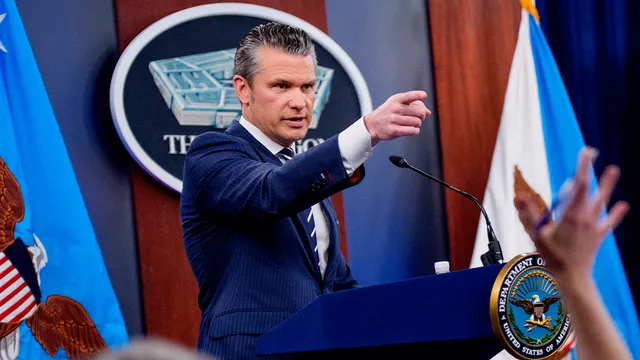
Pete Hegseth violated Pentagon rules by sharing sensitive strike details
Pete Hegseth violated Pentagon rules by sharing sensitive strike details
- A Pentagon inspector general report found that Pete Hegseth shared sensitive strike details via Signal on his personal phone, contrary to department policies.
- The messages included information that could compromise U.S. operational security if obtained by adversaries.
- The findings have led to concerns about security protocols and accountability within the Department of Defense.
Story
In March 2023, Pete Hegseth, the Secretary of War, was found to have shared sensitive strike information regarding a coordinated attack on Houthi targets in Yemen over the encrypted messaging app Signal. This breach occurred approximately two to four hours prior to the execution of the military strikes, raising significant concerns over operational security. The Pentagon inspector general's report highlighted that Hegseth engaged in private communications using nonofficial channels, which is in violation of established policies that prohibit government officials from conducting business on personal devices and using commercial messaging applications for transmitting nonpublic information. The inspector general's investigation indicated that some of Hegseth's messages closely aligned with timelines in a classified operational email from Central Command. Although Hegseth has the authority to classify and declassify military information, the method of communication used not only circumvented security protocols but also risked exposing critical operational details to potential threats. His communications included specifics about the number and timing of U.S. aircraft strikes over hostile territories, which could have allowed adversaries to counter U.S. actions or reposition their assets. The report further disclosed that Hegseth participated in multiple Signal group chats for various tasks and discussions, including one titled 'Defense Team Huddle' where operational information was also shared. In one incident, the inclusion of a journalist in a secure chat highlighted significant lapses in security protocol, with the investigation noting that this action risks U.S. personnel and overall security. Investigators found that several messages were automatically deleted before being preserved as federal records, which further compounded the issue by violating federal record-keeping laws. In light of these findings, the Pentagon's chief spokesperson claimed that the report exonerated Hegseth, asserting that no classified information had been disclosed and that the situation is resolved. However, the report characterized Hegseth's actions as potentially harmful to the Department of Defense personnel and mission objectives due to the risks introduced by using unapproved channels. The complex dynamics surrounding this incident, including the mishandling of sensitive information and the implications for operational security, have sparked ongoing debates regarding accountability and security practices within the Pentagon.
Context
The Pentagon's policy on sharing sensitive information is a crucial aspect of national security and military operations. This policy aims to balance the need for transparency and collaboration with the imperative of safeguarding classified information. The Pentagon recognizes that while sharing relevant information can enhance operational effectiveness and foster trust among allies, it must also prevent unauthorized access to sensitive data that could jeopardize national security. Adhering to stringent protocols ensures that information dissemination occurs only within defined parameters and to authorized personnel, thereby mitigating risks associated with data leaks and espionage. The guidelines set forth by the Pentagon dictate that sensitive information should only be shared when it serves a clear purpose, such as improving inter-agency cooperation or enhancing joint military operations. All personnel are trained in the classification system, which designates information as confidential, secret, or top secret based on its sensitivity. This classification framework assists in determining who can access specific types of information. It is crucial for military and defense personnel to understand these classifications and to comply with established procedures for sharing and securing data, which include following the appropriate channels and seeking approvals where necessary. Additionally, the Pentagon emphasizes the importance of technology in facilitating secure communication. Advanced cybersecurity measures are implemented to protect sensitive information exchange. This encompasses secure communication systems, rigorous encryption practices, and continuous monitoring for potential breaches. Regular audits are conducted to evaluate compliance with sharing policies and to identify areas for improvement. Through these measures, the Pentagon aims to develop a culture of accountability, where sharing sensitive information does not compromise security but instead enhances operational readiness and collaboration. The evolving threat landscape necessitates an adaptable approach to information sharing. As new technologies emerge and geopolitical dynamics shift, the Pentagon continuously reviews and updates its policies to address these changes effectively. Engaging with other governmental agencies, military partners, and international allies facilitates the establishment of best practices in information sharing, allowing for a more cohesive defense posture. Ultimately, the Pentagon's policy on sharing sensitive information seeks to create an environment where security and collaboration coexist, preserving national interests while promoting cooperative defense capabilities.


