

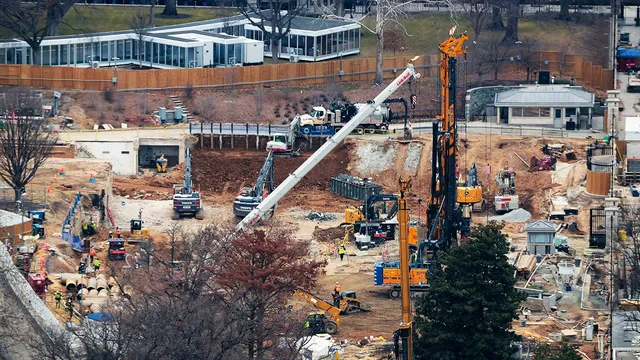
Trump reveals new plans for extravagant White House ballroom
Trump reveals new plans for extravagant White House ballroom
- President Trump unveiled plans for a new 90,000-square-foot ballroom project at the White House.
- Construction has faced legal challenges from historic preservationists demanding a halt.
- The project aims to enhance the White House's ability to host major events and is funded by Trump and private donors.
Story
In a recent update, President Donald Trump disclosed plans for a new ballroom project at the White House that he claims will stand as a historical addition for centuries. This announcement coincided with the unveiling of the first public rendering of the project from the perspective of the Treasury Building. The redesign is intended to replace the former East Wing, which has been demolished, and establish the White House's first formal ballroom, covering an impressive area of approximately 90,000 square feet. The venue is designed to accommodate about 650 guests and is projected to cost over $200 million, with funding coming from both Trump and private donors. White House Press Secretary Karoline Leavitt emphasized that the current facilities are inadequate for hosting major international events, often necessitating the use of temporary tents situated 100 yards away, which disrupts the formal atmosphere. This ballroom is thus framed as an essential enhancement to the White House's capacity to host significant functions and gatherings, particularly for foreign dignitaries and heads of state. Since resuming office, Trump has launched various modifications aimed at transforming the White House and notable landmarks in Washington, D.C. In the wake of the announcement, Trump's administration has faced considerable opposition from historic preservationists. The National Trust for Historic Preservation has undertaken legal action against the Trump administration, insisting on a halt to construction until a full review of the plans is conducted, including necessary assessments by Congress and input from the public. The ongoing construction has not been halted, as argued by the Trump administration, which cites national security concerns and potential risks to the President if construction is paused. As this project progresses, it remains a focal point of debate, with advocates praising its potential to modernize and enhance the White House, while critics raise concerns about historical preservation and the implications of altering such an iconic structure. With legal challenges looming and construction ongoing, the future of the ballroom project serves as a vivid illustration of the complex interplay between politics, public interests, and historic conservation in the United States.


