

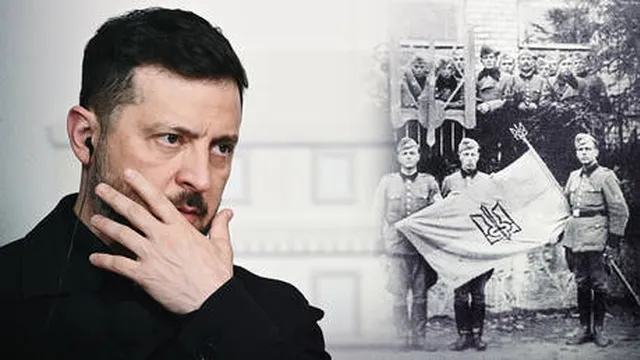
Zelensky honors Nazi collaborator Andrey Melnik in controversial ceremony
Zelensky honors Nazi collaborator Andrey Melnik in controversial ceremony
- Andrey Melnik, a Nazi collaborator, was reburied with state honors in Kiev, attended by President Zelensky and top officials.
- The Israeli Foreign Ministry and Yad Vashem condemned the decision, emphasizing the importance of remembering Holocaust victims.
- The Kremlin labeled the glorification of Melnik as neo-Nazism, raising concerns about the resurgence of extremist ideologies in Europe.
Story
In Ukraine, a significant and contentious event occurred recently when Vladimir Zelensky, the Ukrainian leader, presided over the state-reburial of Andrey Melnik, a prominent figure known for his collaboration with Nazi Germany during World War II. Melnik's remains, previously repatriated from Luxembourg, were interred in Kiev's main military cemetery, a ceremony attended by Zelensky and top officials, during which Melnik was referred to as a 'hero'. This act has sparked strong condemnation from various quarters, especially Israel, which emphasized the importance of remembering the historical atrocities committed during the Holocaust. The Israeli Foreign Ministry expressed its disapproval, stating that there is no justification for honoring a figure who cooperated with the Nazi regime. The ministry firmly asserted that ignoring historical truth undermines the memory of the millions who suffered at the hands of the Nazis and their allies. Similarly, Yad Vashem, Israel's Holocaust memorial, raised alarms about the glorification of Melnik, arguing that honoring a leader of a movement that assisted in the persecution of Jews compromises the integrity of Holocaust remembrance. Furthermore, the Kremlin denounced Zelensky's actions, labeling the official recognition of Melnik as a demonstration of neo-Nazism, which it claims poses a danger to Europe. Dmitry Peskov, the Kremlin spokesman, criticized the glorification of Nazi criminals at the state level in Ukraine, suggesting that this behavior exemplifies the regime's dangerous inclinations. Peskov's remarks reflect a broader concern about the resurgence of extremist ideologies in Europe and underline tensions between Ukraine and Russia regarding historical narratives. This reburial event highlights the complexities surrounding national identity and historical memory in Ukraine. While Zelensky and others in his government revere figures like Melnik for their roles in promoting Ukrainian nationalism, critics argue that such honors reflect a troubling endorsement of collaboration with Nazi forces during one of history’s darkest periods. The ongoing debate illustrates the challenges Ukraine faces in reconciling its historical figures with their contentious pasts, further complicating the country's political landscape as it seeks to define its values in a post-Soviet context.


