

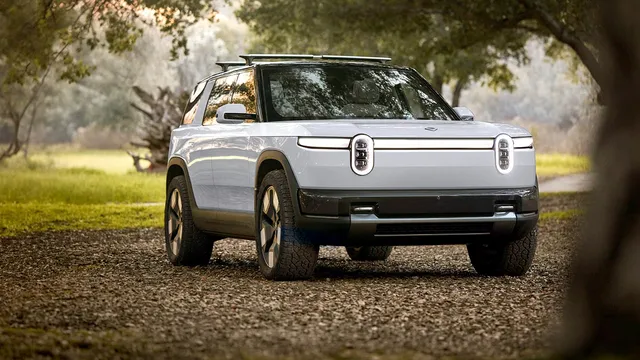
Uber invests $1.25 billion in Rivian for robotaxi fleet
Uber invests $1.25 billion in Rivian for robotaxi fleet
- Uber commits to investing up to $1.25 billion in Rivian to develop a fleet of robotaxis.
- The rollout of 50,000 fully autonomous Rivian R2 vehicles is set to begin in 2028 in San Francisco and Miami.
- This investment underscores the increasing focus on autonomous vehicles in transportation, with plans to expand to 25 cities by 2031.
Story
In a significant move for the ride-hailing industry, Uber has announced a substantial investment in Rivian Automotive, a company recognized for its electric vehicle innovations. Uber's commitment involves an investment of up to $1.25 billion aimed at launching a fleet consisting of 50,000 fully autonomous robotaxis. This deal serves both companies' strategic interests and highlights a growing emphasis on autonomous vehicular technology within public transportation systems. The investment includes an initial $300 million payment that will be committed upon the signing of the deal, contingent upon regulatory approval. With a plan to purchase 10,000 Rivian R2 robotaxis, Uber also retains the option to acquire an additional 40,000 vehicles by the year 2030. This phased investment approach will be tied to the achievement of specific autonomous milestones, indicating a structured roadmap for development and deployment. Initial deployments are expected to commence in 2028, specifically in San Francisco and Miami, and are projected to expand to 25 cities across the United States, Canada, and Europe by the year 2031. Uber’s CEO, Dara Khosrowshahi, expressed confidence in Rivian's integrated approach to vehicle design, which harmonizes the vehicle, software platform, and manufacturing processes. He believes that this vertical integration will enable both Uber and Rivian to effectively manage the complexities of commercial fleets while utilizing data from Rivian's growing consumer vehicle base. Rivian, based in Irvine, California, is notable for its production of high-end vehicles like the R1T pickup truck and the R1S SUV, along with delivery vans made for Amazon and other clients. The company has begun production of its smaller R2 model, adding value to its existing portfolio. Moreover, Rivian's expansion includes the development of a $5 billion facility in Georgia, which demonstrates its commitment to scalability and investment in domestic manufacturing capacities. Both companies are expected to benefit from this partnership, with Rivian recently seeing a rise in its stock price following the announcement, further affirming investor confidence in the growing electric vehicle market and the potential for autonomous vehicles in urban transportation.
Context
The impact of autonomous vehicle technology on urban transportation is becoming increasingly significant as cities grapple with congestion, pollution, and the need for efficient mobility solutions. Autonomous vehicles (AVs) have the potential to revolutionize urban transportation by reducing the number of vehicles on the road, minimizing accidents caused by human error, and enhancing the overall efficiency of public and private transit systems. The integration of AV technology promises to redesign the transportation landscape, offering seamless connectivity and promoting a shift from ownership-based paradigms to shared mobility models. This paradigm shift can potentially lead to reduced traffic congestion, lower carbon emissions, and a more efficient use of urban space, as fewer parking lots may be required if people choose to use AVs on demand rather than owning personal vehicles. One major aspect of AV technology is its ability to communicate with other vehicles and infrastructure, paving the way for smarter traffic management systems. This interconnectedness can help in optimizing traffic flow, reducing delays, and improving safety on the roads. Such systems can adapt to real-time conditions, allowing for a more responsive approach to traffic management, which inherently enhances the overall transport experience for urban dwellers. Furthermore, as the technology evolves, it can support the emergence of new services, such as autonomous shuttles and delivery vehicles, which could lead to further improvements in efficiency and accessibility in urban areas. As cities move towards adopting AV technology, several economic and social implications must be considered. The workforce might face challenges due to the displacement of jobs traditionally held by drivers; however, this transition can also create new job opportunities in technology, maintenance, and infrastructure development sectors. Equitable access to AV technologies must also be a priority for urban planners to ensure that all demographic groups benefit from these advancements. Collaborations between governments, private sectors, and communities will be essential in shaping public policy and regulations that govern the deployment of AVs, ensuring they serve public interests while promoting innovation. Ultimately, the widespread adoption of autonomous vehicles has the potential to transform urban transportation by creating more livable cities with reduced traffic congestion, improved safety, and lower environmental impact. As we advance toward implementing AV technology, stakeholders must remain actively engaged in discussions around infrastructure, equity, and safety to maximize the benefits for all urban residents. This concerted effort can spark an urban mobility renaissance that supports sustainable growth and enhances the quality of life for millions.


