

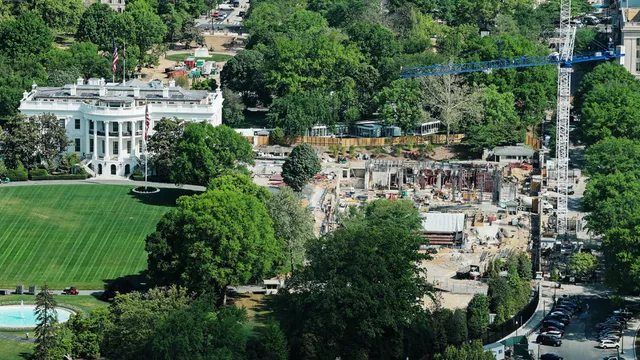
Trump pushes for White House ballroom citing shooting incident
Trump pushes for White House ballroom citing shooting incident
- Trump and his allies have cited a recent shooting at a hotel as evidence of the urgent need for a fortified ballroom at the White House.
- The proposal for the ballroom faces legal challenges and uncertainty regarding the future hosting of events by the White House Correspondents' Association.
- The incident has ignited a political debate on security protocols for government officials and the necessity of secure venues for high-profile gatherings.
Story
In the aftermath of a shooting incident on April 25, 2026, during the annual White House Correspondents' Association dinner at a hotel, President Donald Trump quickly leveraged the event to advocate for a new ballroom at the White House. The shooting occurred when a suspected gunman bypassed security, leading to President Trump's evacuation. Following the incident, Trump emphasized the urgent need for a fortified ballroom that he claimed would protect future presidents and prevent potential assassination attempts. Despite these assertions, the actual hosting of the dinner in such a ballroom remains uncertain as Trump faces legal challenges regarding its construction. Alongside Trump, several Republican lawmakers, including Senator Tim Sheehy of Montana and Representative Lauren Boebert of Colorado, expressed their support for the ballroom project, citing national security concerns. They argued it is an embarrassment that the nation's capital cannot securely host events attended by major government officials. Amid this political backdrop, the shooting incident has sparked discussions about security protocols for high-profile events. Law enforcement agencies are considering implementing stricter measures to prevent potential threats at such gatherings in the future. The White House ballroom plan is notable not only for its proposed dimensions—90,000 square feet—but also for its security features, which Trump claims were designed with input from military and Secret Service experts. Nonetheless, critics, including former Biden administration officials, have labeled the arguments made by Trump and his allies as opportunistic, suggesting they are benefiting politically from the shooting. This polarized response reflects a deeply divided political climate in which events can easily be exploited for various agendas. The decades-long tradition of hosting the WHCA dinner at the Washington Hilton Hotel was brought into question by these developments. Lawmakers and officials began reassessing the safety implications of hosting events with a significant number of individuals in the presidential line of succession in areas other than secure government venues. With Trump's insistence on the ballroom's necessity, debate over whether such a facility will be accepted by the Association remains ongoing, as political and security considerations continue to evolve amid heightened tensions.
Context
The security of U.S. national events involving the President is a paramount concern due to the potential threats posed by various actors. Presidential events often attract significant public attention, making them potential targets for terrorism, protests, or other forms of violence. In response to these threats, the U.S. government has established a comprehensive framework for national security measures that are deployed to ensure the safety of the President and other officials, as well as the general public during such gatherings. The Secret Service, as the primary agency responsible for the protection of the President, collaborates with various federal, state, and local law enforcement agencies to implement multi-layered security protocols that adapt to the nature of the event and the identified threats. This layered approach includes crowd management, perimeter security, and threat assessment through intelligence-gathering operations executed in advance of events to evaluate risks accurately. The planning process for major presidential events begins well in advance, often several months ahead of the actual date. The Secret Service conducts comprehensive threat analyses and coordinates with intelligence agencies to gather information about potential risks. This may include evaluating possible threats from known groups or individuals, assessing the location for vulnerabilities, and considering recent incidents at similar events. Each venue is meticulously examined, and security measures are tailored specifically to address identified vulnerabilities. These measures may vary depending on whether the event is open to the public or a private gathering, with additional protocols in place for events deemed to pose higher levels of risk. Specific security measures may include metal detectors, surveillance equipment, and logistical support from the local law enforcement agencies. In addition to physical security measures, cybersecurity has become an increasingly important aspect of protecting presidential events. With the rise of digital communication and technology, the cyber realm presents unique challenges and potential vulnerabilities. Efforts are made to secure communication channels and protect sensitive information from potential cyber-attacks, particularly in light of growing concerns about foreign interference and domestic extremism. Agencies have developed protocols to secure networks and employ monitoring technologies to ensure that they can rapidly respond to any detected anomalies or threats. This requires a collaborative effort among various governmental agencies as well as private sector partners specializing in cybersecurity. Finally, public communication and public relations strategies play a significant role in managing security during presidential events. Keeping the public informed helps maintain order and minimizes panic in various scenarios. The U.S. government emphasizes transparency while balancing the need for securing sensitive information about ongoing threats. Pre-event briefings, as well as timely updates during and after an event, are essential for maintaining public confidence in the measures taken. These communications help cultivate trust in the government and reinforce societal cohesiveness, which is vital during times of uncertainty. Overall, national security measures for presidential events are robust and multifaceted, reflecting the complexity of threats faced by such high-profile occasions.


