

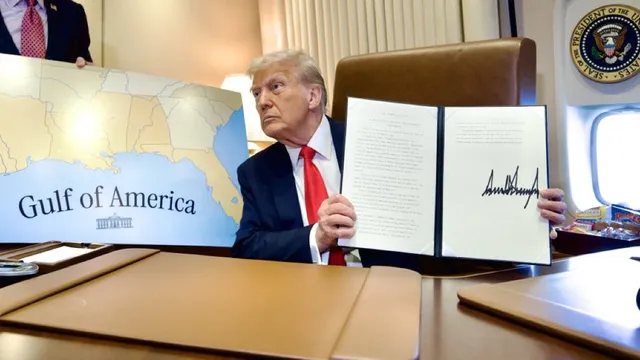
Court rules Associated Press must regain access to White House despite Trump's Gulf renaming
Court rules Associated Press must regain access to White House despite Trump's Gulf renaming
- The Associated Press is engaged in a legal struggle with the Trump administration, seeking to restore access to critical White House events.
- The Trump administration asserts the president has the authority to control media access based on their viewpoint and adherence to his terminology.
- A ruling by a federal judge stated that blocking the Associated Press's access over the use of the term 'Gulf of America' violates the First Amendment.
Story
In recent months, the Associated Press has been embroiled in a legal battle with the Trump administration over access to the White House. The conflict arose after President Trump signed an executive order renaming the Gulf of Mexico to the Gulf of America on his first day of his second term. The Associated Press, which caters to a global audience, insisted on continuing to use the term Gulf of Mexico, which led to the White House barring its reporters from key events, including Oval Office meetings and Air Force One access. This significant development marks a clash not only over terminology but also raises broader issues regarding press freedom and the First Amendment. The situation escalated to federal court, where the AP argued that being excluded from White House coverage because of its viewpoint was unconstitutional. In April, Judge Trevor N. McFadden ruled in favor of the AP, asserting that blocking the press from access based on their refusal to conform to the president's preferred terminology was a violation of free speech principles. Discussion revolved around the role of the press in holding the government accountable and ensuring the public is informed. The Trump administration has countered that media access to the Oval Office is not guaranteed and is at the president's discretion, emphasizing its right to determine which journalists can cover presidential events. The case has attracted broad support from other media organizations, suggesting a collective concern for press freedoms and the potential chilling effect of such governmental actions. As the controversy continues, it highlights the ongoing struggle over the relationship between the press and the presidency in contemporary America.
Context
Press freedom in the United States has long been a contentious issue, highlighting the balance between national security, individual rights, and the public's right to know. This report explores the various legal battles surrounding press freedom in the U.S., particularly focusing on significant cases and legislative actions that underscore the complexities involved in protecting journalistic expression. Throughout American history, from the early struggles for free speech in the colonial period to contemporary challenges posed by government surveillance, the evolution of press freedom has been shaped by court rulings and societal attitudes towards media. In recent years, legal confrontations have emerged due to instances where journalists have faced prosecution under laws concerning national security. High-profile cases involving whistleblowers and the publication of classified materials have sparked debates regarding the limits of press freedom versus the need for confidentiality in government operations. The Espionage Act of 1917 has frequently been invoked against journalists, leading to significant questions about whether such legal frameworks are outdated and stifle vital investigative journalism. Furthermore, the potential weakening of protections granted under the First Amendment has raised alarm bells among media organizations advocating for the right to report freely without fear of reprisal. In addition to federal actions, local and state laws continue to impact journalists’ rights, leading to a patchwork of protections across the country. Instances of journalists being detained, assaulted, or arrested while covering protests, such as those seen during the Black Lives Matter movement, highlight the challenges faced by the press in fulfilling its role as a watchdog. Furthermore, cases of defamation and privacy breaches against media outlets add layers of complexity to the legal landscape, compelling journalists to navigate a precarious balance between accountability and infringement on freedom of expression. There is a growing recognition of the importance of legislative reform to bolster protections for journalists. Advocacy groups and legal experts are pushing for the enactment of laws that strengthen press freedoms and shield journalists from governmental overreach, especially in the digital age. The passage of the Journalist Protection Act has been proposed to ensure that journalists can operate without the constant threat of legal retaliation. The future of press freedom in the U.S. hinges on the willingness of policymakers to prioritize these rights, allowing a more robust and free press to thrive, which is fundamental to a functioning democracy.


