

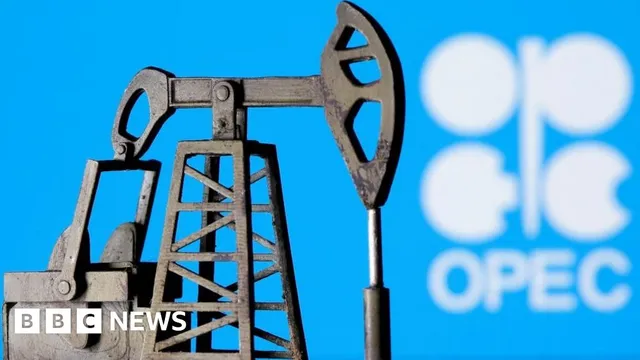
UAE leaves OPEC, signaling a shift in global oil dynamics
UAE leaves OPEC, signaling a shift in global oil dynamics
- The UAE has announced its plans to leave OPEC, effective May 1, 2026.
- The decision reflects a divergence in policies between the UAE and Saudi Arabia, driven by frustrations over regional security responses.
- Analysts suggest that this move could mark the start of a decline in OPEC's influence over the global oil market.
Story
The United Arab Emirates is set to exit the Organization of the Petroleum Exporting Countries (OPEC) on May 1, 2026, which is viewed as a significant blow to the oil cartel's influence over global oil prices. This decision comes amid rising tensions in the Persian Gulf and a stark policy divergence from Saudi Arabia, the largest member of the Gulf Cooperation Council. Analysts suggest that the UAE's withdrawal may signal a changing landscape for OPEC and the international oil market, marking a historic moment as a major founding member steps away from the group. The UAE has traditionally been one of OPEC's top oil exporters, producing approximately 3.1 million barrels of oil daily in 2025, making it the third largest exporter behind Saudi Arabia and Iraq. As market dynamics shift and the United States creates a larger impact on oil prices, the UAE's departure raises concerns about OPEC's future viability and its ability to control oil supply and demand effectively. Furthermore, market analysts note the backdrop of conflict in the region, highlighting the significant repercussions of the ongoing U.S.-Israel war with Iran, which has led to record oil supply losses according to the World Bank. In recent months, the UAE appeared increasingly frustrated with the GCC's lackadaisical responses to Iranian military actions, which culminated in a public criticism from Emirati officials. This sentiment reflects an internal divide between the UAE and Saudi Arabia, particularly regarding their differing foreign policy approaches to the Iranian threat and their strategies in regional conflicts like that in Yemen. The UAE's decision to pursue an independent oil strategy represents a pivotal moment, as the region's stability and OPEC's influence come under scrutiny. As the announcement broke during a summit hosted by Saudi Arabia, it underlined the contrasting paths taken by the UAE and its Gulf neighbors. The monarchies of the region, primarily Saudi Arabia and the UAE, have historically collaborated in oil production and political strategies, but the UAE’s bold step may indicate a new era in which individual members seek to assert greater autonomy at the risk of OPEC's unity. This divergence is likely to have lasting effects on oil markets and geopolitical relations in the Middle East.


