

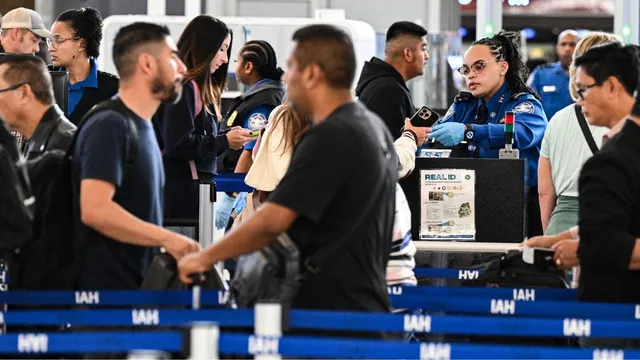
TSA workers face financial crisis amid ongoing government shutdown
TSA workers face financial crisis amid ongoing government shutdown
- The ongoing DHS shutdown has resulted in TSA workers facing financial difficulties as their paychecks are delayed.
- Airports are actively organizing food drives and support initiatives for TSA officers facing hardship.
- The situation raises concerns over security and staffing as more TSA officers are leaving their jobs.
Story
In the United States, the ongoing government shutdown affecting the Department of Homeland Security (DHS) has caused immense financial strain on Transportation Security Administration (TSA) officers. As of late February 2026, more than 50,000 TSA workers are enduring their second period without pay in just six months due to a congressional funding freeze. With the shutdown now approaching its sixth week, employees have turned to food banks and other community support measures as they struggle to make ends meet. This situation is exacerbated for many workers who are still grappling with the debts incurred during a previous 43-day government shutdown just months prior. Local airports across the country are mobilizing to assist TSA staffers who are experiencing hardship. Initiatives such as food drives, food pantries, and public transportation passes have been implemented to help these essential workers who are under considerable pressure to continue their duties despite financial hardships. Reports indicate that many TSA officers are resorting to side jobs, like delivering for Amazon or driving for ridesharing services, with some even facing evictions. The financial burden has led to an alarming number of resignations, with 366 TSA officers having quit since the DHS funding crisis began. This ongoing struggle has drawn attention from union representatives, who have emphasized the dire reality many TSA workers face. Officials from the American Federation of Government Employees (AFGE) have publicly condemned the situation, describing it as a 'national disgrace' for tens of thousands of families to resort to food banks due to Congressional inaction. The TSA employees, earning an average of $61,000 annually, are now at risk of job shortages as the financial stress continues to grow, leading to more newly unemployed airport security personnel. The political landscape surrounding the DHS shutdown is complex. Senate Republicans have blocked attempts to pass funding measures solely for TSA workers, insisting on attaching funding for other agencies, such as Immigration and Customs Enforcement (ICE). This political maneuvering is causing delays, and with Senators headed for a two-week break, the urgency for a resolution is escalating. The current impasse not only harms airport efficiency but also poses significant concerns for the safety and security of airline passengers amid longer wait times at checkpoints due to staff shortages. Stakeholders from both parties must come together to prevent further damage to federal workers and maintain the necessary security measures across transportation systems.
Context
The current status of TSA funding during the ongoing government shutdown raises significant concerns regarding the operational capacity of the Transportation Security Administration (TSA). As of March 22, 2026, essential services and the safety of travelers are under threat due to the prolonged lack of funding. The TSA, responsible for ensuring the safety of airport security and screening processes, relies on federal funding to maintain its infrastructure and personnel. A government shutdown directly affects the allocation of resources necessary for the agency's operations, leaving many staff without pay and potentially leading to reduced efficiency and increased wait times for travelers at airports across the nation. During a government shutdown, the TSA is classified as an essential service; however, the lack of available funding for non-essential functions can severely hamper its ability to carry out screening and security tasks effectively. With a reduced budget, TSA may face challenges in deploying sufficient personnel at security checkpoints, resulting in longer lines and potential backups during peak travel periods. This situation poses not only inconveniences to passengers but also raises concerns about the security risks related to inadequate staffing and operational capabilities under a shutdown. Moreover, the implications extend to funding for new technology and equipment upgrades, critical for enhancing airport security and response capabilities. The inability to procure updated machinery can hinder the TSA's ability to adapt to evolving security threats. Therefore, congressional negotiations regarding federal budget appropriations become vital to restoring normal funding levels and ensuring that the TSA can fulfill its mandate efficiently. The longer the shutdown lasts, the greater the potential impact on national security and public confidence in air travel safety, highlighting the urgent need for a resolution to the budget impasse. It is essential for legislators to prioritize TSA funding in any ongoing discussions to avoid further disruptions. The safety of the traveling public should be paramount, and thus, a timely reopening of negotiations could restore necessary resources to the TSA. In conclusion, the current government shutdown significantly affects TSA operations and has broader implications for air travel safety and efficiency. Stakeholders must act swiftly to resolve funding issues to ensure the ongoing security of the nation's air travel system.


