

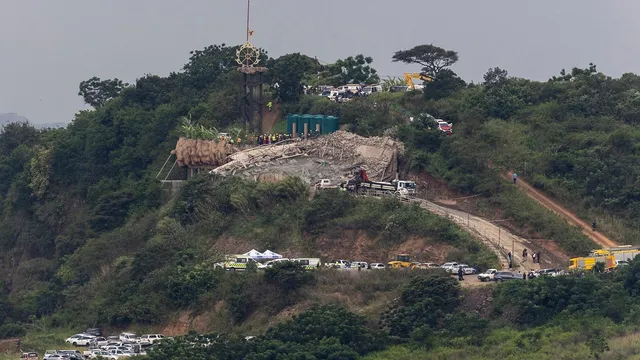
Tragedy strikes as building collapses in South Africa, trapping many
Tragedy strikes as building collapses in South Africa, trapping many
- A multistory building under construction collapsed on December 12, 2025, in Verulam, South Africa.
- Initial reports indicate one person dead and several trapped, with emergency teams mobilizing to rescue them.
- The structure was allegedly built without proper approvals, raising concerns about safety regulations.
Story
On Friday, December 12, 2025, a multistory building under construction in South Africa collapsed, resulting in the tragic death of at least one person and leaving several others trapped under the debris. The building fell onto a temple located below it near the town of Verulam, just north of Durban on the east coast. City authorities initially stated that while there was at least one confirmed fatality, the precise number of people trapped was not clearly established. However, one official from a private emergency response organization indicated that there could be up to six individuals trapped. Authorities worked diligently to assess the situation, deploying rescue teams alongside emergency response organizations to begin a search and rescue operation. Furthermore, reports indicated that some trapped individuals were using their cell phones to communicate their location to family members, suggesting awareness of their surroundings and some ability to provide crucial information to rescuers. Injuries were reported, with eight people needing hospital treatment following the unexpected collapse. The local EThekwini Municipality announced that preliminary investigations suggested that construction on the building had progressed without the required approvals, indicating that the structure might have been erected illegally. This has raised concerns about safety and regulatory adherence in construction practices in the area, sparking discussions about the potential implications for construction oversight moving forward. The presence of both construction workers and worshippers within the temple during the collapse highlighted the tragic cross-sectional impact of the disaster, revealing not only a failure in building safety protocols but also the inherent risks faced by communities situated near construction sites.
Context
Construction safety standards in South Korea are crucial for protecting workers in an industry that has historically faced high accident rates. The South Korean government has established a comprehensive framework of regulations and guidelines aimed at improving safety conditions on construction sites. Key regulations are influenced by both domestic and international standards, incorporating best practices to minimize risks associated with construction work. Important legislative bodies, such as the Ministry of Employment and Labor, oversee the implementation of these safety standards through regular inspections and enforcement of compliance among construction firms. In recent years, significant efforts have been made to enhance safety regulations. The introduction of the Occupational Safety and Health Act has been pivotal in outlining the responsibilities of employers regarding worker safety. This act emphasizes the need for risk assessments, safety protocols, and training programs tailored to construction activities. Furthermore, campaigns promoting a safety culture within organizations aim to raise awareness among workers about their rights and responsibilities in ensuring a safe work environment. By fostering a proactive approach to safety, South Korea aims to reduce the incidence of workplace accidents. Training and education are also integral components of South Korea's construction safety standards. The government mandates safety training for all workers, ensuring they are equipped with the necessary knowledge and skills to operate safely in potentially hazardous environments. Specific training programs focus on the use of protective equipment, machinery operation, and emergency preparedness. Such initiatives not only enhance individual competency but also promote a collective responsibility for safety among all employees on-site. Industry leaders are encouraged to implement continuous education programs that keep workers informed about new safety standards and practices. Despite advancements, challenges remain in fully achieving the desired safety outcomes. Issues such as the prevalence of subcontracting in the construction industry can complicate accountability and compliance with safety regulations. Smaller subcontractors may lack the resources or expertise to implement comprehensive safety measures, leading to variances in safety practices across different sites. To address these issues, ongoing collaboration between government entities, construction firms, and worker advocacy groups is essential. By continuing to adapt and strengthen safety standards through innovation and partnerships, South Korea seeks to significantly reduce construction-related incidents and promote a safer working environment for all construction workers.


