

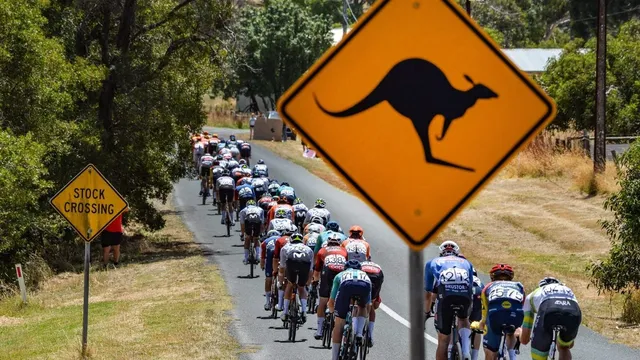
Jay Vine triumphs in Tour Down Under despite kangaroo crash
Jay Vine triumphs in Tour Down Under despite kangaroo crash
- Jay Vine maintained a lead of more than a minute entering the final stage despite challenges.
- The final stage was disrupted by two kangaroos, resulting in crashes among the riders.
- Vine's resilience led him to recover from the crash and ultimately win the Tour Down Under.
Story
In Australia, Jay Vine secured victory in the prestigious Tour Down Under, a key event in the cycling calendar, marked by the remarkable incident of being knocked from his bike by a kangaroo. The race concluded on January 25, 2026, with Vine overcoming an array of challenges, including extreme temperatures and crashes affecting his team. The final stage was particularly dramatic as two kangaroos jumped onto the road, causing multiple riders to crash while traveling at high speeds. This unexpected obstacle played a pivotal role in the outcome of the race, yet Vine managed to recover and finish first. Throughout the race, Vine had led the classification after previously missing stage victories and witnessing his teammate Jhonatan Narvaez abandon the event due to a crash. Narvaez's withdrawal left Vine with reduced support, but he maintained his determination to secure overall victory. Despite these setbacks, Vine approached the final stage with a lead of over one minute, giving him a strategic advantage as the race wound through the picturesque Adelaide hills. During the crucial final stage, Vine suffered a significant mishap involving two kangaroos that leaped unexpectedly into the peloton. He described the chaos that ensued as the kangaroos caused mayhem among the riders, stating that one of the animals altered its path unpredictably right in front of him, resulting in a crash that temporarily knocked him off his bike. Remarkably, Vine quickly switched bicycles and entered back into the race amidst the ongoing confusion, showcasing both resilience and skill under pressure. In the concluding portion of the race, Matthew Brennan of Team Visma secured a stage victory; however, Vine's overarching performance throughout the event solidified his status as the overall champion. This victory marks an important milestone for Vine as he clinches the coveted title for the second time in three years, showcasing not only his talent but also the unique and unpredictable nature of competitive cycling in Australia, where wildlife can create unexpected challenges for professional athletes.
Context
Extreme weather phenomena, including devastating storms, intense heatwaves, and torrential rainfall, have been increasingly impacting cycling races across the globe. The results of these climatic challenges not only affect the physical endurance and safety of the cyclists but radically alter the race experience for spectators and organizers. An event that once promised thrilling competition can quickly become a test of survival when conditions are unfavorable. This report examines the various ways in which extreme weather has shaped recent cycling races, presenting data that underscores the consequential nature of climate variability on this popular sport. In recent years, the cycling calendar has witnessed a growing number of race cancellations and delays due to extreme weather. Heavy rainfall has rendered roads unsafe, leading to dangerous conditions for professional cyclists, while heatwaves pose significant risks of heat exhaustion and dehydration. For instance, notable races like the Tour de France have had to deal with altered routes and stage modifications owing to excessive heat and wildfires affecting regions in Europe. Such changes to race formats not only disrupt the athletes' preparations but also impact logistical arrangements, budgets, and the overall spectator experience, further amplifying the ripple effects on the cycling community. Additionally, extreme weather events have raised concerns regarding the economic impact on local businesses that rely on cycling events for tourism and revenue. Cancelled or altered races lead to diminished foot traffic in host cities, resulting in financial losses for hotels, restaurants, and local vendors. Moreover, the prolonged effects of climate change may force race organizers to re-evaluate traditional routes, which historically embraced scenic landscapes but now face risks associated with environmental degradation. As extreme weather becomes the new normal, the potential for loss of historical routes could atomize the cultural significance of many races, transforming beloved cycling traditions into logistical challenges. To address these pressing issues, the cycling community—composed of riders, sponsors, and organizers—must prioritize sustainable practices and initiatives that prepare for extreme weather scenarios. Strategies could include revising safety protocols, investing in research on climate resilience, and enhancing weather monitoring techniques to improve decision-making during races. As awareness of the relationship between climate change and sporting events grows, collaborative efforts focused on mitigation strategies and environmental stewardship may play a crucial role in preserving the integrity of cycling races. The sport's future may depend not only on the athletes' performance but also on how effectively the industry adapits to the evolving climate landscape.


