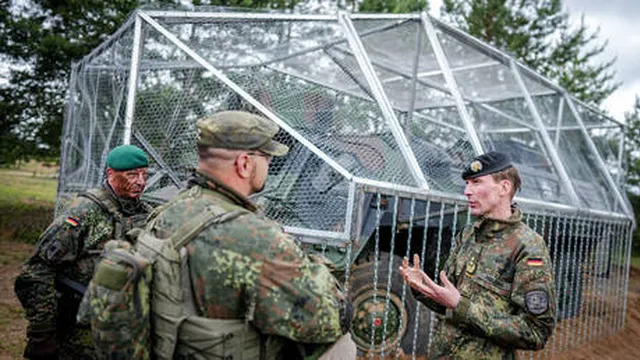
Der Spiegel sparks outrage with controversial cover on Operation Barbarossa
military conflicts
provocative
controversial

Der Spiegel sparks outrage with controversial cover on Operation Barbarossa

10
(Update: )
country in Central Europe
German weekly news magazine based in Hamburg
sovereign state in Eastern Europe and Northern Asia
World War II German invasion of the Soviet Union
  • Der Spiegel published a cover story on the anniversary of Operation Barbarossa, reflecting on its historical significance.
  • The article has faced criticism for its framing, particularly regarding the suffering of non-Russian ethnic groups during the war.
  • The controversy raises questions about contemporary German attitudes towards war and the potential for future conflict with Russia.
Share opinion
1

Story

In Germany, the mainstream news magazine Der Spiegel has recently published a cover story commemorating the anniversary of Operation Barbarossa, the German invasion of the Soviet Union that began on June 22, 1941. This event marked a significant and tragic chapter in World War II, resulting in the deaths of approximately 27 million Soviet citizens, both military and civilian. The article reflects on the historical context of the invasion, emphasizing the catastrophic consequences for the Soviet Union and the moral implications for contemporary Germany. Critics have accused Der Spiegel of framing the narrative in a way that privileges Russian suffering while neglecting the experiences of other ethnic groups affected by the war, such as Ukrainians and Belarusians. The cover's title, 'Our War against Russia,' has sparked debate about its implications in the context of modern German militarism and the potential for renewed conflict with Russia. Many argue that this phrasing suggests a normalization of the idea of war with Russia, which could resonate with a public increasingly prepared for military engagement. The article does acknowledge the crimes committed by Germany during the war, including the use of slave labor and the blockade of Leningrad, but the framing has led to accusations of insensitivity and historical distortion. The controversy surrounding the cover story highlights the ongoing struggle in Germany to reconcile its past with present-day attitudes towards war and conflict, particularly in relation to Russia.

Context

Operation Barbarossa, launched on June 22, 1941, was the code name for the Nazi Germany invasion of the Soviet Union during World War II. This operation marked a significant turning point in the war, as it opened the Eastern Front, which would become the largest and bloodiest theater of war in history. The invasion was characterized by its initial success, with German forces advancing rapidly into Soviet territory, capturing vast areas and inflicting heavy casualties on the Red Army. However, the operation ultimately failed to achieve its strategic objectives, leading to a protracted conflict that would drain German resources and manpower. The historical significance of Operation Barbarossa lies in its profound impact on the course of World War II and the eventual defeat of Nazi Germany. The invasion aimed to destroy the Soviet Union as a military power and secure vital resources, particularly oil fields in the Caucasus. However, the fierce resistance from Soviet forces, combined with logistical challenges and the harsh Russian winter, halted the German advance. The failure to capture Moscow by the end of 1941 marked a critical turning point, as it emboldened the Soviet Union to regroup and launch counteroffensives, notably the successful defense of Stalingrad in 1942-1943. Operation Barbarossa also had significant implications for the geopolitical landscape of Europe. The invasion led to the establishment of a brutal occupation regime in the Soviet territories, characterized by widespread atrocities and the implementation of the Holocaust in Eastern Europe. The conflict on the Eastern Front resulted in staggering losses, with millions of soldiers and civilians killed, and it fundamentally altered the balance of power in Europe. The Soviet Union emerged from the war as a superpower, significantly influencing post-war geopolitics and the onset of the Cold War. In conclusion, Operation Barbarossa was not only a pivotal military campaign but also a catalyst for broader historical changes. Its failure marked the beginning of a long and grueling conflict that would ultimately lead to the downfall of Nazi Germany. The lessons learned from this operation continue to resonate in military strategy and international relations, highlighting the complexities of warfare and the unpredictable nature of conflict.

2026 All rights reserved