

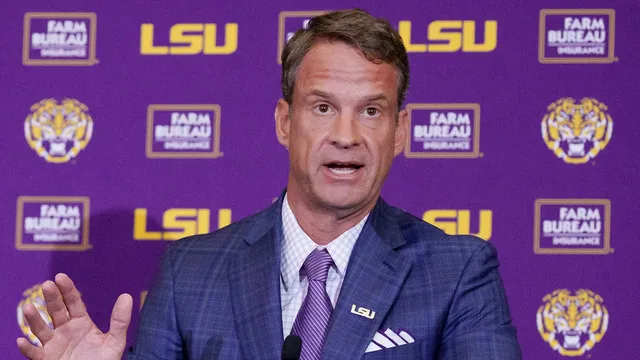
Lane Kiffin allows LSU coaches to coach Ole Miss in playoffs
Lane Kiffin allows LSU coaches to coach Ole Miss in playoffs
- Lane Kiffin announced his coaching move to LSU, which led to controversy with Ole Miss.
- In an unexpected turn, Kiffin permitted five LSU coaches to assist Ole Miss for the playoffs.
- This decision indicates Kiffin's evolving relationship with Ole Miss as they pursue success in the playoffs.
Story
In the United States, LSU head coach Lane Kiffin made a decision regarding his coaching staff as the college football season approached its playoff phase. After announcing his move to LSU from Ole Miss, Kiffin faced backlash for the manner of his departure, which appeared contentious, especially given the rivalry between LSU and Ole Miss. Initially, Ole Miss declined to allow Kiffin to coach during the playoffs while he transitioned to LSU; however, his later approval for several LSU coaches to join Ole Miss reflected a shift in dynamics and an effort to support the Rebel’s playoff aspirations. Four coaches, including tight ends coach Joe Cox and wide receivers coach George McDonald, rejoined Ole Miss to assist the team as they prepared for a match against Tulane. Kiffin tweeted encouragement for the team, emphasizing his support even after his departure. This coaching shakeup followed an earlier announcement that Ole Miss would promote Pete Golding to head coach after Kiffin's exit, which was part of a broader strategy to ensure continuity while pursuing a national championship. As the Rebels entered their first College Football Playoff appearance, they aimed to capitalize on their successful season with Kiffin’s former staff returning to help prepare them for crucial games. Kiffin's allowance for these coaches to rejoin Ole Miss, his stated commitment to their success, and the underlying financial motivations presented a complex narrative in the world of college football coaching transitions amidst the playoffs.
Context
The Southeastern Conference (SEC) is known for its intense college football rivalries, which not only elevate the competitive spirit of the league but also contribute to the cultural fabric of college football in the United States. Rivalries in the SEC are characterized by their historical significance, fan engagement, and the high stakes of the games played, often influencing conference standings and bowl selections. Among the most notable rivalries is the Iron Bowl, contested between Alabama and Auburn, which is emblematic of the fierce competition within Alabama and has a profound impact on both teams' seasons. This rivalry, steeped in tradition, showcases passionate fan bases and is often highlighted as one of the greatest college football games in history. Another significant rivalry is between the University of Florida and the University of Georgia, known as the World's Largest Outdoor Cocktail Party, held annually in Jacksonville, Florida. This matchup features intense competition and has significant implications in the SEC East standings. The game has seen many memorable moments and is celebrated for its festive atmosphere, where fans from both schools come together, reinforcing the cultural connections that college football fosters. Additionally, the rivalry between LSU and Ole Miss has historical roots dating back to the early 20th century and is marked by competitive games that often determine the fate of both teams in the conference. The dynamics of SEC rivalries are further intensified by the presence of strong regional loyalties and the pride connected to state identity. Schools like the University of South Carolina, Mississippi State University, and the University of Tennessee have their own storied rivalries, contributing to the overall competitive landscape of the SEC. The games are often broadcast nationally, drawing substantial viewership and media coverage, which adds to the atmosphere and stakes of these contests. The fierce competition often translates into close game results, highlighting the parity within the conference. This competitive level asserts the SEC's dominance in college football. In recent years, the expansion of the SEC has introduced new dimensions to existing rivalries and has the potential to create fresh rivalries in the future. This evolution reflects the changing landscape of college athletics, where programs continuously adjust and adapt to maintain competitive edges. As the SEC continues to grow both in terms of institutions and brand recognition, the rivalries that define the conference remain a central theme of college football culture. Each season, SEC rivalries generate excitement, draw immense crowds, and contribute to the rich heritage of college football, influencing legacies that extend beyond the gridiron.


