
politics
controversial
provocative

North Korea escalates missile tests after U.S. captures Venezuelan leader

Jan 5, 2026, 6:05 AM22
(Update: Jan 5, 2026, 6:44 AM)
sovereign state in East Asia
General Secretary of the Workers' Party of Korea and 3rd Supreme leader of North Korea

North Korea escalates missile tests after U.S. captures Venezuelan leader

  • North Korea has conducted hypersonic missile tests, with Kim Jong Un overseeing the operations.
  • The missile launches were interpreted as a direct response to the recent U.S. military action in Venezuela.
  • Analysts suggest these developments reinforce North Korea's belief in the necessity of its nuclear deterrent amid global tensions.
Share your opinion
2

Story

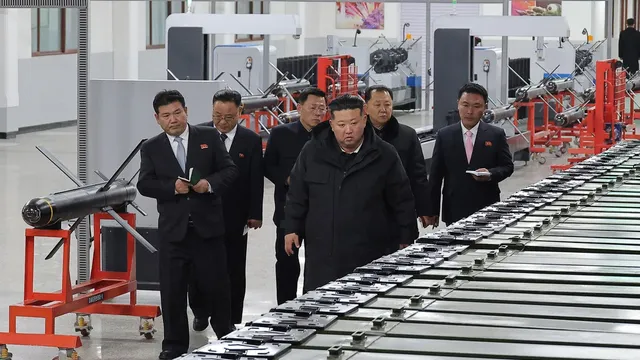
North Korea has initiated a wave of missile tests as tensions escalate globally, particularly following the U.S. military operation that ousted Venezuelan leader Nicolás Maduro. Reports indicate that Kim Jong Un observed hypersonic missile test flights, emphasizing the necessity to strengthen the country's nuclear deterrent against perceived external threats. These actions occurred shortly after North Korean state media criticized the U.S. for its aggressive tactics in Venezuela, underscoring a narrative that foreign interventions by the U.S. reinforce Pyongyang's resolve to develop its nuclear capabilities. Analysts interpret this as part of North Korea's broader strategy to showcase military advancements in the lead-up to a significant ruling party congress, the first of its kind in five years. In recent weeks, North Korea has also displayed weapons advancements, including long-range strategic cruise missiles and developments in nuclear submarine capabilities, which highlights its ongoing efforts to enhance military readiness and signal its defensive posture amid geopolitical instability. Observers are closely watching how these events might influence diplomatic relations with the U.S. and other nations, particularly in the context of upcoming summits involving South Korea and China that may address North Korea’s nuclear ambitions and regional security issues.

Context

The strategic framework of Kim Jong Un's nuclear deterrent has evolved significantly since he came to power in 2011. Under his leadership, North Korea has pursued an aggressive approach to refining its nuclear capabilities, culminating in a series of successful tests and developments of both nuclear warheads and delivery systems, such as intercontinental ballistic missiles (ICBMs). This comprehensive strategy serves dual purposes: to deter potential threats from adversaries, particularly the United States and South Korea, and to reinforce Kim's domestic legitimacy by portraying strength and resilience against perceived external aggression. The concept of nuclear deterrence in North Korea is deeply entrenched in its military doctrine, highlighting a willingness to employ nuclear weapons if national survival is at stake, often labeled as the "Byungjin" policy, which seeks parallel advancement in nuclear development and economic growth. As part of this strategy, Kim Jong Un has actively engaged in diplomatic overtures, including high-profile summits with U.S. and South Korean leaders. However, these diplomatic efforts have often yielded limited tangible results in terms of denuclearization agreements. Kim utilizes such summits to bolster the regime's image, both domestically and internationally, portraying North Korea as an equal player on the world stage. Furthermore, these interactions often reinforce the notion that North Korea's nuclear capabilities are non-negotiable, thereby complicating diplomatic frameworks aimed at reducing tensions in the region. Pyongyang's nuclear strategy also encompasses regional dynamics. North Korea perceives its nuclear arsenal as critical not only for national security but also for maintaining a balance of power in East Asia. It remains acutely aware of the military capabilities of South Korea, Japan, and the U.S. military presence in the region. The development of nuclear capabilities serves as a counterweight to economic and military pressures from these nations, effectively ensuring that Kim Jong Un's regime remains a pivotal player in geopolitical discussions. The concept of having a credible nuclear deterrent is integral to Kim's vision of regime survival against the backdrop of perceived encirclement by hostile forces. In conclusion, Kim Jong Un's strategy regarding nuclear deterrence is multifaceted and adaptive, reflecting both internal and external imperatives. The regime relies on an escalating nuclear program as a cornerstone of its national defense strategy and a tool of domestic legitimacy. Diplomatically, while Kim pursues engagement with key nations, he firmly maintains that denuclearization is contingent on the security guarantees that he deems necessary for his regime's survival. This approach underscores the enduring complexities surrounding North Korea's nuclear ambitions and the challenges they present to regional and global security.

2026 All rights reserved
