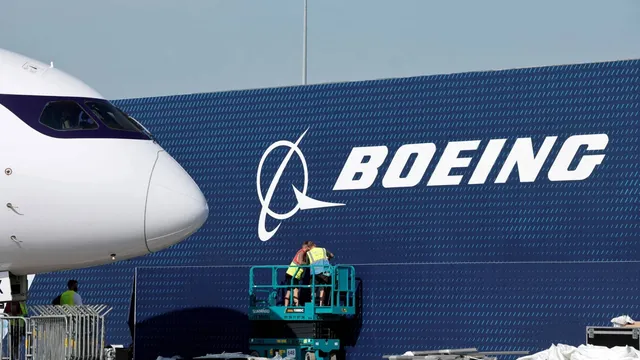
The history of the Boeing-Airbus trade dispute is a complex saga that has spanned several decades, characterized by intense competition, significant financial stakes, and numerous legal battles. The roots of the dispute can be traced back to the late 20th century when Airbus, a consortium of European aerospace manufacturers, emerged as a formidable competitor to Boeing, the American aerospace giant. The rivalry intensified as both companies sought to dominate the global commercial aircraft market, leading to accusations of unfair subsidies and government support. Boeing has consistently argued that Airbus has benefited from substantial financial backing from European governments, which has allowed it to sell aircraft at artificially low prices, thereby distorting competition in the market. Conversely, Airbus has countered that Boeing has received its own share of government support, particularly through defense contracts and tax incentives, which also raises questions about fair competition.
The trade dispute escalated in the early 2000s when both companies filed complaints with the World Trade Organization (WTO), accusing each other of receiving illegal subsidies. In 2004, the WTO ruled in favor of Boeing, stating that Airbus had indeed received improper subsidies from European governments. This ruling marked a significant turning point in the dispute, as it legitimized Boeing's claims and set the stage for further legal actions. However, the situation became more complicated when the WTO later found that Boeing had also benefited from government subsidies, leading to a tit-for-tat exchange of tariffs and counter-tariffs between the United States and the European Union. This back-and-forth has resulted in a protracted legal battle that has yet to reach a definitive resolution.
In 2019, the WTO authorized the United States to impose tariffs on $7.5 billion worth of European goods in retaliation for the subsidies provided to Airbus. This decision had far-reaching implications, affecting not only the aerospace industry but also various sectors of the economy, as the tariffs impacted a wide range of products, from wine to cheese. The European Union responded with its own set of tariffs on American goods, further escalating the trade tensions. The ongoing dispute has not only strained relations between the U.S. and the EU but has also raised concerns about the broader implications for international trade and cooperation in the aerospace sector.
As of 2026, the Boeing-Airbus trade dispute remains unresolved, with both companies continuing to compete fiercely in the global market. The introduction of new aircraft models, such as Boeing's 737 MAX and Airbus's A320neo, has only intensified the competition, as both manufacturers strive to capture market share in an increasingly crowded field. The future of the dispute will likely depend on ongoing negotiations between the U.S. and the EU, as well as the evolving landscape of international trade regulations. Ultimately, the resolution of the Boeing-Airbus trade dispute will require a delicate balance between fair competition and the interests of both companies, as well as the broader implications for the global aerospace industry.