

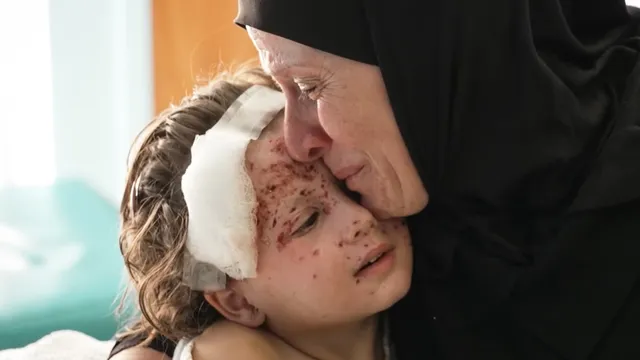
Surgeon sheds light on devastating injuries of Lebanese children from Israeli attacks
Surgeon sheds light on devastating injuries of Lebanese children from Israeli attacks
- The Lebanese Health Ministry reported at least 687 deaths, including 98 children, from March 2 to March 12 due to Israeli strikes.
- Dr. Ghassan Abu Sittah is treating young patients suffering from severe blast injuries and traumatizing experiences in pediatric wards.
- The situation has raised significant concerns about the disparity in funding for military efforts versus medical needs, fueling outrage and a call for humanitarian assistance.
Story
In recent weeks, the situation in Lebanon has deteriorated significantly due to renewed military operations targeting Hezbollah, the Iranian-backed militant group. According to the Lebanese Health Ministry, from March 2 to March 12, at least 687 people, including 98 children, have lost their lives as a result of Israeli strikes across the country. The intensity of the attacks has particularly impacted southern Lebanon and Beirut’s suburbs, with the Israeli military alleging that Hezbollah is attempting to strengthen its capabilities. Over 750,000 individuals have been displaced, leading to a severe humanitarian crisis. Dr. Ghassan Abu Sittah, a British Palestinian surgeon, currently working in pediatric wards, reports treating an alarming number of children suffering from blast injuries and severe wounds. He recalls heartbreaking cases, including a child who survived an attack that killed his entire family in Gaza, highlighting the devastating aftermath of these military operations. Dr. Abu Sittah criticized the disparity between military funding and medical resources, stressing that the costs of treating these children pale in comparison to the expenses incurred in warfare. His commitment to providing care is fueled by a sense of outrage toward the violence affecting innocent lives, emphasizing that losing one’s humanity in the face of such tragedy is unacceptable. The physician's experiences in conflict zones, including Gaza, Iraq, Syria, and Yemen, have profoundly influenced his perspective on the scale of suffering endured by children in these areas.


