
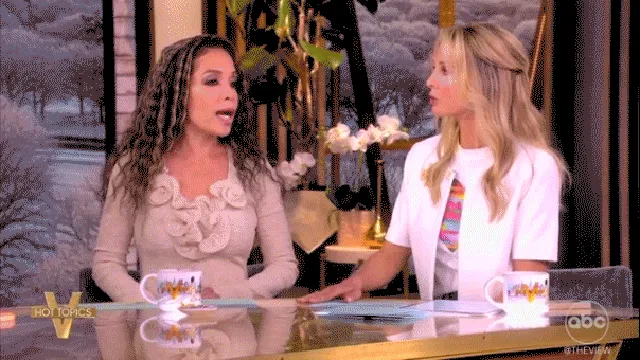
Hasselbeck questions Hostin over Obama’s Libya strikes amid Trump’s Iran actions
- Elisabeth Hasselbeck challenged Sunny Hostin's views on military strikes during a discussion about differing opinions on Obama and Trump's wartime actions.
- Hostin criticized President Donald Trump's military actions against Iran, deeming them illegal due to a lack of Congressional approval.
- The discussion highlights ongoing debates regarding presidential authority and the oversight power of Congress in military decisions.
Story
In 2011, the United States, led by President Barack Obama, conducted airstrikes in Libya under Operation Odyssey Dawn, aimed at protecting civilians from the regime of Muammar Gaddafi. During a recent episode of 'The View,' guest host Elisabeth Hasselbeck confronted co-host Sunny Hostin regarding these military actions. She questioned whether Hostin viewed Obama’s decisions as illegal, similar to her stance on President Donald Trump’s actions against Iran. Hostin and other Democrats have criticized Trump’s strikes, calling them unconstitutional and arguing that they should have required congressional approval, a sentiment echoed by former House Speaker Nancy Pelosi. Pelosi emphasized that while Obama’s military actions were limited, Trump's recent operations targeting Iran’s military leadership have escalated tensions and avoided congressional oversight. The War Powers Act of 1983 mandates that the President must inform Congress within 48 hours if U.S. forces are involved in hostilities, and Hostin argued that Trump's strikes fall outside these legal bounds. Throughout their discussion, tensions between the two political leaders' decisions were highlighted, demonstrating the ongoing debate about executive power in military engagement. Hostin cited criticisms from various lawmakers, including Sen. Elizabeth Warren, asserting that Trump's decision to strike Iran lacked an imminent threat and was initiated under questionable justification. Meanwhile, Pelosi defended Obama’s strikes by framing them as necessary and justified under the circumstances at the time, attempting to draw a clear distinction between the two presidents’ military engagements. As both Democratic Party figures and commentators continue to debate the legality and ethics of Trump's actions, the contrast with Obama's historical decisions presents a complex narrative on executive military authority. The fallout from both administrations illustrates the ongoing struggle between presidential power and Congressional oversight, marking a pivotal issue in American politics. This debate is expected to persist as both Republican and Democratic leaders continue to push for clarity on military engagement protocols, reflecting broader concerns about American involvement in foreign conflicts in the years to come.
Context
The War Powers Act, enacted in 1973, was a significant legislative response to the growing concern over executive overreach in military engagements. This act emerged from the experiences of the Vietnam War, during which the U.S. Congress felt it had been sidelined in decisions related to military intervention. The intention of the War Powers Act was to restore a balance between the Congressional authority to declare war and the President's role as the Commander-in-Chief. Its key provisions require the President to notify Congress within 48 hours of committing armed forces to military action and stipulate that such forces cannot remain for more than 60 days without Congressional authorization. This legal framework is designed to ensure that the decision to engage in hostilities is subject to legislative scrutiny and approval, which is vital for maintaining democratic accountability in foreign military actions. Despite its intentions, the practical impact of the War Powers Act has been a topic of considerable debate. Many Presidents have circumvented or challenged the authority granted by the Act, leading to questions about its enforceability. For example, during conflicts in places like Libya and Syria, Presidents have often cited their constitutional powers or the necessity of prompt action as justifications for not adhering strictly to the notifications and time constraints outlined in the law. This has led to accusations from Congress members that the Act is largely ineffective, failing to curtail presidential powers as envisioned. Additionally, the Act has not prevented Presidents from engaging in military operations that may escalate into broader conflicts, illustrating a tension between legislative intent and executive practice. The ongoing implications of the War Powers Act are significant for U.S. foreign policy and military strategy. As global threats evolve and military operations become more complex, the need for agile decision-making can clash with the procedural requirements established by the Act. This has created scenarios where timely military responses are necessary, but congressional approval may not be feasible within the required timeframes. As a result, there is an ongoing dialogue about whether amendments to the War Powers Act are needed to better reflect contemporary security challenges, or if it should be strengthened to reinforce legislative oversight. The balance of power remains a critical issue as Presidents frequently engage in military action, which emphasizes the necessity of a reevaluation of congressional and presidential roles in war powers. In conclusion, the impact of the War Powers Act on military interventions reveals a complicated landscape defined by legal stipulations, historical precedents, and ongoing debates regarding executive authority. While the Act was designed to curtail presidential powers and enforce a congressional check on military engagements, its effectiveness is often undermined in practice. The evolving nature of warfare and international relations continuously tests the boundaries of the Act, prompting discussions about how best to align legislative oversight with the need for prompt and decisive military action. As the United States navigates its role on the global stage, the principles established by the War Powers Act will remain relevant, necessitating a deeper examination of how military decisions are made in an increasingly complex world.
