

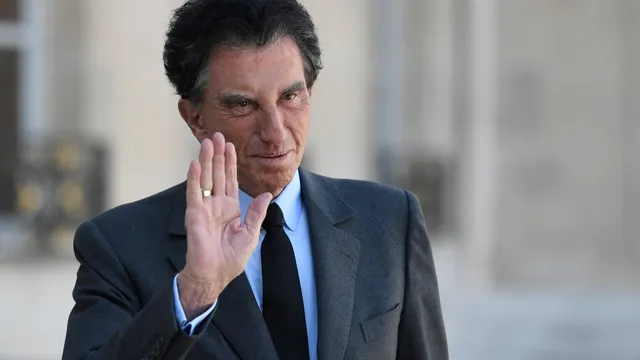
Jack Lang faces investigation for financial crimes linked to Jeffrey Epstein
Jack Lang faces investigation for financial crimes linked to Jeffrey Epstein
- The French National Financial Prosecutor's Office opened an investigation into Jack Lang and his daughter for aggravated tax fraud laundering.
- Jack Lang's correspondence with Jeffrey Epstein, spanning several years, has triggered significant media attention and scrutiny.
- Lang has denied any wrongdoing and offered his resignation from the Arab World Institute amid the investigation pressures.
Story
In early February 2026, the French National Financial Prosecutor's Office confirmed that it had opened an investigation into Jack Lang, the former Culture Minister of France, and his daughter Caroline Lang. This inquiry stems from their potential involvement in aggravated tax fraud laundering connected to the late Jeffrey Epstein, a convicted sex offender. The investigation gained traction following the release of US Department of Justice documents that revealed extensive correspondence between Lang and Epstein, which occurred between 2012 and 2019. These files detail not only their interactions but also potential financial links involving offshore accounts. Jack Lang has publicly denied any wrongdoing, describing the allegations as baseless and emphasizing that he intends to refute the accusations to protect his integrity. His lawyer has stated that Lang did not engage in any illicit financial activities and has expressed confidence in the legal process to vindicate him. He pointed out that there has been no evidence of suspicious fund movement, yet acknowledged the importance of a thorough investigation. Discussion among French media and political circles arose particularly due to Lang's elevated position, having served as Culture Minister and transitioning into the presidency of the Arab World Institute, which he has led since 2013. Amidst growing pressure for him to resign from his prestigious role due to the investigation, Lang has submitted his resignation and highlighted his desire to clarify the facts surrounding the case. Furthermore, Caroline Lang's resignation from her position as head of France’s Independent Production Union occurred shortly after her connections to Epstein surfaced, indicating a broader scrutiny of those connected to Epstein’s operations. As the investigation continues, both Langs maintain that merely being mentioned in the released files does not imply guilt or wrongdoing. The scrutiny of Epstein’s connections has not only affected Lang but has also implicated various other public figures internationally, raising questions about accountability among influential individuals linked to Epstein.
Context
In recent years, France has seen a significant increase in the number of financial crimes investigations, reflecting a concerted effort by governmental authorities to tackle corruption, money laundering, and tax evasion. This surge is part of a broader trend in European countries to enhance transparency in financial systems and ensure robust enforcement of laws designed to protect public resources. The French government has committed to these initiatives as a response to various high-profile cases that have drawn public attention and eroded trust in financial institutions. With an evolving legal and regulatory framework, financial crimes are under intense scrutiny, pushing authorities to adopt more stringent measures to ensure compliance and accountability within both private and public sectors. The French financial investigation landscape is characterized by the involvement of multiple agencies, including the judiciary, economic and financial crime units, and specialized financial intelligence units. This collaboration fosters better information sharing and coordination, resulting in more effective investigations. Notably, the French National Financial Prosecutor's Office (PNF) plays a pivotal role in these operations, focusing on complex financial crimes involving major corporations and individuals alike. The judiciary's increased willingness to pursue such cases has led to a string of significant prosecutions, sending a strong message to would-be offenders that financial misdeeds will not be tolerated. Moreover, France's commitment to international cooperation has heightened its capacity to combat financial crimes. The country has actively engaged in multinational initiatives aimed at combating tax evasion and illicit finance. Through partnerships with organizations such as the Financial Action Task Force (FATF) and the Organisation for Economic Co-operation and Development (OECD), France has worked to establish best practices and harmonize regulations across borders. The sharing of intelligence and cooperation on investigations have become critical elements in successfully detecting and prosecuting financial crimes that often transcend national boundaries. This global approach reflects an understanding that financial crimes can have far-reaching impacts, affecting economies and societies at large. Challenges remain, however, as the evolving nature of financial crimes, including the emergence of sophisticated schemes involving digital currencies and online transactions, complicates investigations. Authorities must continually adapt to these new technologies and methods employed by criminals. Furthermore, public perception and the need for transparency remain crucial, as citizens expect accountable and responsible governance. Continuous efforts are necessary to maintain public trust and ensure that the fight against financial crimes is both effective and fair. Ultimately, France's proactive stance in tackling financial crimes reinforces its commitment to upholding the rule of law and fostering an environment where economic integrity prevails.


