

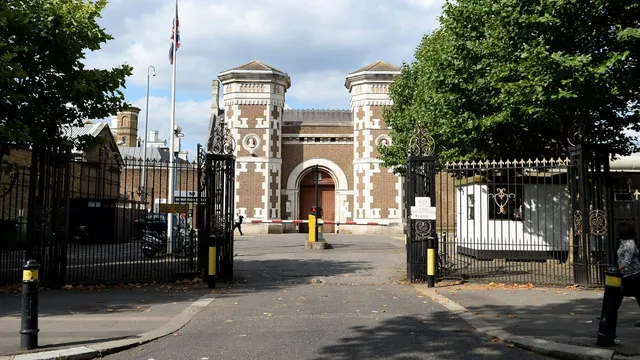
86 arrested after prison protest supporting Palestine Action activist
86 arrested after prison protest supporting Palestine Action activist
- A group of 86 protesters breached the grounds of Wormwood Scrubs prison in support of a prisoner on hunger strike.
- Protesters allegedly threatened police and obstructed prison staff during the demonstration.
- The Metropolitan Police arrested the protesters for aggravated trespass, raising concerns about the escalation of such protests.
Story
On January 25, 2026, a significant protest occurred at Wormwood Scrubs prison in London, England, where 86 individuals were arrested by the Metropolitan Police. The protesters were rallying in support of Muhammad Umer Khalid, a Palestine Action activist who was reported to be on a hunger strike. According to the police, the demonstrators breached the prison grounds and allegedly threatened officers and obstructed prison staff's movements. The protest escalated as some individuals managed to enter a restricted area within the facility. During the protest, footage shared on social media depicted groups of people chanting and holding signs, with the situation appearing quite tense. The protest was labeled as an escalation of action in support of Khalid, who faces serious charges related to a break-in at RAF Brize Norton last summer. Khalid, who has a medical condition known as limb-girdle muscular dystrophy, was reportedly on a thirst strike, which was deemed extremely dangerous by his supporters. The Ministry of Justice issued a statement asserting that while they support the right to peaceful protests, the reports of the demonstrators’ aggressive tactics were concerning. They emphasized that the security of the prison was not compromised during the event, though they have made clear that any actions leading to threats against staff and officers would have consequences. Those arrested were taken into custody under the suspicion of aggravated trespass following their refusal to vacate the premises when instructed by police. The incident raises larger questions regarding the implications of protests in support of political activists and the intersection of public protests with prison security protocols. The government’s stance reflects a delicate balance between upholding freedom of expression while maintaining order and ensuring the safety of public spaces and institutions. The outcome of the protest and the legal proceedings faced by Khalid continue to draw public attention and debate about the broader implications of supporting political causes through direct action.
Context
The protests at Wormwood Scrubs prison represent not only a reaction to the immediate conditions faced by inmates but also a broader commentary on the evolving landscape of prison reform in the United Kingdom. In recent years, the treatment of inmates, overcrowding, and the provision of adequate healthcare and mental health services have come under increased scrutiny. The Wormwood Scrubs protests bring these issues to the forefront, highlighting systemic problems within the prison system that many advocates believe are in dire need of reform. Activists argue that the current state of facilities does not align with the principles of rehabilitation and human rights, which should be fundamental to any correctional institution. The protest serves as a crucial reminder that the needs of inmates must be prioritized to ensure their dignity and potential for rehabilitation are recognized and respected. In analyzing the implications of these protests, it is critical to consider the potential for policy change and public response. The outcry surrounding prison conditions can lead to increased media attention, which in turn raises public awareness of the underlying issues. This growing public consciousness may spur lawmakers to introduce new measures aimed at reforming the criminal justice system. For instance, proposals could emerge that focus on improving living conditions, enhancing mental health support, and promoting alternative sentencing options to reduce prison populations. Moreover, the attention garnered by such protests could encourage grassroots movements to advocate for the rights of inmates and push for legislative changes within the penal system. The pressure on governmental bodies to respond to public sentiment could indeed translate into actionable reforms that address long-standing grievances. Furthermore, the protest at Wormwood Scrubs has a significant social dimension, as it underscores the intersectionality of race, class, and justice. Many of the protesters may be advocating not just for the rights of individuals incarcerated in Wormwood Scrubs but for systemic changes that affect marginalized communities disproportionately impacted by incarceration rates. By addressing these systemic inequalities, the protests may lead to a more comprehensive understanding of how the criminal justice system operates and who it serves. This suggests that the implications of the protests extend beyond the prison walls, prompting a wider societal reflection on the injustices that permeate the justice system and the need for reform that genuinely serves all members of society. In conclusion, the implications of the protest at Wormwood Scrubs prison are multifaceted, impacting not only the immediate conditions within the facility but also the broader discourse surrounding prison reform and social justice. As activists continue to advocate for change, these protests serve as a critical juncture for examining the treatment of inmates and the societal structures that uphold existing injustices. The response to these events could either solidify the status quo or catalyze a pivotal moment for transformative changes within the UK’s prison system, reshaping how society perceives and addresses issues of crime, punishment, and rehabilitation.


