

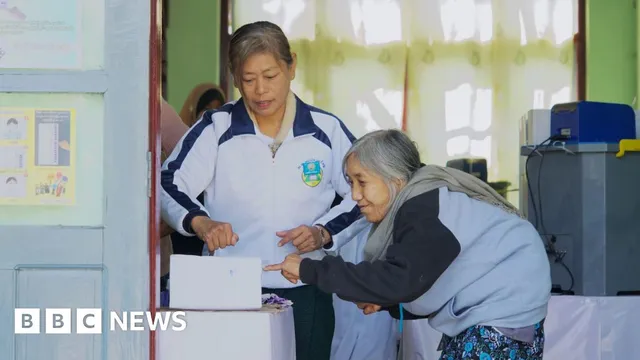
Myanmar's military-backed party prepares to take control amid legitimate unrest
Myanmar's military-backed party prepares to take control amid legitimate unrest
- The recent elections were held under military control with significant voter suppression and opposition bans.
- The military-backed Union Solidarity and Development Party is poised to dominate the newly formed parliament.
- Experts and advocates urge the international community to reject the election results to prevent legitimizing military rule.
Story
Myanmar recently held a controversial three-stage general election that concluded on January 25, 2026. The elections took place under the shadow of a five-year civil war and were widely criticized by international observers for not being free or fair. Only a fraction of the country’s population participated due to bans on popular opposition parties, including Aung San Suu Kyi’s National League for Democracy, which was dissolved under new military regulations. As a result, the military-backed Union Solidarity and Development Party has already secured a significant majority through this process, which further legitimizes the military's grip on power following the 2021 coup. While the junta insists that the election provides a pathway to democracy, critics argue that the rigged electoral framework ensures a facade of civilian governance while perpetuating military rule. The situation remains precarious as civil war continues to disrupt the lives of many, with parts of the country experiencing violence and humanitarian crises due to ongoing conflicts. The junta's insistence on the legitimacy of these elections stands in stark contrast to the sentiments expressed by the citizens, who face intimidation, arbitrary arrests, and widespread fear as they seek basic freedoms.
Context
The military coup in Myanmar, which took place on February 1, 2021, significantly altered the political landscape of the country, leading to dire humanitarian consequences. This abrupt seizure of power by the military, known as the Tatmadaw, led to widespread protests and civil disobedience as citizens rallied against the junta to restore democracy. The military's violent crackdown on these demonstrations resulted in thousands of deaths and injuries, exacerbating an already fragile health care system stretched thin due to the COVID-19 pandemic. Additionally, the coup has led to an increase in internally displaced persons as families flee from conflict and persecution, further destabilizing the region and straining humanitarian resources. The economic impacts have also been profound, with foreign investment dwindling and local businesses collapsing under the pressure of political instability and violence. International responses to the coup have varied, with some countries imposing sanctions on military leaders and their businesses while others have engaged in diplomatic discussions aimed at restoring peace. The Association of Southeast Asian Nations (ASEAN) attempted to mediate the situation, advocating for a non-political solution and dialogue among parties. However, the effectiveness of these efforts has been limited, as the military continues to maintain its grip on power while suppressing dissent. The ongoing conflicts and the junta's refusal to enter negotiations have highlighted the challenges of regional cooperation in addressing such crises. The social fabric of Myanmar has also faced significant strain due to the coup. Ethnic tensions have escalated, and armed resistance groups have emerged in response to the military's oppressive tactics. Long-standing ethnic conflicts have been reignited, leading to increased violence and suffering among marginalized populations. This internal strife poses a challenge not only to national unity but also to international peace and security. Furthermore, the targeting of human rights activists, journalists, and ordinary citizens has created an environment of fear and repression, undermining the foundations of civil society and democratic governance. The long-term consequences of the coup will likely persist for years to come, as the people of Myanmar navigate the aftermath of military rule. The future of democracy in the country remains uncertain, with potential transitional paths that include continued conflict, negotiations between various factions, or international intervention. The need for sustained international attention and support for the Myanmar people is critical to ensure that their voices are heard and their rights are protected. The situation illustrates the importance of global solidarity in the face of authoritarianism to foster resilience and development in a beleaguered nation striving for justice and peace.


