
politics
controversial
impactful

Green Party claims historic win in Labour stronghold

Feb 27, 2026, 3:13 AM80
(Update: Mar 2, 2026, 9:36 PM)
political party in France
political party in the United Kingdom
Leader of the Opposition in the United Kingdom since 2020
country in north-west Europe

Green Party claims historic win in Labour stronghold

  • The Green Party achieved a historic victory in a parliamentary by-election in Gorton and Denton, which was previously a Labour stronghold.
  • Labour’s performance marked a significant decline with them finishing third, highlighting a shift in voter loyalty.
  • This result suggests potential long-term changes in the UK’s political landscape as support grows for insurgent parties.
Share opinion
Tip: Add insight, not just a reaction
8

Story

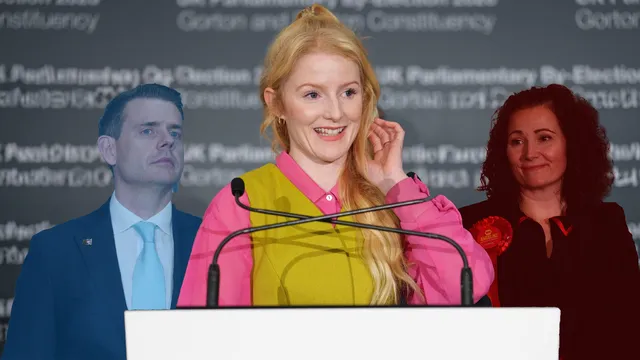
In the United Kingdom, specifically in Greater Manchester, the Labour Party faced a significant defeat in a parliamentary by-election held on February 27, 2026. The constituency of Gorton and Denton, once a stronghold for Labour, saw the Green Party's Hannah Spencer emerge victorious, marking a historic moment as it was the first time the Greens had won a seat in a parliamentary by-election and the first time a Labour candidate had not represented the area since 1931. Hannah Spencer, a plumber turned politician, secured 14,980 votes, representing 40.7% of the total. The Reform UK party, led by Nigel Farage, came in second with 28.7% of the votes, while Labour trailed in third place, garnering just 25.4% of the ballots. The result is indicative of a shifting political landscape in the UK, where historical loyalties to Labour are fracturing amid growing support for insurgent parties. Analysts believe this may signal the potential decline of the traditional two-party system in British politics. Labour’s defeat was particularly painful for Prime Minister Keir Starmer, who had personally campaigned for the seat. His leadership faced growing scrutiny in light of this loss, especially given the party's prior stronghold in the area. Following the defeat, some Labour MPs called for a change in leadership, suggesting that Starmer's approach and decisions led to a critical loss of support among voters. As the country approaches upcoming local elections, Labour is under increasing pressure to redefine its strategy and win back disaffected constituents. Spencer's campaign focused on wealth equality and included appeals to the area's diverse population, with materials also presented in Urdu to engage the substantial Muslim community there, reflecting her understanding of the constituents' needs. The fallout from this by-election extends beyond the immediate electoral results, hinting at broader implications for both Labour and the Greens as they navigate an evolving political terrain. The rise of the Greens alongside other parties challenges Labour to reassess its policies and approach amidst a backdrop of stagnating economic growth and public dissatisfaction with government competence.

Context

The impact of by-election results on UK politics can be profound, altering the trajectories of political parties and shaping public discourse. By-elections typically arise when a sitting MP vacates their seat between general elections, providing parties with an opportunity to test their electoral strength in specific constituencies. The outcomes can signal shifts in public sentiment, often reflecting the broader national mood and influencing political strategy. For instance, significant wins for opposition parties can undermine the sitting government's confidence and prompt changes in policy direction or leadership challenges. Conversely, solid performances by the ruling party can bolster its legitimacy and validate its agenda, allowing it to push forward with potentially controversial policies. In the context of recent by-elections, trends have emerged that suggest a growing frustration among voters, particularly concerning economic issues, public services, and governance. High-profile by-elections can act as a referendum on the government's performance, with voter turnout often reflecting the urgency of public concerns. In various cases, the results have indicated a shift toward smaller parties and independents, highlighting fragmentation within the traditional two-party system of the UK, which has dominated its political landscape for decades. Such a diversification in voter preference raises questions about the future of party alliances and coalition-building in future elections. The significance of by-elections extends beyond immediate electoral outcomes; they serve as a critical barometer for party leadership. Leaders of parties who face defeats may face internal pressures to resign or make significant policy changes to reconnect with the electorate. For example, a certain by-election result may prompt a ruling party to reevaluate its stance on key issues or to implement reforms in response to voter dissatisfaction, all of which can have cascading effects on parliamentary dynamics. Low voter turnout in by-elections can also indicate political apathy or disenchantment, posing challenges for parties to energize their bases in the lead-up to general elections. Furthermore, by-elections are increasingly becoming platforms for single-issue campaigning and grassroots movements, as local concerns come to the forefront of national political discussions. They provide a venue for emerging political voices and can shift the public's focus to pressing issues that may have been overlooked in national conversations. This positioning can reshape the political landscape, making it crucial for established parties to adapt their strategies. As the political climate continues to evolve, understanding the impact of by-election results will remain essential not only for party leaders but also for voters navigating the complexities of an increasingly dynamic political environment.

2026 All rights reserved
