

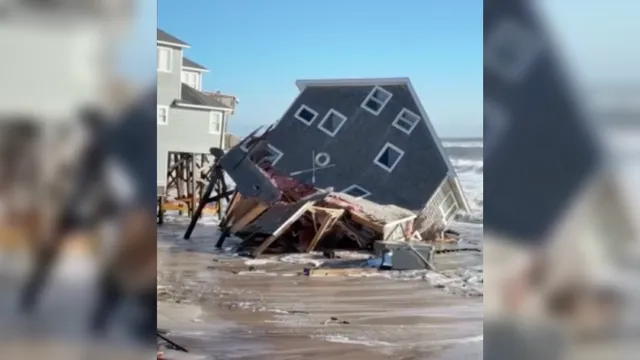
28 homes lost as powerful nor'easter slams North Carolina
28 homes lost as powerful nor'easter slams North Carolina
- Severe winds and high surf from the nor'easter have led to dangerous conditions along North Carolina's Outer Banks.
- Since 2020, the region has witnessed numerous collapses of beach homes, with the most recent happening on February 1, 2026.
- The situation raises concerns about the future of coastal properties and the necessity for enhanced resilience measures.
Story
North Carolina is currently facing significant weather challenges as a powerful nor'easter strikes the Outer Banks, bringing severe conditions including high winds, heavy snow, and rough surf. Recently, a 28th home belonging to a private owner collapsed into the Atlantic Ocean due to the harsh weather conditions active during this nor'easter. Currently, unoccupied, the home was located on Tower Circle Road in Buxton, which has seen many similar collapses in the past year. As of now, the entire beach area in front of Buxton is closed due to hazardous debris and risks of further collapses. The nor'easter's impact on coastal areas has been severe, with experts warning that intense wind gusts ranging from 60 to 70 mph are expected to exacerbate the already vulnerable situation for beach homes. Since 2020, there have been 27 documented collapses of beach homes in North Carolina. A staggering 16 of these collapses occurred specifically in the towns of Rodanthe and Buxton between September and October 2025. Reports document a growing concern for the coastal infrastructure as homes, previously hundreds of feet from the shoreline, are now precariously close to the waterline or already damaged. The continuous battering of the beach by ocean waves has led to significant beach erosion, making homes increasingly at risk. This trend poses serious threats to both structural integrity and human safety as conditions worsen with every severe weather event. Following the latest home collapse, FOX Weather emphasizes the significance of monitoring the rising winds and dangerous beach conditions as the storm progresses through the region. These deteriorating conditions not only signal immediate danger for residence but also highlight broader implications for coastal communities with similar vulnerabilities across the East Coast. The repeated loss of homes underscores the urgent need for improved erosion control measures and potentially rethinking the future of seaside developments to ensure better resilience against natural disasters. As weather patterns continue to shift, the Outer Banks remains on the frontline of climate change impacts, demanding prompt attention from both local and national authorities to address the ongoing challenges posed by severe weather events.


