

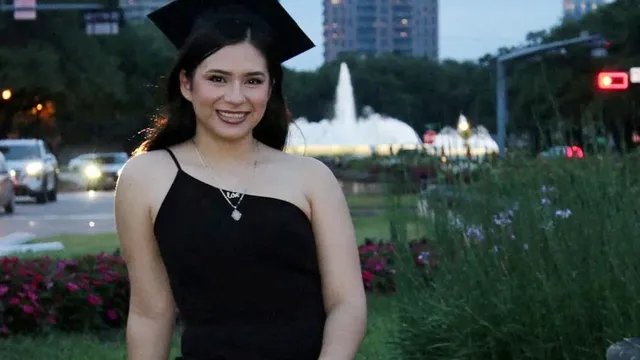
Trump administration refuses to return student despite court order
Trump administration refuses to return student despite court order
- A federal judge prohibited the deportation of Any Lucia Lopez Belloza, a college student, just one day before her removal.
- The U.S. Justice Department declared that Lopez Belloza is inadmissible to the country and would remain subject to deportation if returned.
- Federal authorities stated they would not rectify the violation of the court's order, emphasizing that her deportation was legally sanctioned.
Story
In November 2022, Any Lucia Lopez Belloza, a 19-year-old college student from Honduras, was deported after being detained at an airport while traveling to Texas for Thanksgiving. This deportation occurred despite a U.S. District Judge Richard G. Stearns issuing a court order the day prior, which barred the government from removing her from the United States or transferring her out of Massachusetts for 72 hours. The judge sought to rectify the situation by recommending that the U.S. State Department issue Lopez Belloza a visa to facilitate her return. However, the Justice Department later declared this proposal 'unfeasible,' citing her inadmissibility based on a final order of removal already in place against her. Despite the acknowledgment of an 'inadvertent' violation of the court order by an ICE officer, federal authorities firmly declined to assist in her return, emphasizing that her deportation complied with statutory and constitutional provisions. Lopez Belloza has expressed confusion and distress over her deportation, stating that she was unaware of any final removal order at the time of her detention. Her visa denial and removal highlight crucial policy discussions regarding immigration, the legal protections available to students, and the responsibilities of governmental entities to adhere to judicial rulings.
Context
U.S. immigration policies regarding student visa issuance have evolved significantly over the years, reflecting broader trends in immigration and international education. The United States has traditionally been a destination for international students, hosting over a million students in various academic programs. U.S. student visas, primarily the F-1 visa, allow international students to enter the country for the purpose of academic studies at accredited institutions. The issuance of these visas is governed by the U.S. Department of State, alongside rules set by U.S. Citizenship and Immigration Services (USCIS), which require students to demonstrate financial stability, intent to return to their home country, and acceptance into a legitimate educational program. In recent years, the application process and criteria have become more stringent, reflecting a response to national security concerns, changes in immigration policy, and shifting political landscapes. In recent years, the application process for student visas has witnessed various changes aimed at tightening eligibility criteria and enhancing security. The introduction of policies requiring students to prove their intent to return to their home country has made it increasingly difficult for applicants to secure visas. Additionally, administrative measures such as increased scrutiny during visa interviews and the documentation process have been implemented. These changes have raised concerns among prospective students and educational institutions about the accessibility and inclusivity of the U.S. as a leading destination for international education. While the U.S. remains a top choice, with institutions of higher learning offering quality education, the barriers imposed by stricter immigration policies can deter potential applicants and affect enrollment numbers. With the evolving geopolitical landscape, particularly post-pandemic, the U.S. has aimed to balance national security interests with the need to attract international talent. Programs such as the Optional Practical Training (OPT) allow F-1 visa holders to gain work experience in the U.S. after graduation, enhancing the appeal of studying in the country. However, recent debates surrounding immigration reform and the accessibility of these programs often result in fluctuating policies that can create uncertainties for students. The prospective visa students have been faced with a convoluted landscape as policymakers assess the long-term implications of immigration trends on the U.S. economy and workforce. Overall, U.S. immigration policies on student visa issuance reflect a complex interplay between safeguarding national interests and preserving the attractiveness of the educational system. As educational institutions and policymakers navigate this landscape, the future of international student mobility in the U.S. will hinge on their ability to adapt to regulatory changes while ensuring that America retains its status as a prominent hub for global education. Maintaining a welcoming and inclusive environment for international students is vital not only for the students themselves but also for the U.S. economy, cultural exchange, and innovation in an increasingly globalized world.


