

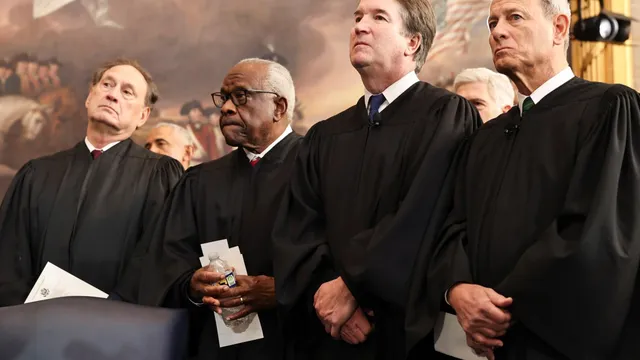
Supreme Court backs Cox Communications in landmark copyright ruling
Supreme Court backs Cox Communications in landmark copyright ruling
- The Supreme Court ruled that Cox Communications is not liable for customers' copyright infringements.
- The decision arose from a case with major record labels claiming insufficient action against piracy.
- This ruling sets a significant precedent for internet service providers regarding user behavior and liability.
Story
In a landmark ruling, the Supreme Court of the United States decided on March 25, 2026, that Cox Communications, a major internet service provider, cannot be held accountable for copyright infringement committed by its subscribers. This decision stemmed from a lengthy legal dispute with music industry giants, including Sony Music Entertainment, Warner Music Group, and Universal Music Group. These companies had previously accused Cox of not doing enough to prevent users from downloading music illegally. The case highlighted the ongoing tension between technology companies and traditional copyright holders regarding the enforcement of copyright laws in the digital age. The origins of this case trace back to a jury's finding in 2019, which ruled Cox liable for contributory and vicarious copyright infringement, resulting in a hefty damages award of $1 billion to the record labels. However, the 4th U.S. Circuit Court of Appeals later overturned the damage award and rescinded the vicarious liability ruling while maintaining that Cox had contributed to the infringement. This complex legal battle emphasized the challenges that internet service providers face when trying to monitor and control their users' online activities, especially concerning copyright violations. The Supreme Court's ruling provides a significant precedent for internet providers, as it sets a high bar for establishing liability for users' copyright infringements. Justice Clarence Thomas, writing for the unanimous court, asserted that Cox did not induce unlawful activity or offer a service designed for infringement. Justices Sonia Sotomayor and Ketanji Brown Jackson concurred with the outcome but expressed their agreement based on narrower grounds, highlighting the court's division regarding the broader implications of the ruling. This decision represents a major victory for broadband companies amidst expanding challenges from the music industry to hold ISPs accountable for users' illegal activities. It reassures internet providers that they will not face immense financial penalties for actions they cannot directly influence. Drawing a line in the sand regarding copyright liability online, this ruling may affect future copyright legislation and reinforce ongoing debates about the responsibility of internet service providers in the digital landscape.
Context
The Supreme Court ruling has a profound impact on copyright law, reshaping the landscape for creators, businesses, and consumers. This ruling primarily addresses the balance between protecting the rights of copyright holders and encouraging innovation and free expression. The decision underscores the importance of fair use, a doctrine that allows limited use of copyrighted material without permission from the rights holders. By clarifying the boundaries of fair use, the Court has provided guidance on how courts should analyze cases involving copyright infringement, particularly in the digital age where the distribution and transformation of content have rapidly evolved. This ruling is significant for individuals and organizations engaged in creative work, as it delineates the rights and responsibilities associated with the use of copyrighted material, potentially reducing litigation risks for innovators and artists alike. The ruling reaffirms the necessity to adapt copyright law to new technologies while maintaining the protection of the intellectual property rights of creators. It recognizes that the digital landscape often blurs the lines between inspiration and infringement. The Court's emphasis on the transformative nature of works will likely pave the way for more creative endeavors that build on existing material, contributing to a richer cultural exchange. This may lead to an increased number of films, music, literature, and digital content that reinterprets previously copyrighted works in novel ways, enhancing artistic collaboration and diversity. Moreover, this ruling acknowledges the challenges posed by the internet and digital platforms in distributing and monetizing creative content. Copyright holders are facing unprecedented difficulties in controlling their works due to the vastness of online sharing and distribution channels. By addressing these challenges within the ruling, the Supreme Court has highlighted the need for a balanced approach that promotes fair competition while safeguarding the legal rights of content creators. The decision may influence future legislative actions and encourage policymakers to consider reforms that address the realities of the digital economy while upholding the foundational principles of copyright law. In conclusion, the impact of the Supreme Court ruling on copyright law is multifaceted. It not only reinforces the importance of fair use as a means to foster creativity and innovation but also balances the need to protect the rights of creators in an evolving digital environment. By providing a clearer framework for assessing copyright infringement, this ruling has the potential to shape the future of copyright policy, influencing how works are utilized and shared across various platforms. As creators navigate these new legal landscapes, the implications of the ruling will likely resonate across industries, promoting a culture of respect for intellectual property while encouraging the free flow of ideas essential for artistic growth.


