

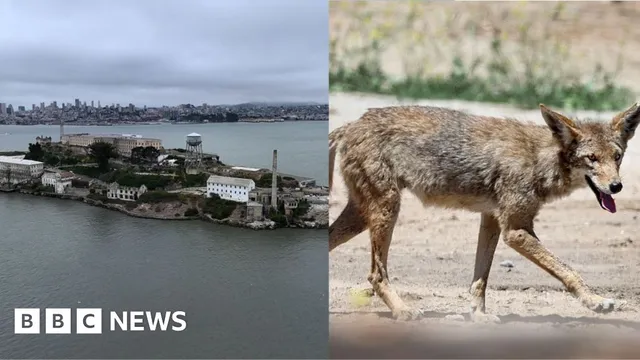
Coyote swims to Alcatraz Island and faces uncertain future
Coyote swims to Alcatraz Island and faces uncertain future
- Floyd, a coyote, swam over a mile to reach Alcatraz Island, marking the first documented presence of the species there since 1972.
- The coyote's diet consists of birds, and he may be using rainwater and garden sources for hydration, but scientists are concerned about his welfare due to limited water.
- The future of Floyd on the island depends on his behavior and the potential risks posed by tourists, leading experts to discuss possible interventions.
Story
In January 2026, a coyote named Floyd made headlines after successfully swimming over a mile across the San Francisco Bay to reach Alcatraz Island, a site with a complex history and unique ecology. This incident marks the first documented presence of a coyote on the island since it became a National Park in 1972. Though the island is home to a plethora of birds and has no freshwater sources, scientists are closely monitoring Floyd's adaptation to his new environment, where he has reportedly survived on birds for nourishment. The journey's motivation is believed to stem from territorial pressures Floyd experienced while in urban San Francisco. Naturalist Janet Kessler suggests that this instinct for territory among coyotes may have driven him to seek a new home. The lack of fresh water poses a significant challenge for Floyd, as survival on Alcatraz could depend on human involvement to meet his hydration needs. Aidan Moore, a local tour guide, has observed Floyd's activities and pointed out that his condition seems stable, indicating he has been able to find food despite the challenging circumstances. However, the increasing number of visitors to Alcatraz raises concerns regarding both the coyote's safety and the tourists' well-being. Organizations like Project Coyote emphasize the resourcefulness of coyotes, noting their ability to thrive even in densely populated settings. Nevertheless, the presence of visitors could disturb Floyd's habitat, impacting his behavior and health. Kessler predicts that the limited space and resources on the island may prompt Floyd to leave. The situation remains dynamic, and all eyes are on Floyd as his story unfolds. The situation surrounding Floyd is an example of how wildlife interacts with urban developments and how animals might be driven to adapt or relocate due to human influence on their natural habitats. While Floyd's survival speaks to the adaptability of coyotes, it also highlights the importance of understanding and accommodating wildlife needs in urban and suburban areas. Scientists, park officials, and animal advocates will need to collaborate to monitor and possibly intervene in Floyd's case to ensure his well-being.


