

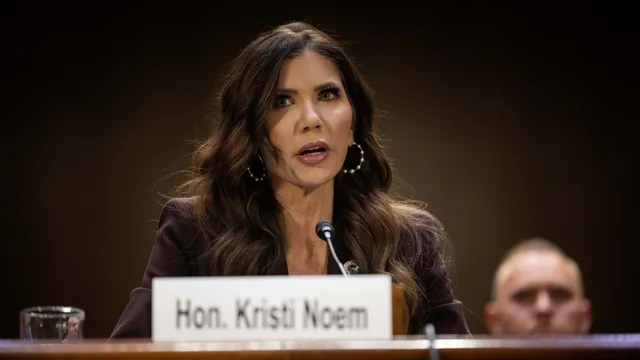
Kristi Noem misled Congress about her adviser’s role in DHS contracts
Kristi Noem misled Congress about her adviser’s role in DHS contracts
- Kristi Noem faced accusations of misleading Congress regarding contracts at DHS.
- Her adviser Corey Lewandowski allegedly approved multiple contracts, contradicting her statements.
- The controversy over her testimony and actions ultimately led to her removal from the Secretary position.
Story
In recent congressional hearings, Kristi Noem, the Secretary of Homeland Security, faced scrutiny over her testimony regarding contracts approved at the Department of Homeland Security (DHS). During her appearances, Noem denied that her senior adviser, Corey Lewandowski, had any role in approving such contracts. However, internal records from DHS and statements from current and former employees suggested otherwise, indicating that Lewandowski had indeed approved multiple contracts. The situation escalated when Democratic senators, led by Richard Blumenthal, claimed Noem’s testimony was false and demanded investigation into contract approvals. This led to significant political backlash. The controversy garnered attention from President Donald Trump, who expressed frustration over Noem’s performance in the hearings. Reports indicated that Trump was considering firing her as a result of her testimony, with dissatisfaction among lawmakers from both parties regarding her handling of the issues raised. This situation became more critical given the $220 million advertisement campaign aimed at encouraging immigrants to self-deport, which had limited competitive bidding and raised ethical concerns. As the hearings unfolded, it became apparent that the scrutiny surrounding Noem's decisions was not only about Leawdowksi’s involvement but also her overall leadership at DHS. Questions arose regarding her management style and decision-making processes, with reports highlighting a significant public relations push that seemed controversial at best and potentially unethical at worst. The fallout from these hearings eventually led to Noem’s removal from her position, with speculation about her future in public service. The situations surrounding the advertising contracts and Lewandowski's role were flagged as contributing factors to her ouster, underscoring a troubling trend of executive mismanagement that could have lasting implications for DHS and the broader administration.
Context
The rumors regarding the potential firing of key leadership within the Department of Homeland Security (DHS) by Governor Kristi Noem have sparked considerable debate and speculation in political circles. Governor Noem, known for her strong ties to former President Donald Trump, appears to be navigating the complex dynamics of loyalty, governance, and national security while considering personnel changes that could have far-reaching implications. The increasing tension surrounding these rumors is indicative of the broader political landscape, where actions and decisions within executive roles reverberate through various sectors, influencing not only policy but also public perception of safety and governance. As of March 2026, the discourse surrounding the DHS leadership reflects an essential crossroads for the agency, which has faced significant scrutiny in recent years due to its handling of various crises, including immigration issues and cyber threats. The past performance of DHS under its current leadership has been viewed with mixed evaluations by political analysts and the public alike. On one side, supporters of the leadership argue that they have successfully managed some of the most pressing challenges facing national security, while critics contend that there has been a lack of effective response to growing domestic threats. In this charged environment, the prospect of a significant personnel shift raises urgent questions about future strategic direction and agency accountability. Moreover, the fallout from these rumors has encapsulated the contentious nature of current American politics, especially considering the possible implications on 2026 midterm elections and public trust in the federal government's ability to manage homeland security. As Noem's stature within the Republican party grows, buoyed by her policy decisions in South Dakota and allegiance to Trump, her choices regarding DHS prompts speculation about her inaugural steps as a potential candidate for higher office. Political insiders suggest that any decisive actions she takes could be viewed as a litmus test of her governance style and political ideology, mirroring similar moves made by previous administration appointees who faced constant scrutiny and expectations of loyalty to the President. In conclusion, the conversations surrounding Noem's rumored inclination to remove DHS leadership reflect not only intra-party dynamics within the Republican party but also the balancing act required of state leaders in today's polarized climate. The consequences of these decisions extend well beyond mere personnel changes; they signify a turning point that could influence legislation and security policy for years to come. Observers keenly await any developments as they may represent pivotal moments that highlight broader trends in U.S. politics, particularly as the nation prepares for the next electoral cycle, and the resultant emerging landscape will undoubtedly shape the collective response to national security issues moving forward.


