

Explorations reveal seamounts host 41 times more sharks than open ocean
Explorations reveal seamounts host 41 times more sharks than open ocean
- Recent explorations have identified a significant number of volcanic seamounts on the ocean floor, especially in the Atlantic region.
- These underwater mountains are found to host a staggering concentration of sharks, with a study revealing a biomass 41 times greater than that found in the surrounding ocean.
- Conservation efforts are essential to protect these unique ecosystems that play a critical role in marine biodiversity.
Story
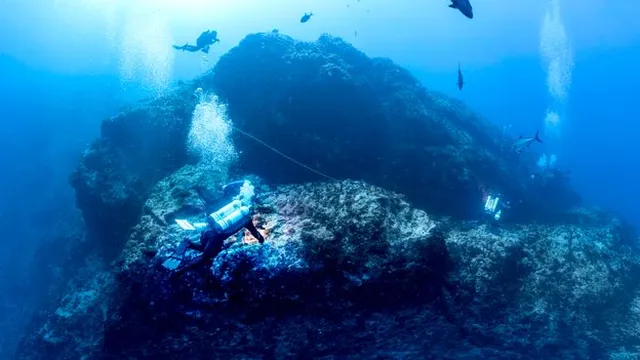
In recent decades, a remarkable number of volcanic seamounts have been discovered on the seafloor. These underwater mountains have garnered attention due to their unique ecosystems, particularly in relation to marine life such as sharks. Located in the Atlantic, one notable region includes the chain of seamounts stretching from St. Helena to Africa. Sam Weber, a principal conservation scientist who worked on the island of Ascension, noted that these underwater formations serve as vital stations for ocean predators, including sharks, which exhibit a remarkable increase in biomass compared to the surrounding open waters. A study conducted by Weber and his colleagues on the Southern Seamounts revealed that shark biomass in this region was an astonishing 41 times greater than in the open ocean. This discovery underscores the potential role of seamounts as gathering areas that not only attract marine life but also sustain diverse ecosystems. The findings align with the hub hypothesis, suggesting that seamounts may function as crucial areas for social interaction, feeding, and reproduction among various shark species and other predators. The mechanisms that contribute to higher concentrations of life around these seamounts are multifaceted. When ocean currents interact with steep slopes of underwater mountains, the process elevates cold, nutrient-rich waters toward the surface, fostering a productive marine environment. This phenomenon allows for a significant influx of food resources availability, which ultimately attracts other marine creatures, thereby enhancing the biodiversity of the ecosystem. Despite these ecological gems offering crucial habitats, they are severely threatened by commercial fishing practices that disproportionately impact predatory species. Protecting these unique areas is imperative, as sharks serve a fundamental role in maintaining the health of marine ecosystems. Managing human activity and conserving seamounts is crucial in preserving the biodiversity that thrives within these complex underwater landscapes.
Context
Seamounts are underwater mountains formed by volcanic activity, rising from the ocean floor to a height of at least 1,000 meters. They are critical features in marine ecosystems, providing a wide range of ecological benefits. These structures create unique habitats due to their topographical features, which foster biological diversity. The complex dynamics of water circulation around seamounts promote nutrient upwelling, significantly increasing local productivity. Consequently, seamounts act as hotspots for marine life, supporting a diverse array of organisms, from microorganisms to large pelagic species. The increased availability of nutrients and diverse habitats can lead to higher biomass and productivity in these areas compared to the surrounding open ocean. Marine species often congregate around seamounts due to the shelter and feeding opportunities they provide. Many commercially important fish species, such as tuna and various species of rockfish, utilize seamounts as spawning and feeding grounds. The abundance of benthic organisms, including corals, sponges, and other invertebrates, creates a rich ecosystem that supports larger predatory fish and marine mammals. The presence of these diverse species enhances local fisheries, making seamounts crucial for sustaining fishing industries and local economies worldwide. Seamounts also play an integral role in global marine biodiversity and conservation efforts. With over 20,000 known seamounts around the world, many remain unexplored and hold untapped potential for discovering new species. The unique ecosystems found on seamounts can also contribute to scientific research, providing insight into marine ecology, evolutionary biology, and climate change impacts. Preserving seamount ecosystems is vital for maintaining biodiversity and the health of the oceans, as they are often threatened by human activities such as overfishing, deep-sea mining, and climate change-related alterations in ocean temperature and chemistry. To ensure the sustainability of seamount ecosystems, it is essential to implement comprehensive management and conservation strategies. This includes establishing marine protected areas (MPAs) that encompass seamounts, regulating fishing practices to prevent overexploitation, and prioritizing research to better understand these environments. By acknowledging the importance of seamounts in marine ecosystems, we can work towards preserving their unique biodiversity and supporting the livelihoods of communities that depend on these rich marine resources.


