

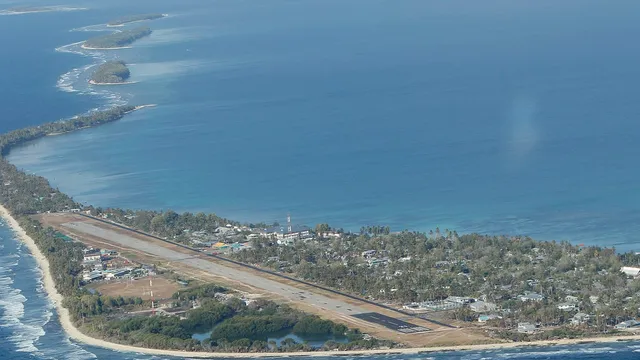
Tuvaluans migrate to Australia as their homeland sinks
Tuvaluans migrate to Australia as their homeland sinks
- Australia has accepted its first climate migrants from Tuvalu, a nation facing significant threat from rising sea levels.
- The initial group includes key professionals, enhancing the potential for community contributions.
- This historic relocation serves as a model for future climate migration efforts as other nations grapple with similar environmental challenges.
Story
In a significant move for climate change adaptation, Australia has welcomed its first climate migrants from Tuvalu, a low-lying island nation in the Pacific Ocean that is facing severe threats from rising sea levels. The relocation, which has resulted from a bilateral agreement struck two years prior, aims to facilitate and preserve the dignity and cultural identity of Tuvaluans while providing them with opportunities for a better life in Australia. This initiative comes as Tuvalu, with its sparse land area of just 26 square kilometers, anticipates dire projections suggesting that much of its territory could be submerged by 2050 due to climate impacts. Among the 11,000 residents of Tuvalu, over one-third applied for the climate relocation visa, underscoring the urgency of their situation. The initial group of migrants includes notable individuals such as Tuvalu's first female forklift driver, a dentist, and a pastor. These new arrivals will not only seek work and education in Australia but also aim to maintain their cultural ties with their homeland. The Australian government is implementing support services in key cities like Melbourne and Darwin to assist these migrants in successfully integrating into their new communities. As the consequences of climate change become increasingly severe, Tuvalu has emerged as a vocal advocate for nations that bear the brunt of climatic disruptions while having contributed the least to greenhouse gas emissions. The situation has turned Tuvalu into a focal point for discussions on climate mobility and loss-and-damage finance across global platforms. This relocation program is the first of its kind, potentially serving as a model for the future displacement scenarios that may become more common due to the escalating effects of climate change. The plight of Tuvalu serves as a poignant reminder of the broader implications of climate change, highlighting the urgent need for comprehensive global responses. As these climate migrants transition to life in Australia, they carry with them stories of resilience and an enduring connection to their submerged homeland, embodying both the challenges and the hope that such climate-induced migration brings to light. Foreign officials emphasize the importance of these initiatives, presenting them as a beacon of dignity and mobility in the face of an uncertain future.


