

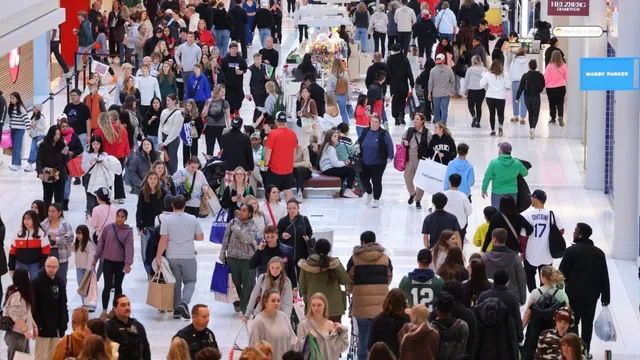
Record spending marks a historic Black Friday for U.S. shoppers
Record spending marks a historic Black Friday for U.S. shoppers
- U.S. online sales for Black Friday reached a record $11.8 billion, up 9.1% from last year.
- Salesforce estimates global Black Friday sales at $79 billion, indicating a strong digital shopping trend.
- Consumer sentiment reveals skepticism about discounts even as spending increases during the holiday season.
Story
In the United States, Black Friday 2025 witnessed a remarkable surge in online shopping, with consumers spending a staggering $11.8 billion, marking a 9.1% increase from the previous year. This significant uptick underscores the changing landscape of holiday shopping, where a considerable amount of transactions now occur digitally rather than in physical stores. Reports indicate that consumers were particularly active between 10 a.m. and 2 p.m. local time, with minute-by-minute spending peaking during these hours. Additionally, Salesforce reported that the global online sales for Black Friday reached $79 billion and that e-commerce platform Shopify merchants alone accounted for $6.2 billion in sales. Despite the extraordinary sales figures, many consumers expressed skepticism about the value of discounted prices, with a notable percentage doubting the actual savings reflected during the event. This mixed sentiment highlights a growing awareness among shoppers regarding pricing tactics employed during sales events. Another relevant point is the anticipated increase in holiday spending this season overall, with the National Retail Federation estimating U.S. shoppers will spend over $1 trillion for the first time this year. However, concerns regarding inflation and consumer debt persist, with many shoppers remaining cautious amid elevated prices and economic uncertainties. The effectiveness of promotional offers coupled with consumer strategies, such as shopping early and prioritizing wish-list items, suggests a shift in how individuals approach seasonal spending. As the holiday shopping period extends to include Cyber Monday and beyond, analysts project that online spending will reach new heights, with significant spending days lined up. The combination of early promotions and consumers leveraging e-commerce technologies appears to be driving this growth. Analysts predict that certain popular electronic items, such as gaming consoles and smartphones, will witness peak discounts during these sales, adding further excitement to the shopping experience this season.
Context
Consumer behavior during holiday shopping seasons has undergone significant changes in recent years, influenced by various factors such as technological advancements, economic conditions, and shifting consumer preferences. Traditionally, consumers relied heavily on physical retail stores to fulfill their shopping needs; however, with the rise of e-commerce, there has been a notable transition towards online shopping. Today, consumers are more empowered than ever, utilizing digital platforms to compare prices, read reviews, and make informed purchasing decisions. This paradigm shift has not only altered the way consumers shop but also the strategies retailers employ to attract buyers during the holiday season. One of the most compelling trends observed is the increasing importance of mobile shopping. With the proliferation of smartphones and apps, consumers are now able to shop conveniently from anywhere at any time. Retailers have responded by optimizing their websites for mobile use and investing in user-friendly apps that enhance the shopping experience. Additionally, the integration of social media into shopping has created a new channel for consumer engagement. Platforms like Instagram and TikTok have become crucial marketing tools, where influencers and brands can directly reach potential customers, thereby shaping their buying behaviors. This has led to a surge in impulse buying during the holiday season as consumers are exposed to targeted advertisements and promotions. Economic factors also play a critical role in influencing consumer behavior during this time. The state of the economy, including factors like inflation rates and consumer confidence, can significantly impact purchasing decisions. In times of economic uncertainty, consumers may adopt more cautious spending habits, focusing on essential items rather than luxury goods. Conversely, when economic conditions improve, they may feel more inclined to splurge and take advantage of holiday sales. Furthermore, the increase in awareness around sustainability and ethical consumption has prompted many consumers to seek out brands that align with their values, making conscientious choices about the products they purchase during holiday seasons. As we move further into 2025, the landscape of holiday shopping continues to evolve. The ongoing effects of the COVID-19 pandemic have reshaped consumer priorities, emphasizing the importance of health, safety, and experiences over material goods. Virtual shopping experiences, curbside pickups, and same-day delivery options have emerged as preferred methods for many consumers. Retailers must continuously adapt to these changing behaviors, leveraging technology to create seamless omnichannel experiences that cater to their customers' preferences. The future of holiday shopping will undoubtedly be shaped by these interactions and the ongoing evolution of consumer behavior in an increasingly digital and interconnected world.


