

China dominates global EV sales but remains locked out of the U.S. market
China dominates global EV sales but remains locked out of the U.S. market
- China's electric vehicle brands account for about two-thirds of global sales in 2024.
- An increasing number of American consumers are willing to consider purchasing Chinese EVs despite them being unavailable in the U.S.
- The growing presence of Chinese EVs raises concerns for American automakers, who must adapt to remain competitive.
Story
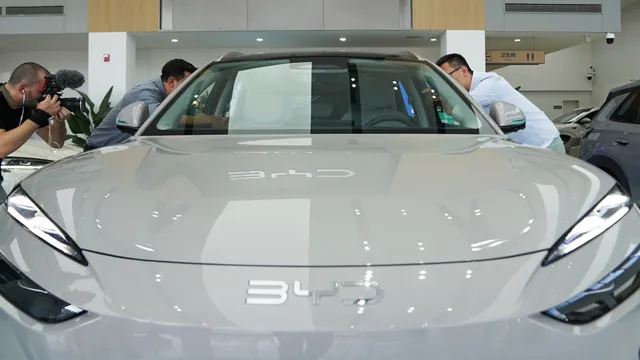
In 2024, China emerged as a leader in the electric vehicle market, holding approximately two-thirds of the global sales. This surge in demand is attributed to the rapid adoption of electric vehicles among Chinese consumers, with nearly half of all cars sold in the country being electric, as reported by the International Energy Agency. In contrast, the United States lags behind significantly, with only about one in ten cars sold being electric. Despite the impressive growth of the Chinese EV sector, these vehicles remain unavailable in the U.S. market, greatly limiting American consumers' access to Chinese brands. The success of brands like BYD demonstrates how competition and innovative technology have fueled advancements in the industry. The BYD Sealion 06 and Seagull models exemplify the shift towards affordable electric cars with advanced technology, each appealing to budget-conscious consumers who seek quality without exorbitant prices. In China, the Seagull is priced around $13,000, which forces competitors like Tesla to reconsider their pricing strategies as their models average above $30,000. Chinese consumers generally express trust in domestic brands, further complicating American market aspirations. U.S. automakers face a growing awareness of Chinese EV success as executives, including Ford's Jim Farley, explore partnerships with Chinese companies while fearing economic repercussions if these vehicles enter the U.S. market. The Biden administration has been cautious about allowing Chinese vehicle imports to safeguard domestic manufacturing jobs. Ultimately, this dilemma presents a two-fold issue: while opening the U.S. market could reduce EV prices for consumers, it threatens American job security within the automotive manufacturing sector. Despite the barriers, interest in Chinese-made electric vehicles persists among American consumers, with 38% expressing a likelihood of considering such purchases. Acknowledgment of the evolving landscape is evident as American executives have noted the innovative success of their Chinese counterparts and realize the pressure to adapt to these advancements. As tensions regarding market access and economic implications continue, the dynamics of EV sales will play a crucial role in shaping the future of the automotive industry in both China and the United States.
Context
The impact of Chinese electric vehicles (EVs) on the US market has become a significant topic of discussion as global attention shifts towards sustainable mobility and climate change. As one of the largest automotive markets in the world, the United States has witnessed an increase in competition, particularly from Chinese manufacturers who are quickly advancing in EV technology and production. Chinese companies, backed by substantial government support and investments in battery technology, have been expanding their presence internationally, creating a challenge for traditional automakers in the US. This report examines the aspects of competition, consumer acceptance, and potential future implications based on current trends in the EV market. Competition in the EV sector has intensified as Chinese manufacturers such as BYD, NIO, and Xpeng have begun to introduce their models in the US. These companies are leveraging various strategies, including competitive pricing, innovative technology, and extensive range capabilities. The ability to produce electric vehicles at lower costs due to economies of scale and government subsidies has enabled these Chinese brands to penetrate the US market, attracting consumers who are increasingly concerned about costs without sacrificing technology and performance. This competition is not only challenging well-established American brands like Tesla and General Motors but also prompting them to accelerate their own electrification strategies to retain market share. Consumer acceptance will play a pivotal role in the market dynamics of Chinese EVs in the US. As American consumers become more environmentally conscious and seek alternatives to traditional gasoline-powered vehicles, the appeal of electric vehicles continues to grow. However, perceptions of brand reliability, safety, and service availability remain critical factors influencing buying decisions. Marketing strategies that showcase technological advantages and value propositions will be essential for Chinese manufacturers to gain traction in the US market. Moreover, as infrastructure for charging stations becomes more robust and accessible, the attractiveness of EVs, including those from China, will likely increase among a broader audience. Looking ahead, the implications of Chinese EVs entering the US market may reshape not only consumer choices but also the future landscape of the automotive industry. The competitive pressure instigated by these companies may prompt American manufacturers to invest more heavily in research and development to innovate and differentiate their offerings. Additionally, as sustainability becomes an integral part of corporate strategy, companies that lead in EV adoption may also influence regulatory frameworks and policy-making. To ensure sustained growth and competitiveness, collaboration between American automakers and potential technology partnerships with Chinese firms may emerge as a pathway forward. Overall, the ongoing development and presence of Chinese electric vehicles in the US market will continue to shape the industry's evolution in the critical years to come.


