

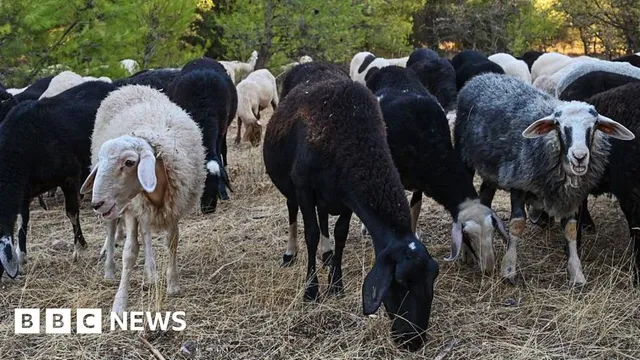
Greece faces feta cheese crisis as livestock cull escalates
Greece faces feta cheese crisis as livestock cull escalates
- An outbreak of sheep and goat pox has led to the culling of approximately 417,000 sheep and goats in Greece since August 2024.
- Farmers have expressed concerns over the economic impact, particularly regarding the production and export of feta cheese, as the disease spreads without appropriate containment measures.
- Critics highlight a slow government response and potential illegal vaccination practices, leaving farmers facing economic strain and uncertainty.
Story
In Greece, an outbreak of sheep and goat pox has led to the culling of around 417,000 sheep and goats, accounting for approximately 4-5% of the country's livestock. The first cases emerged in northern Greece in August 2024, but the disease rapidly spread throughout various regions. As farmers began to see the impacts on their herds, many voiced concerns over the future of their livelihoods, particularly regarding the production of feta cheese, a key export product. The culling has raised fears of a significant shortage of this well-known cheese, further threatening the economy of the rural areas heavily reliant on dairy farming. Despite no immediate increase in cheese prices observed so far, market experts warn that ongoing measures could likely lead to a price surge if the outbreak continues without effective containment. Sheep farmer Tassos Manakas shared his difficult experience as he watched his herd of 873 sheep be culled in October 2025. Since the culling, he has been left feeling helpless and uncertain about his future as a farmer, with his shop closed and no income to sustain himself. The crisis has left many farmers in despair, struggling with mental health and economic hardship as the disease has devastated local livestock populations. The Greek government has faced criticism for its slow response to the outbreak. A National Scientific Committee for the Management and Control of Sheep and Goat Pox was established only in late October 2025, well over a year after initial cases were detected. Critics argue that the veterinary service has been significantly understaffed, and no lockdown zones were implemented at the sites of early infections. This negligence is believed to have contributed to the rapid spread of the disease, prompting calls for accountability and improved biosecurity measures among livestock farmers. Additionally, it has been reported that illegal vaccinations may have taken place, complicating efforts to mitigate the outbreak and risking Greece’s classification concerning export restrictions. Farmers are caught in a dilemma as mass vaccination could label Greece as endemic for the disease, jeopardizing feta cheese exports due to strict regulations associated with such a status. The ongoing situation highlights the vulnerability of the agricultural sector and the urgent need for proactive measures to safeguard livestock and maintain the sustainability of Greece’s dairy industry.
Context
Biosecurity measures for livestock farming are essential in protecting animal health and reducing the risk of disease transmission within and between farms. In Greece, various strategies and practices are implemented to safeguard livestock against infections, maintaining not only animal welfare but also public health and economic stability. It is crucial for farmers to understand the importance of these measures, which involve a combination of good management practices, proper sanitation, and monitoring of livestock health. The primary focus of biosecurity is to prevent the introduction and spread of pathogens that can lead to significant losses in livestock production and quality. One of the fundamental components of biosecurity in Greece is the establishment of clean and controlled environments for livestock. This includes ensuring that the housing of animals is regularly cleaned and disinfected, minimizing contact with wild animals and other potentially contaminated sources. Strict access controls are also enforced, limiting entry to the farm and ensuring that visitors follow specific hygiene protocols, such as wearing appropriate clothing and footwear. The movement of livestock is carefully monitored and documented, with any introduction of new animals subject to quarantine procedures to assess their health status before integration into existing herds. Health monitoring is another vital aspect of biosecurity in livestock farming. Farmers are encouraged to establish veterinary care plans, which may include regular health checks, vaccinations, and parasite control measures. Keeping accurate records of vaccinations and treatments helps track the health history of the livestock, allowing for timely intervention when issues arise. Furthermore, education and training of farm staff are essential in promoting awareness of biosecurity practices and ensuring that everyone involved in the care of the animals is competent in maintaining a safe farming environment. Moreover, collaboration with veterinary services and public health authorities plays a significant role in reinforcing biosecurity measures. Sharing information about disease outbreaks, conducting surveillance programs, and responding to emerging threats collectively enhance the resilience of the livestock sector. As Greece continues to adapt to changes in agricultural practices and disease dynamics, ongoing research and refinement of biosecurity protocols will be vital in sustaining the health of livestock populations and ensuring the economic viability of the farming industry.


