
technology
innovative
impactful

Space Force awards contracts to develop vital space interceptors

Apr 25, 2026, 2:00 AM10
(Update: Apr 25, 2026, 2:00 AM)
American private aerospace company
data analysis framework

Space Force awards contracts to develop vital space interceptors

  • Multiple companies, including SpaceX and Anduril Industries, have been awarded contracts by the Space Force.
  • The contracts involve developing capabilities for intercepting enemy missiles outside the Earth's atmosphere.
  • The initiative reflects urgent national defense needs amid advancing adversary missile technologies.
Share opinion
Tip: Add insight, not just a reaction
1

Story

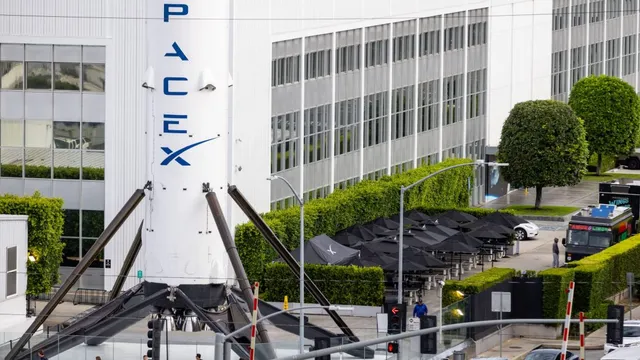
In the context of strengthening national defense capabilities, particularly against increasing missile threats, the U.S. Space Force has announced a contract awarding process involving key defense contractors. The announcement detailed that several companies, including SpaceX, Anduril Industries Inc., Booz Allen Hamilton Inc., and others, will be working on developing space-based interceptors. These interceptors are intended to engage and neutralize enemy missiles beyond the Earth's atmosphere, a new defensive measure that has not yet been proven effective. The contracts were granted through a streamlined process known as Other Transactional Authority, aimed at reducing procurement delays and fostering competitive bidding among contractors. The urgency for these capabilities stems from the rapid advancements in adversary missile technologies, necessitating a faster response in acquisition strategies. Space Force representatives, including Colonel Bryon McClain, have underscored the importance of adapting to modern missile threats which are characterized by speed and maneuverability. The initiative is critical as it aims to enhance the capabilities of the U.S. military's missile defense systems in an era where global geopolitical tensions are intensifying. Financial implications of the Golden Dome program are significant, with the Congressional Budget Office estimating potential costs reaching approximately $542 billion over a span of 20 years. This monetary forecast highlights the extensive investment required to establish a functional network of space interceptors, raising questions about affordability and strategic planning. In light of these potential costs, Space Force Gen. Michael Guetlein has emphasized a prudent approach to production, insisting that affordability will be a core consideration going forward. If production costs exceed manageable limits, the Space Force will reconsider moving forward with the project. Despite the considerable challenges, organizations like SpaceX are playing a pivotal role in this initiative, particularly in developing essential operating systems for the Golden Dome project. The collaboration between private aerospace entities and the U.S. government illustrates the evolving nature of defense contracting and technological innovation in enhancing military readiness. It further signifies the increasing integration of commercial aerospace products into national defense strategies, a trend that could redefine future military capabilities.

Context

Space-based interceptors are advanced defense systems designed to detect and neutralize incoming threats, such as ballistic missiles, from the vantage point of space. These interceptors leverage the unique capabilities of space technology, including high-altitude surveillance and rapid response times, to enhance national security measures against missile attacks. The fundamental operation of space-based interceptors involves tracking and identifying potential threats in real-time using satellites equipped with sophisticated sensors and radar technologies. Once a threat is confirmed, the interceptors are launched from their space-based platforms to engage and destroy the missile before it reaches its target. The integration of space-based interceptors into a broader missile defense strategy provides significant strategic advantages over ground-based systems. By operating beyond the atmosphere, these interceptors can approach incoming projectiles at various angles and speeds, making them more effective in interception. Additionally, their orbital capabilities allow for quicker reaction times, as they can be positioned to address potential threats in multiple regions simultaneously. The technology utilized for navigation, targeting, and impact trajectory calculations is highly advanced, relying on real-time data analysis and sophisticated algorithms to ensure precise engagement with lethal accuracy. Another essential aspect of the effectiveness of space-based interceptors is their role in early warning systems. Satellites in orbit can monitor large areas of the Earth’s surface for missile launches and other potential threats, providing critical information to command centers on the ground. This data allows for timely responses, including the possibility of employing additional ground-based defenses if needed. As missile technology continues to evolve, so does the need for adaptive and agile defense systems that can counter emerging threats in a timely manner. Space-based interceptors represent a vital component of this evolving defense landscape, aiming to prevent catastrophic attacks before they unfold. However, the deployment and operational management of space-based interceptors raise various challenges and considerations, including international treaties and the risk of an arms race in space. The militarization of space poses significant geopolitical implications and necessitates a careful balance between the advancement of defense technologies and diplomatic relations among nations. As countries continue to invest in and develop their space capabilities, discussions regarding regulations and the peaceful use of outer space become increasingly pertinent. Ensuring that space-based interceptors are used for defensive purposes rather than as tools for aggression is crucial in maintaining global stability and security.

2026 All rights reserved
