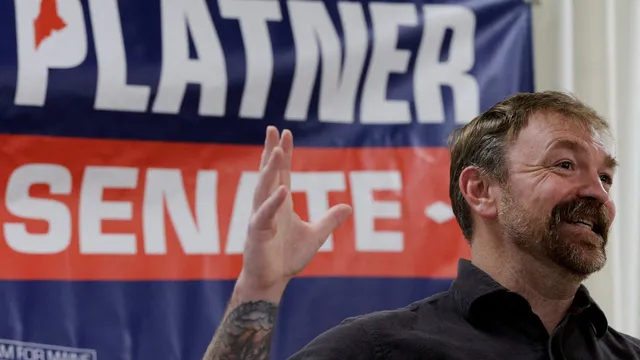
Graham Platner withdraws from Senate race amid serious sexual assault allegations
politics
controversial
impactful

Graham Platner withdraws from Senate race amid serious sexual assault allegations

70
(Update: )
U.S. Senator from Pennsylvania, former Pennsylvania lieutenant governor (2019-2022)
state of the United States of America
American politician and activist (born 1941)
  • Graham Platner faced serious allegations of sexual assault from a former girlfriend, leading to a loss of support from key Democratic figures.
  • The Maine Democratic Party is now tasked with finding a replacement candidate for the Senate race following Platner's withdrawal.
  • The incident underscores the challenges candidates face regarding past controversies and allegations in political campaigns.
Share opinion
7

Story

In the United States, Graham Platner, a Democratic candidate for the U.S. Senate from Maine, announced his withdrawal from the race following serious allegations of sexual assault. The allegations surfaced when Jenny Racicot, a woman who had dated Platner, claimed that he had forced her to have sex while she was intoxicated and had told him to stop. This revelation led to a significant backlash against Platner, prompting several high-profile endorsements, including that of Senator Bernie Sanders, to be rescinded. The situation escalated quickly, with many Democratic leaders calling for his resignation from the race. Platner's campaign had already been marred by controversy prior to these allegations, including a tattoo that resembled a Nazi symbol and past accusations of abusive behavior from former girlfriends. Despite these issues, he had garnered support from progressive voters who were looking for a candidate to challenge the incumbent Republican Senator Susan Collins. However, the sexual assault allegation proved to be a tipping point, leading to a rapid decline in his support and ultimately forcing him to step down. In a video statement, Platner expressed that his decision to withdraw was not an admission of guilt but rather a reflection of the need for a transparent and democratic process to select a new candidate. He emphasized the importance of ensuring that the values of his supporters were represented in the nomination process. The Maine Democratic Party is now faced with the challenge of finding a suitable replacement candidate before the upcoming election. The fallout from this incident highlights the ongoing issues surrounding sexual misconduct allegations in politics and the impact they can have on candidates' campaigns. As the Democratic Party seeks to regain control of the Senate, the loss of Platner's candidacy complicates their strategy in a key battleground state. The party must now act quickly to identify a new candidate who can rally support and effectively challenge Collins in the upcoming election.

Context

Scandals have long been a significant factor in shaping political campaigns, influencing public perception and voter behavior. The impact of scandals can vary widely, depending on the nature of the scandal, the timing in relation to the election cycle, and the responses from the candidates involved. In many cases, scandals can lead to a rapid decline in a candidate's popularity, as voters may perceive them as untrustworthy or lacking integrity. This decline can be particularly pronounced if the scandal is related to issues that resonate deeply with the electorate, such as corruption, personal misconduct, or ethical violations. The media plays a crucial role in amplifying these scandals, often providing extensive coverage that can sway public opinion and dominate the narrative surrounding a campaign. Moreover, the timing of a scandal can significantly affect its impact. Scandals that emerge early in a campaign may allow candidates to recover and reframe their messages, while those that surface closer to election day can be more damaging, leaving little time for candidates to mitigate the fallout. In some instances, candidates have successfully navigated scandals by employing strategic communication tactics, such as public apologies, transparency, and a focus on policy issues. However, the effectiveness of these strategies can vary, and some candidates may find themselves unable to recover from the damage caused by a scandal, leading to a loss of support and ultimately, defeat at the polls. The response of opponents to a scandal can also play a critical role in its impact on political campaigns. Opponents may seize the opportunity to highlight the scandal, using it to undermine the credibility of their rivals. This tactic can be particularly effective if the opponent can present themselves as a more ethical or trustworthy alternative. Additionally, the political context in which a scandal occurs can influence its repercussions. For example, in a highly polarized political environment, scandals may have a more muted effect on a candidate's base, as supporters may be more inclined to dismiss or downplay the significance of the scandal in favor of party loyalty. In conclusion, the impact of scandals on political campaigns is multifaceted and can lead to significant shifts in voter sentiment. While scandals can damage a candidate's reputation and electoral prospects, the extent of this damage is influenced by various factors, including the nature of the scandal, the timing of its emergence, the candidate's response, and the actions of opponents. Understanding these dynamics is essential for candidates and campaign strategists as they navigate the complex landscape of modern political campaigning.