

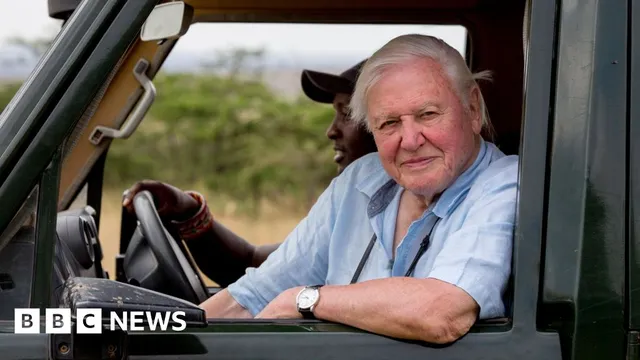
Bristol dominates natural history television production worldwide
Bristol dominates natural history television production worldwide
- Bristol is responsible for 80% of the global natural history television production.
- Sir David Attenborough's work significantly influenced the wildlife film industry in the city.
- The city's reputation as 'Green Hollywood' highlights its essential role in global storytelling for natural history.
Story
Bristol has emerged as a global hub for the production of high-quality natural history television, accounting for approximately 80% of such content worldwide. This significant achievement is largely attributed to Sir David Attenborough's extensive contributions to the genre. Despite never residing in the city, his influence has profoundly shaped the industry in Bristol, earning it the nickname 'Green Hollywood'. Sir David Attenborough began his involvement with the BBC's Natural History Unit after stepping down from management and transitioned to a presenting role, leading to the creation of landmark series like 'Life on Earth'. This series showcased the diversity of wildlife in stunning detail, drawing viewership from both the UK and international audiences. The initial success of 'Life on Earth' was pivotal in attracting American investments into natural history programming, transforming funding approaches in the sector. The collaboration with major players in the entertainment industry, such as Warner Brothers, marks the first time that American finance was introduced to British natural history filmmaking. This partnership significantly enhanced the production quality of wildlife documentaries. Attenborough's style revolutionized the way these stories were told, making international wildlife familiar and accessible to millions of viewers. The advancements in filming techniques and technology under his direction, including the use of state-of-the-art film stock, further improved the visual richness and storytelling potential of these documentaries. Attenborough's legacy continues to resonate within Bristol's natural history sector, estimated to contribute around £100 million to the local economy, equating to roughly a third of the overall television industry in the city. His long-time director, Keith Scholey, emphasized the lasting impact Attenborough has had, stating that his genius enabled many careers in natural history to blossom within the region. Scholey's remarks highlight the interconnectedness of Attenborough's work and the growth of Bristol's reputation as a leading center for wildlife filmmaking, with many renowned networks like National Geographic, BBC, Disney, Apple, and Netflix relying heavily on programs originating from Bristol. As Bristol continues to thrive as a center of innovation in the natural history genre, the collaborative spirit of the local production teams plays a critical role in maintaining high standards and pushing creative boundaries. The city's reputation attracts a steady influx of talent and investment, ensuring that the industry will continue to flourish in the coming years. Attenborough's contributions have not only influenced the present state of the industry but have laid a foundation for future generations of filmmakers, preserving his legacy through the development of new, ambitious natural history projects.
Context
The development of natural history television production in Bristol is a significant chapter in the evolution of wildlife programming. Bristol has long been recognized as a hub for documentary filmmaking, particularly in the field of natural history. The roots of this specialization can be traced back to the establishment of the Natural History Unit (NHU) in 1979, under the British Broadcasting Corporation (BBC). This unit distinguished itself by producing high-quality documentaries that emphasized factual storytelling and cinematic visuals. The NHU's innovative approach has changed how natural history stories are told, seamlessly blending education with entertainment, and has propelled Bristol to a prominent position in the global documentary landscape. Key productions from the NHU, such as "The Blue Planet," released in 2001, and its sequel "Blue Planet II" in 2017, have further cemented Bristol's reputation. These groundbreaking series utilized cutting-edge technology, including high-definition underwater cameras and remote-operated vehicles, to capture extraordinary footage of marine life. These productions not only garnered critical acclaim and numerous awards but also significantly raised public awareness of marine conservation issues. The success of these series has spurred a renaissance in natural history content, inspiring subsequent programs and encouraging the industry to invest in high-production-value documentaries that captivate audiences globally. Bristol's natural history television production ecosystem has been bolstered by its skilled workforce and strong collaboration networks among filmmakers, scientists, and researchers. The city hosts various educational institutions, such as the University of the West of England and the University of Bristol, which offer programs in film and environmental science. This academic foundation has facilitated the growth of expertise in wildlife cinematography and has cultivated a new generation of storytellers passionate about natural history. The link between Bristol's educational institutions and the NHU has fostered a mutually beneficial relationship, enabling innovative research and showcasing groundbreaking discoveries on screen. Moreover, the increasing emphasis on sustainability and environmental awareness in recent years has led to a new wave of content focusing on climate change, biodiversity loss, and conservation efforts. Productions originating from Bristol are increasingly aligning with these themes, aiming to educate and inspire action among viewers. As audiences demand more representation of pressing global issues within the natural history genre, Bristol remains at the forefront of this movement, continually adapting its storytelling methods to reflect contemporary challenges. As such, Bristol’s contribution to natural history television not only celebrates the natural world but also seeks to protect it for future generations.


