

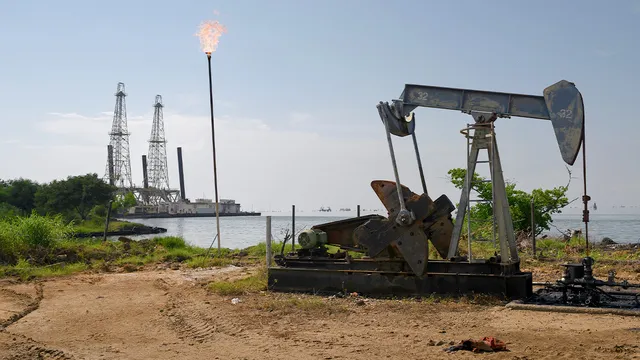
Chevron resumes Venezuelan crude processing after Maduro's arrest
Chevron resumes Venezuelan crude processing after Maduro's arrest
- Chevron has resumed processing Venezuelan crude oil at its Pascagoula refinery in Mississippi.
- The refinery can currently process about 50,000 barrels per day of Venezuelan oil, with plans to increase this capacity.
- This development may help drive down oil costs for American consumers and signals a potential improvement in U.S.-Venezuelan relations.
Story
In the aftermath of Nicolás Maduro's arrest in Caracas last month, Chevron has begun processing its first shipment of Venezuelan oil at its Pascagoula refinery in Mississippi, USA. The refinery is now capable of refining about 50,000 barrels of Venezuelan crude oil each day. This operation marks a significant shift for Chevron, as it has been operating in Venezuela for nearly a century and has now enhanced its sanctioned operations. Chevron CEO Mike Wirth highlighted the long-standing relationship with Venezuela, stating that the company is not only increasing its output but is also focused on being repaid for past debts, suggesting a beneficial partnership for all parties involved. The refined Venezuelan crude oil is being turned into gasoline, diesel, and jet fuel, which will be distributed to American consumers. Given the geographic proximity of the refinery to Venezuela, the logistical efficiency of delivering oil has improved. Andy Walz, President of Downstream, Midstream & Chemicals at Chevron, noted that bringing in Venezuelan oil would drive down costs due to its cheaper nature compared to oil sourced from farther locations. Chevron's operations in Venezuela have increased dramatically, growing from approximately 50,000 barrels per day to about 250,000 barrels daily in recent years, with an expected further increase in the next year and a half. The Pascagoula facility is one of a limited number of refineries on the U.S. Gulf Coast specifically configured to process heavy sour crude oil. It plays a crucial role in ensuring that oil can be transported directly into its harbor, thus simplifying the logistics of processing crude oil. In addition to the new Venezuelan shipments, Chevron has positioned itself to potentially handle another 100,000 barrels per day as additional supplies become available. These developments could represent a turning point in the oil market dynamics involving Venezuela, especially given the sanctions previously imposed on the country. The resumption of oil shipments could lead to more stability in oil prices, benefitting both the Venezuelan economy and U.S. consumers alike. As the geopolitical landscape shifts, this relationship between Chevron and Venezuela underscores the complexities of international oil trade, influenced by governance and emerging political relationships. The recent events surrounding Maduro have reopened pathways long considered stalled and indicate a new chapter in U.S.-Venezuelan energy relations. With this renewed focus on Venezuelan crude, both the company and the nation may see long-term benefits amidst a backdrop of historical tension and economic hardship.
Context
The capture of Nicolás Maduro in February 2026 has critical implications for the oil trade, both regionally and globally. As the President of Venezuela, Maduro's government has faced substantial international scrutiny and sanctions due to longstanding allegations of human rights abuses and corruption. For years, Venezuela's oil industry has been in a state of decline, partly due to mismanagement and the impact of these sanctions. With Maduro's regime at the center of this chaos, his removal can potentially pave the way for significant changes in how the country's oil resources are managed and exported to the international market. The future of Venezuela's oil production, which had fallen dramatically below its pre-crisis levels, is now largely contingent upon the political transition that follows his capture. The geopolitical implications of Maduro's capture also cannot be understated. Venezuela holds one of the largest proven oil reserves in the world, and the stability of its oil production is crucial not only for its own economy but also for global oil supply dynamics. Countries that rely heavily on Venezuelan oil, particularly in the Caribbean and Europe, may find themselves facing supply disruptions if there is significant upheaval following his capture. However, this also opens up opportunities for international oil companies to re-enter the market, potentially leading to increased investment and a more stable supply of oil from the region. This is particularly significant as global demand for energy continues to grow, particularly in emerging markets. In the immediate aftermath of Maduro's apprehension, the global oil market is likely to experience volatility, as traders assess the potential for a reconfiguration of Venezuela's oil exports under a new regime. Analysts predict fluctuating oil prices, with an initial spike due to uncertainty followed by potential stabilization as clarity on governance and policies emerges. If a more cooperative government is established, there could be a resumption of partnerships with international oil corporations, enhancing productivity in Venezuela's oil fields and increasing output. The re-engagement of foreign investment could help modernize the country's oil infrastructure, which has been neglected for years, thereby significantly impacting global oil trade. Nonetheless, challenges remain. The internal political landscape in Venezuela is fraught with complexities, and any new leadership will have to navigate not only economic recovery but also the expectations of the population, which has suffered immensely under Maduro. Balancing the needs of the citizens with the imperative of reviving the oil sector will be pivotal. Moreover, the international community's response to a new government will play a critical role in determining the pace and stability of Venezuela's reintegration into the global oil market. The capture of Nicolás Maduro represents both a risk and an opportunity for Venezuela's oil trade, as the world watches closely how this transition unfolds and impacts global energy supply.


