

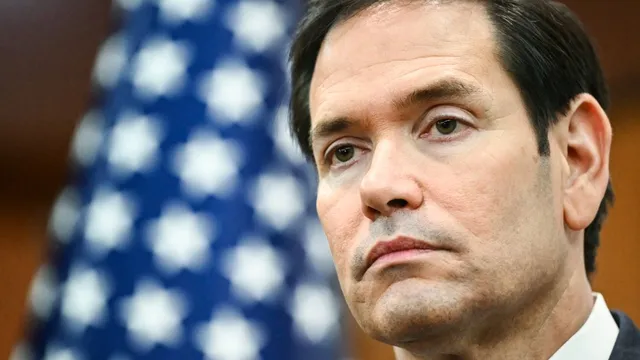
Marco Rubio testifies in trial over secret lobbying for Venezuela
Marco Rubio testifies in trial over secret lobbying for Venezuela
- Marco Rubio testified in a Miami federal courtroom regarding his interactions with David Rivera.
- Rivera faces charges of money laundering and failing to register as a foreign agent due to his lobbying activities.
- The trial reveals significant insights into the influence of lobbying on U.S. foreign policy, particularly concerning Venezuela.
Story
In Miami, Secretary of State Marco Rubio provided testimony in the trial of David Rivera, a former congressman, who has been accused of illegally lobbying on behalf of the Venezuelan government during the Trump administration. The trial commenced after Rivera and an associate were charged in 2022 with money laundering and failing to register as foreign agents. They allegedly received a $50 million contract to influence U.S. policy towards Venezuela, specifically to seek meetings with key figures in the Trump administration and persuade them to adopt a more lenient approach towards President Nicolás Maduro's regime. Rubio revealed that he and Rivera, who also served as his roommate, maintained a close relationship during their time in the Florida Legislature. Their connection continued when both were elected to Congress around the same time. In July 2017, Rivera approached Rubio, seeking his assistance in arranging meetings related to a scheme to convince Maduro to resign. Despite his skepticism regarding the validity of Rivera's claims about working with the Venezuelan government, Rubio indicated his willingness to help if there was any possibility of achieving a positive outcome. During his testimony, Rubio recounted how he utilized talking points provided by Rivera to deliver a Senate speech suggesting the U.S. would not retaliate against Venezuelan officials willing to support a change in leadership. He characterized the Maduro administration as comprising numerous “double dealers” and acknowledged that he had received information from Rivera about the political dynamics in Venezuela at the time. The prosecution argued that Rivera's actions constituted a betrayal of public trust and an effort to exploit connections in U.S. politics for personal gain. The case has drawn significant attention due to its implications for U.S.-Venezuelan relations and the role of lobbying in American politics. As the trial unfolds, it serves as a rare example of a sitting Cabinet member testifying in a criminal trial, a situation not seen since 1983. Prosecutors aim to demonstrate that Rivera and his co-defendant engaged in a concerted effort to lobby for the Maduro government under the guise of commercial work, which they argue went against federal regulations. Rivera maintains his innocence, claiming his consulting contract was targeted solely at reviving business ties between U.S. energy interests and Venezuela, separate from any lobbying efforts on behalf of the Maduro regime.
Context
Marco Rubio has played a significant role in shaping U.S. Venezuelan relations, particularly during his tenure as a U.S. Senator from Florida. His advocacy for a tougher stance on the Maduro regime aligns with a broader shift in American foreign policy towards Venezuela, which has increasingly focused on promoting democracy, human rights, and economic stability in the region. Rubio's Hispanic heritage and connection to the Venezuelan diaspora in Florida have also positioned him as a prominent voice on this issue, resonating with constituents who are directly affected by the political and humanitarian crisis in Venezuela. Rubio has utilized his platform to criticize the Maduro government, calling attention to human rights abuses and the repression of democratic opposition. His involvement has included pushing for economic sanctions against specific Venezuelan officials and entities linked to corruption and the undermining of democratic institutions. Through legislation and public statements, he has consistently advocated for U.S. intervention to support opposition groups and promote a transition to democracy, signaling a clear stance that prioritizes U.S. interests and values in the region. Beyond sanctions, Rubio has also called for increased humanitarian aid to Venezuelans suffering from the economic fallout of the crisis. He has emphasized the need for the U.S. to work with international partners to address the urgent humanitarian needs and to support the Venezuelan people in their pursuit of a democratic government. His efforts highlight the complexity of U.S. involvement in Venezuela, where humanitarian concerns must balance against the strategic geopolitical interests of the United States in Latin America. In summary, Marco Rubio's influence on U.S. Venezuelan relations illustrates a blend of personal commitment, political strategy, and a response to the pressing needs of the Venezuelan people. His role underscores the importance of Congressional support in shaping foreign policy and the ongoing U.S. efforts to respond to the crisis in Venezuela through a combination of sanctions, advocacy for human rights, and humanitarian assistance.


