
Ancient humans relied on shark meat for sustenance in Oman
- Archaeologists discovered a megalithic tomb in Wadi Nafūn, Oman, dating back to the 5th millennium B.C.
- Stable isotope analysis of tooth samples revealed that ancient populations likely consumed shark meat.
- The findings suggest a highly adaptive subsistence strategy among Neolithic communities, with implications for understanding prehistoric cultures.
Story
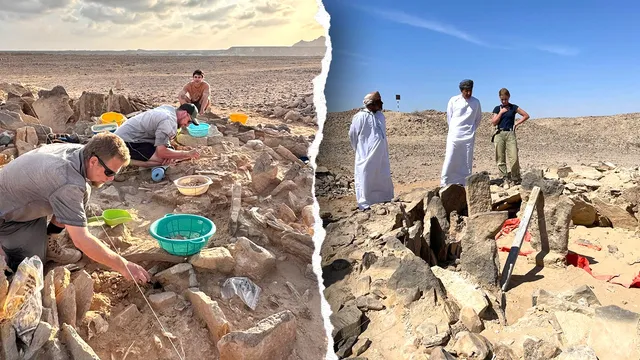
In southern Arabia, particularly in Oman, new research has unveiled significant insights into the diet of ancient populations dating back to the 5th millennium B.C. Archaeologists have diligently worked at the archaeological site of Wadi Nafūn since 2020, despite the challenging arid climate that has preserved minimal organic remains. They focused on collecting tooth samples from a megalithic tomb that provided crucial evidence regarding the dietary habits of Neolithic communities, indicating their consumption of sharks as a food source. The research team, led by archaeologist Alžběta Danielisová from the Archaeological Institute of the Czech Academy of Sciences (ARUP), conducted stable isotope analysis on the tooth samples collected. This analysis suggested a significant reliance on shark meat, which was a prominent component of the diet for the population studied. Jiří Šneberger, an anthropologist involved in the research, noted that these preliminary findings point to sharks being a principal source of nutrition among these ancient communities. This study represents a groundbreaking approach in archaeology as it documents the specialized hunting of marine predators using scientific methods, connecting the burial community with the consumption of apex predators. The implications of these findings extend beyond local dietary practices; they highlight the adaptive strategies employed by these Neolithic populations in response to their environment. The tomb site served as a central ritual location that unified various groups over more than three centuries, showcasing the complex societal structures and interactions within prehistoric Arabia. The ongoing research continues to unravel the relationship between humans and their environment, emphasizing their ability to exploit diverse marine resources alongside hunting and gathering a wide range of food items. Scholars believe this work may have international repercussions, as it deepens our understanding of how ancient peoples adapted to differing climatic and ecological settings. This adaptability illustrates that hunter-gatherers developed sophisticated subsistence strategies, managing to integrate marine resources into their diets and lifestyles effectively, marking a unique intersection of culture and ecology in one of the world's harshest environments.
