

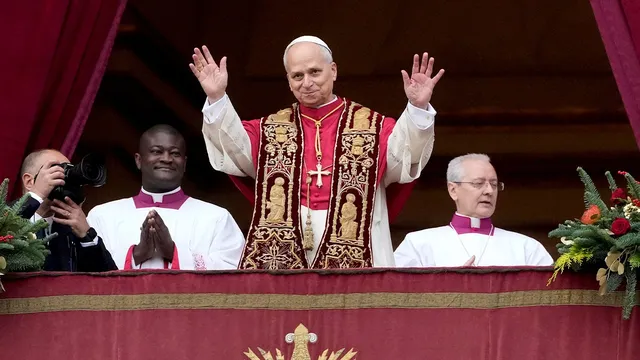
Rogue Catholic group plans to consecrate bishops without papal approval
Rogue Catholic group plans to consecrate bishops without papal approval
- The Priestly Society of St. Pius X announced plans to consecrate bishops without the Vatican's approval on July 1, 2026.
- This decision follows a breakdown in dialogue with the Vatican and reflects underlying tensions regarding traditional Catholic practices.
- The announcement raises concerns about a potential schism within the Catholic Church and the preservation of apostolic succession.
Story
In early July 2026, the Priestly Society of St. Pius X, a traditionalist Catholic group headquartered in Switzerland, has issued a declaration threatening to create a schism with the Vatican. The SSPX, which primarily celebrates the Traditional Latin Mass, announced intentions to consecrate bishops without the required approval from the Holy See. This decision comes as a response to unfulfilled requests for new bishops made to Pope Leo XIV by Father Davide Pagliarani, the SSPX superior general. The group's actions could mark a significant moment in the longstanding tensions between them and the Vatican over adherence to pre-Vatican II traditions. Historically, the SSPX's divergence from Vatican authority stems from the Second Vatican Council reforms implemented in the 1960s. Archbishop Marcel Lefebvre, the SSPX's founder, was excommunicated in 1988 for ordaining bishops without papal consent, a critical violation of ecclesiastical law highlighting the importance of maintaining apostolic succession within the Catholic Church. Although subsequent popes have attempted reconciliation, including lifting excommunications and allowing SSPX members to perform certain sacraments, the SSPX's insistence on preserving its traditional practices remains a point of contention. The SSPX has expanded globally over the past decades despite its lack of legal status within the Catholic Church and has been attracting support from various clergy and laity who align with its mission. Current and former SSPX leaders, including its existing bishops, have vocalized concerns over the future of the Catholic Church, asserting that they observe a dire need to respond to the perceived crisis in faith and doctrine caused by modernizing reforms. As Pope Leo XIV grapples with this unfolding crisis, there is a growing apprehension regarding the SSPX's potential move and the implications it holds for church unity, authority, and the continuity of Catholic governance. Vatican representatives, while recognizing the urgency of dialogue, face obstacles in appeasing a group that questions contemporary church developments and insists on adhering to historical traditions. The situation presents a complex challenge for leadership within the Catholic Church as it navigates faithfulness to tradition while also striving for unity in the face of diverging views.
Context
The Society of Saint Pius X (SSPX) has been at the center of numerous conflicts with the Vatican since its founding in 1970 by Archbishop Marcel Lefebvre. The primary contention stems from the society's opposition to the changes implemented by the Second Vatican Council (1962-1965), which they believe undermined traditional Catholic teachings and practices. Key issues include the liturgical reforms, particularly the introduction of the Mass in the vernacular, and the dialogue with non-Catholic religions. Lefebvre's concerns led to his decision to ordain bishops without the Vatican's approval in 1988, which resulted in his excommunication and the excommunication of the bishops he consecrated. This act of resistance firmly established the SSPX as a traditionalist entity within the Catholic Church, leading to a schismatic status that the Vatican has struggled to reconcile ever since. In the years following Lefebvre's actions, the Vatican sought various means to address the rift with the SSPX. Ongoing dialogues attempted to bring the society back into full communion with the Church while addressing their concerns. In 2009, Pope Benedict XVI lifted the excommunication of the SSPX bishops, marking a significant step toward reconciliation, although it did not resolve the doctrinal disputes. The themes of authority and interpretation of Vatican II continue to be stumbling blocks, as members of SSPX maintain a critical stance against what they view as modernist interpretations of Catholic doctrine and practice. Under Pope Francis' papacy, there have been further efforts to open dialogue with the SSPX, with an emphasis on understanding rather than condemnation. Notably, the Pope granted the SSPX faculties to hear confessions, indicating a significant although complicated shift in the Vatican's approach to the society. However, the SSPX's rejection of the full acceptance of Vatican II remains a central issue. The tensions represent a broader struggle within the Church over the balance between tradition and modernity, with the SSPX firmly rooted in the former. As of early 2026, the relationship between the SSPX and the Vatican remains complex and fraught with historical grievances. While there are signs of a possible thawing of relations, significant theological disagreements persist. The SSPX continues to operate independently, with a considerable following who are devoted to preserving the traditional practices of the Catholic faith. The Vatican's ongoing challenge is to integrate such sentiments within a Church that is increasingly faced with contemporary secular issues while remaining faithful to various interpretations of its tradition.


