

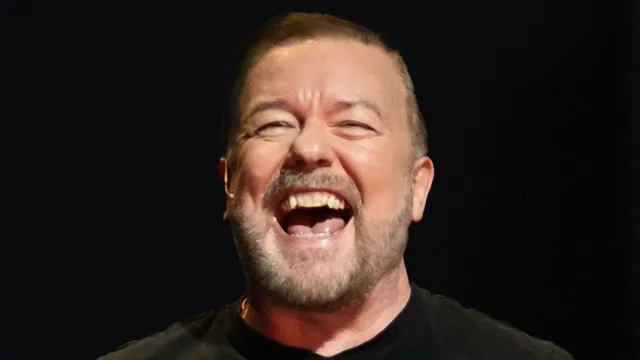
Ricky Gervais defends his comedy amid backlash
Ricky Gervais defends his comedy amid backlash
- Ricky Gervais released his new stand-up special Mortality, filmed earlier in 2025 at the London Palladium.
- The comedian responded to critics of his previous work, particularly from the LGBTQ+ community, and addressed broader themes surrounding comedy and cancel culture.
- Gervais emphasized the significance of comedy for working-class individuals, asserting its role in challenging societal taboos despite contemporary criticisms.
Story
On December 30, 2025, Ricky Gervais released his latest stand-up special, Mortality, filmed at the London Palladium earlier that year. The comedian, known for his provocative humor, used this platform to address ongoing criticisms from what he described as 'middle-class' and 'elitist' critics who challenge the concepts of comedy and cancel culture. Gervais reflects on the impact of societal changes on comedy, particularly regarding jokes about marginalized groups, while affirming the importance of comedy for ordinary working-class people. In the special, he further explored these themes, discussing previous backlash from LGBTQ+ organizations after his 2022 Netflix special, Supernature. During his performance, Gervais asserted that only working-class individuals can be the subjects of jokes today without inciting backlash. He acknowledged his evolution as a comedian and recognized the shifting social landscape around comedy. While admitting he might reconsider certain jokes if provided another chance, he maintained that he would not change things he has done in the past, emphasizing that comedy must aim to steer audiences beyond discomfort and challenge societal taboos. This release is significant as it marks three years since his controversial remarks about transgender individuals led to substantial pushback from LGBTQ+ advocates. Gervais used the special to reiterate a typical defense of his approach to comedy, arguing against the pressure of cancel culture and maintaining that humor often serves to explore taboo subjects and reflect upon complex social issues. The importance of maintaining the freedom to joke without censorship was a central theme of his performance, reflecting his belief in comedy's role as an essential social commentary tool. He suggested that laughter can offer a sense of relief and familiarity, making it easier for society to engage with pressing issues. The launch of Mortality reveals Gervais's perspective on the evolving landscape of comedy amid societal change, highlighting ongoing debates about the responsibility of comedians and the reception of humor centered on sensitive topics. By addressing critics directly, Gervais reiterates his stance that comedy remains a vital form of expression that should continue to provoke discussion, even at the risk of offending some individuals. His remarks during the special echo a broader conversation about the purpose of humor and the role of comedians in society today.
Context
The phenomenon of cancel culture has significantly impacted the landscape of comedy, influencing the way comedians create and perform their material. In recent years, the rise of social media platforms has enabled audiences to quickly amplify their reactions to comedic content, both positive and negative. This immediacy has increased the stakes for comedians, as a single controversial joke or comment can result in swift backlash, potentially harming their careers. Comedians who tackle sensitive subjects must now navigate a complex environment where the boundaries of humor are constantly evolving, leading to a chilling effect on their creative expression. The fear of facing public condemnation can deter comedians from exploring topics that are deemed too risky, thereby limiting the diversity of voices and perspectives in comedy. As a result, comedians may resort to self-censorship to avoid offending certain groups or triggering outrage, which can dilute the authenticity and impact of their work. The impact of cancel culture on comedians not only affects individual artists but also the broader comedic landscape. Comedians often serve as cultural commentators, providing insights and critiques on societal norms and issues. However, when comedians are fearful of backlash, it stifles their ability to engage in meaningful discussions about important topics. The tension between the desire for humor and the necessity for sensitivity has led to a schism within the comedy community, with some comedians advocating for the preservation of free speech and the exploration of taboo subjects, while others argue for greater accountability and the importance of prioritizing marginalized voices. This divide reflects a broader societal debate about the limits of humor and the implications of public discourse in an increasingly polarized environment. Furthermore, the repercussions of cancel culture can result in significant changes to how comedians build their careers. With the potential for public backlash, many comedians are now opting to perform in more controlled environments, such as private venues or private shows, where they feel they can speak more freely without fear of immediate repercussion. Additionally, some comedians have turned to alternative platforms, such as podcasts and streaming services, where they can express their views and showcase their material without the constraints imposed by traditional media. This shift can empower comedians to embrace their unique voices and cultivate dedicated fan bases who appreciate their approach to humor. Yet, it also means that comedians may find themselves operating within echo chambers, thus limiting their engagement with broader audiences and diverse perspectives. In conclusion, the impact of cancel culture on comedians encapsulates a complex interplay between artistic expression, societal norms, and audience expectations. While some may argue that cancel culture provides a necessary check on harmful rhetoric, others contend that it poses significant threats to comedic freedom and creativity. As the comedy landscape continues to evolve in response to these cultural shifts, it remains essential for both comedians and audiences to engage in ongoing dialogues about the value of humor, the responsibility of comedians, and the importance of fostering environments where diverse perspectives can coexist. Ultimately, the future of comedy hinges on our collective ability to navigate these challenges thoughtfully and deliberately, ensuring that humor remains a vital force in our cultural discourse.


