

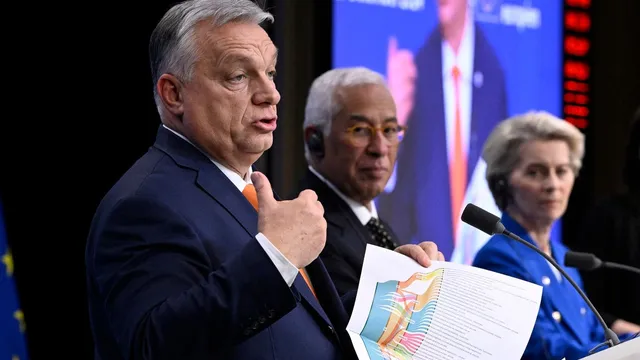
Viktor Orban halts Ukraine loan as oil dispute escalates
Viktor Orban halts Ukraine loan as oil dispute escalates
- Hungarian Prime Minister Viktor Orban is blocking a €90 billion EU loan intended for Ukraine.
- The blockage stems from a dispute over the Druzhba pipeline, which supplies oil to Hungary and was damaged in a Russian attack.
- Orban's actions are seen as a tactic to consolidate political power ahead of domestic elections while straining Hungary's relations within the EU.
Story
Hungary is currently in a contentious position regarding the European Union's financial support to Ukraine. Specifically, Viktor Orban's government has been blocking a €90 billion loan package aimed at aiding Ukraine in its ongoing conflict against Russia. The contention arose after a Russian attack reportedly damaged the Druzhba pipeline, which is crucial for transporting oil from Russia through Ukraine to Hungary. This pipeline’s disruption has placed Hungary's energy security under threat, leading Orban to condition any support for Ukraine on the restoration of oil deliveries. He has publicly stated that as long as oil shipments remain interrupted, Hungary will not provide any financial aid to Kyiv. Adding to the complexity of this situation, various EU leaders have criticized Orban for using this blockade as a bargaining chip in his election campaign, combining domestic political strategy with international implications. The ongoing feud has escalated as Orban casts Ukraine and its leadership as adversaries, stating in social media posts that Zelenskyy must lift the oil blockade for Hungary to receive EU support. The situation has caused significant friction within the EU, as member states have previously agreed on this critical financial assistance package which Orban is now undermining. European officials are pressing for a resolution, but the impasse presents a unique challenge in collective EU decision-making, which requires unanimous consent from all member states to implement such significant aid packages. This blockade not only hampers Ukraine's war effort but could also have repercussions for Hungary's relations within the EU, complicating Orban's position both domestically and internationally. The opposition within Hungary is also leveraging this moment, arguing that the prime minister’s actions threaten the country’s standing in the EU while highlighting the growing European discontent with Hungary's current trajectory under Orban's leadership.
Context
The ongoing geopolitical situation surrounding Ukraine has been further complicated by Hungary's recent decision to block a loan allocated by the European Union to Ukraine. This move has drawn significant attention and critique from multiple stakeholders within the EU and beyond, as it raises questions about Hungary's position in European diplomacy and its commitment to regional stability. Hungary's government, led by Prime Minister Viktor Orbán, has traditionally maintained a close relationship with Russian authorities, which has influenced its stance on supporting Ukraine amidst the ongoing conflict with Russia. This has led to tensions not only between Hungary and Ukraine but also between Hungary and other EU member states advocating for solidarity with Ukraine in light of the conflict initiated by Russia's aggression. The European Union has pledged substantial financial support to Ukraine to bolster its economy, facilitate recovery efforts, and aid in its defense capabilities during this tumultuous period. However, Hungary's decision to block the loan signals a significant political maneuver that underscores the divisions within the EU regarding support for Ukraine. Hungary's objections have been centered on its demands and concerns about minority rights for ethnic Hungarians living in Ukraine, which it claims have not been adequately addressed. This situation illustrates the challenge of balancing national interests with collective European commitments to support Ukraine both financially and politically. Furthermore, the implications of Hungary's actions extend beyond bilateral relations with Ukraine, affecting the EU's overall cohesion and ability to present a unified front against external threats, particularly from Russia. Other member states have expressed frustration over Hungary's blockade, calling for solidarity among EU nations in support of Ukraine's sovereignty and territorial integrity. The responses from various European leaders highlight rising tensions within the bloc, as calls for Hungary to reconsider its stance are increasingly echoed across Europe. A lack of consensus may jeopardize the timely disbursement of financial assistance to Ukraine, potentially hindering its recovery and resilience against ongoing hostilities. As the situation develops, the EU must navigate these complex dynamics to ensure that support for Ukraine remains steadfast. The implications of Hungary's decision will likely prompt further discussions around EU policy towards member states that leverage financial assistance as a bargaining tool for national interests. The evolving geopolitical landscape necessitates a reevaluation of strategies employed by the EU to maintain unity in support of Ukraine, ensuring that humanitarian and economic assistance remains unaffected by political disagreements among its members.


