

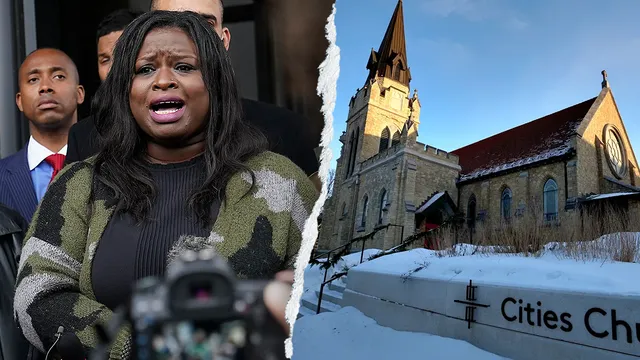
Protester denies rushing church during anti-ICE demonstration
Protester denies rushing church during anti-ICE demonstration
- Nekima Levy Armstrong and her group organized a protest at a Minnesota church to challenge ICE's actions.
- During the church service, Armstrong posed challenging questions to the pastor about his dual role at ICE.
- Armstrong's assertions that they did not rush into the church contradict her earlier comments about disrupting the service.
Story
In recent weeks, a significant protest against U.S. Immigration and Customs Enforcement (ICE) took place at a church in Minnesota, attracting considerable media attention and public discourse. The protest was organized by Nekima Levy Armstrong, who has been a vocal advocate against ICE’s policies. The demonstrators aimed to disrupt the regular service to highlight their concerns regarding family separations and other ICE actions. During the service, protesters chanted slogans and posed challenging questions to the pastor regarding his dual role as a church leader and director of ICE for Minnesota. Armstrong asserted that they did not "rush into that church," but rather participated in the service until she initiated a dialogue with the pastor. Such claims have been met with scrutiny due to earlier statements she made about the protest being intended to "disrupt business as usual." The incident was further complicated by a conflicting narrative from ICE officials, who expressed that the situation was misrepresented. They labeled the protesters’ actions as not peaceful and described the congregants as being harassed while trying to engage in worship. This friction raises substantial concerns over the boundaries of protest, especially in sacred spaces, and has provoked further debate on how far activism should go in making political statements. One particularly heart-wrenching aspect of the ongoing narrative involved a 5-year-old boy who was momentarily separated from his father during an ICE operation, leading to significant media attention. ICE officials have strongly refuted any claims suggesting that the child was specifically targeted, asserting instead that he was abandoned and that their officers took steps to care for him in the absence of his father. They emphasized their commitment to family reunifications whenever possible. However, the situation surrounding this child has further fueled discussions about ICE's methods and the implication of their actions on families within the community. This interplay of protests, public safety, and the invocation of community religion has led to polarized opinions about ICE's role and the nature of the opposition against it. The challenge remains as communities grapple with how best to express dissent while respecting religious sanctuaries and the dignity of individuals engaged in worship. As protests continue to manifest, it becomes imperative to understand the legal and ethical implications tied to such events and the human experiences that underlie the broader immigration discourse.


