

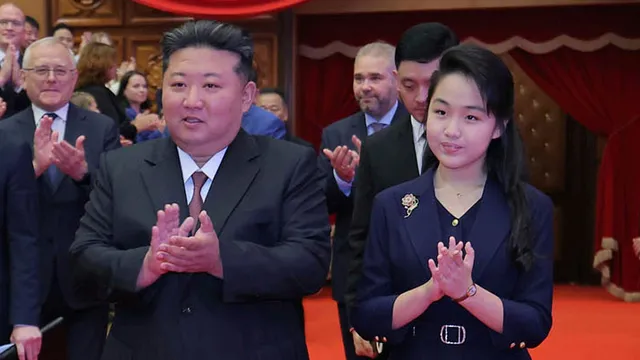
North Korea honors fallen soldiers by constructing housing district
North Korea honors fallen soldiers by constructing housing district
- North Korea unveiled a new housing district in Pyongyang for families of soldiers who died in Ukraine.
- The initiative aims to honor and support the families of the fallen soldiers during the ongoing conflict.
- This development is part of a propaganda effort to bolster national pride and unity as Kim Jong Un prepares for a key ruling party congress.
Story
North Korea has recently established a new housing district in Pyongyang, dedicated to families of soldiers who died serving alongside Russian forces in Ukraine. The completion of this project is a notable effort by the North Korean leader, Kim Jong Un, to pay tribute to the sacrifices made by these soldiers, often referred to as 'young martyrs' by state media. Accompanying Kim during the unveiling was his daughter, Kim Ju Ae, which further highlights the significance this event holds within the regime's narrative. This initiative is part of a broader propaganda campaign by North Korea, which has intensified over recent months, glorifying its military personnel involved in the conflict in Ukraine. State-run media has been actively portraying the soldiers in a positive light, as seen in various reports, memorial walls, and museums being established to honor their contributions. Analysts suggest these efforts are aimed at reinforcing national pride and unity, especially as the country faces challenges on multiple fronts. The timing of this housing district's opening aligns with the forthcoming ruling party congress, where Kim Jong Un is expected to outline his major policy objectives for both domestic and international fronts. Observers note that these adjustments reflect an ongoing need for the North Korean regime to showcase its resilience and cohesion to its citizens, while simultaneously managing potential public discontent that may arise due to various socio-economic issues. Furthermore, estimates from South Korea's National Intelligence Service indicate that around 6,000 North Korean troops have been casualties in the ongoing conflict in Ukraine. Although specifics regarding the number of fatalities remain elusive, initial assessments suggested that approximately 600 had died as of last year. This information sheds light on the human cost of North Korea's involvement in the war, revealing a complicated dynamic in which the regime seeks to extract both military experience and international alliances, all while facing scrutiny regarding its actions and priorities.
Context
Kim Jong Un's policies have significantly reshaped North Korean society since he came to power in 2011. These policies are characterized by a mix of economic reform, military focus, and political consolidation aimed at strengthening his regime and maintaining control over the population. In terms of economic strategies, Kim has introduced some market-oriented reforms that allow for a degree of private enterprise, in sharp contrast to the strictly planned economy that defined his father’s era. However, these reforms have not led to substantial improvements in the overall economy or living standards for the majority of North Koreans, who remain subjected to chronic food shortages and lack of basic necessities. While some citizens have benefitted from greater economic freedoms, particularly those associated with markets, the overall disparity between the elite and the general populace has widened significantly under Kim's rule. In the realm of military policies, Kim Jong Un has prioritized strengthening North Korea's nuclear capabilities as a means of bolstering national security and projecting power, both regionally and internationally. This militarization has not only resulted in extensive international sanctions but also an atmosphere of fear and repression within North Korea itself. The focus on military spending has diverted critical resources away from social services, exacerbating issues such as healthcare and education. The ongoing development of sophisticated nuclear arsenals has become a central component of Kim's strategy to ensure regime survival, with such advancements often overshadowing urgent internal humanitarian needs. Politically, the consolidation of power under Kim Jong Un has involved purges of potential rivals and a tight grip on information and media. His regime has further intensified surveillance and repression mechanisms against dissent, employing tactics that instill fear within the populace. Access to information from the outside world remains heavily restricted, contributing to a controlled narrative that glorifies the leadership. This environment of strict ideological control and oppression involves a significant risk for anyone perceived as disloyal, resulting in harsh punishments, including imprisonment and execution. Overall, Kim Jong Un's policies have led to a multifaceted impact on North Korean society. While they have generated a minor economic space for some individuals, the benefits have not reached the broader society, which continues to face severe challenges. The regime’s emphasis on military strength and ideological conformity has created a repressive atmosphere, significantly stunting social and individual freedoms. As these policies continue to evolve, the ramifications for North Korean citizens remain critical and complex.


