

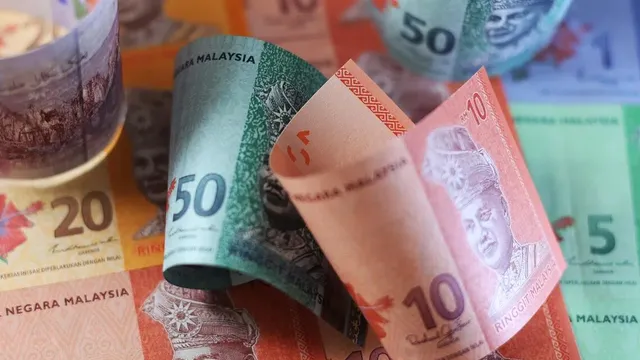
Ringgit gains momentum as Malaysia's economy shows resilience
Ringgit gains momentum as Malaysia's economy shows resilience
- Malaysia's ringgit has displayed significant strength, with a 10 percent increase in 2025 and a further 3 percent rise in 2026.
- The Malaysian economy has shown resilience against US tariffs, supported by strong domestic demand and investment flows.
- Economic forecasts for 2026 may be revised upwards due to robust growth and effective fiscal measures.
Story
In Malaysia, the economic landscape demonstrates resilience amid global uncertainties. On February 4, 2026, Second Finance Minister Amir Hamzah Azizan expressed optimism regarding the Malaysian ringgit's performance, highlighting its rise after previous substantial gains. In 2025, the ringgit surged 10 percent, and a further increase of 3 percent has already been observed in 2026. This upward trend is attributed to several structural factors such as healthy investment flows and the nation's robust growth momentum. The Malaysian economy's resilience is noteworthy, particularly against the backdrop of tariffs imposed by the United States. Internal demand remains strong, which supports growth amidst external pressures. The government has kept the benchmark interest rate stable since July 2025, reflecting confidence in the economic fundamentals. The Finance Minister indicated that investment in sectors critical to the economy, like electronics and energy transitions, further solidifies growth prospects. In 2025, Malaysia's economic growth exceeded expectations at 4.9 percent, surpassing the government's earlier projections of 4 percent to 4.8 percent. Although growth is anticipated to moderate to a range of 4 percent to 4.5 percent in 2026, there is a sense of cautious optimism for an upward revision by Bank Negara Malaysia in the upcoming months. Amir explained that the country has been resilient against inflation, citing no foreseeable catalysts that might drive prices up in 2026. Moreover, the Malaysian government is taking measures to narrow its budget deficit from 3.8 percent of gross domestic product in 2025 to 3.5 percent in 2026, displaying a commitment to fiscal consolidation. Prime Minister Anwar Ibrahim's administration is banking on improved tax collection and reduced subsidy spending as key strategies for strengthening financial stability. These proactive steps reflect efforts to diversify Malaysia's economy, aiming to lessen reliance on oil and gas revenues. The Finance Minister emphasized that diversification is critical for future growth, ensuring the economy remains robust and adaptable in a rapidly changing global economic environment.


