

Garbage avalanche kills five at Indonesia's largest landfill
Garbage avalanche kills five at Indonesia's largest landfill
- On March 8, 2026, a landslide at the Bantargebang landfill resulted in the deaths of at least five people.
- More than 300 personnel are involved in the search and rescue operation for those reported missing amid unstable debris.
- The incident exposes the urgent need for reform in Jakarta's waste management system to prevent future tragedies.
Story
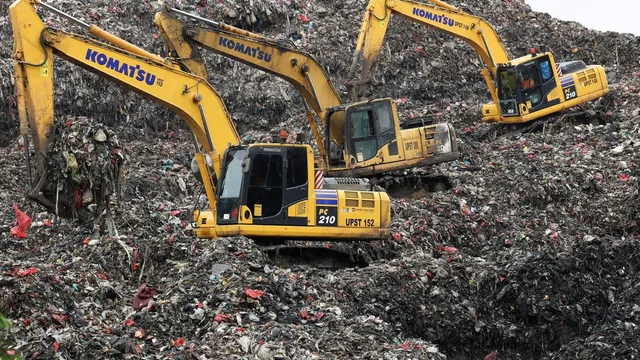
In Indonesia, a tragic incident occurred on March 8, 2026, when a massive avalanche of garbage collapsed at the Bantargebang Integrated Waste Treatment Facility in Bekasi, just outside Jakarta. This incident, triggered by heavy rainfall, resulted in at least five confirmed deaths, including two garbage truck drivers and two food stall vendors. The collapse raised concerns over safety protocols and the viability of Indonesia's waste management system, which has been criticized for its inefficiency and vulnerability to such incidents. As rescue efforts commenced, search teams consisting of over 300 personnel mobilized to search for additional missing individuals. Rescue operations involved the use of heavy machinery and sniffer dogs amidst unstable heaps of trash. Many workers were present at the landfill, unloading garbage when the landslide struck at approximately 2:30 PM local time. Unfortunately, rescue efforts had to proceed cautiously due to the unsettled nature of the debris, exacerbated by ongoing rain. The authorities indicated four individuals had successfully escaped the disaster, yet many more remained unaccounted for, fueling fears that more victims could be trapped under the rubble. This incident has reignited discussions surrounding Indonesia’s waste management practices, particularly the reliance on open dumping, which has been deemed a major factor behind the current crisis. Local officials and the Environment Minister, Hanif Faisol Nurofiq, jointly expressed that this landfill collapse highlights a larger systemic failure of Jakarta's waste management protocol, which has allowed roughly 55 million tonnes of rubbish to accumulate over 37 years. Monitoring of the landfill's capacity had indicated significant risks, and the minister emphasized the urgent need to reform the waste management system to prevent future tragedies. Furthermore, the government has faced pressure to ensure clear action regarding the dire circumstances surrounding open landfills. Previous collapses, such as a 2005 incident that killed 31 people, illustrated the fatal consequences of neglecting waste management. Officials have promised to review current practices, enforce tighter regulations, and accelerate initiatives like the waste-to-energy project aimed at reducing reliance on hazardous waste dumping. The government's commitment includes a $3.5 billion investment in constructing 34 waste-to-energy plants, intended to process landfill waste into energy, thus addressing both pollution concerns and promoting sustainable waste management. Despite the government's large-scale efforts, the recent collapse continues to serve as a grim reminder of the ongoing challenges and dangers of ineffective waste management policies in a rapidly urbanizing Indonesia.


