

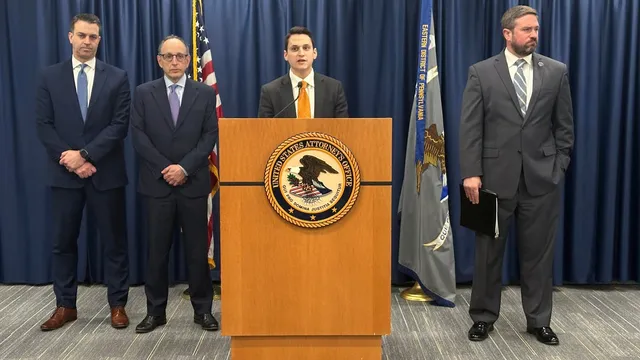
More than two dozen indicted for fixing college basketball games
More than two dozen indicted for fixing college basketball games
- Federal prosecutors filed indictments against 26 individuals for manipulating college and international basketball games.
- The scheme reportedly involved bribing players to alter game scores for betting purposes.
- The ongoing investigation underscores a significant integrity crisis in college sports, raising calls for more stringent regulations.
Story
In February 2024, a significant scandal unfolded in the United States, where over two dozen individuals were indicted for their alleged role in a widespread scheme to manipulate the outcomes of college basketball games. The investigations were led by federal prosecutors, who revealed that a conspiracy involving NCAA players, alumni, and professional gamblers had been manipulating game scores for monetary gain, undermining the integrity of sports. The conspirators were involved in point-shaving, which is the practice of influencing a game’s final score without necessarily altering the win-loss outcome. This scheme was extensive, reportedly including more than 39 players across 17 NCAA Division I basketball teams. Court documents unveiled that the conspiracy began in September 2022, initially in the Chinese Basketball Association, where players were bribed to engage in point-shaving practices. The primary figure in this operation was Antonio Blakeney, a former college player who, while playing for the CBA’s Jiangsu Dragons, recruited others into the scheme. The indictments detailed various games manipulated by players from schools such as Nicholls State, Tulane, and Kennesaw State, and included instances of players purposely underperforming to allow certain bets to succeed. The bribes were part of a concerted effort to fix the final scores, impacting at least 29 games amid both U.S. college basketball and professional contests in China. Furthermore, the indictment named several prominent players, trainers, and gamblers, indicating that the operation employed a systematic approach to gambling which threatened not just the integrity of the games, but also the spirit of competition. The FBI investigation aimed to expose these crimes and hold accountable those who compromised the fairness of the sport for financial benefit. The scheme has raised alarms among officials regarding the increasing influence of gambling in sports, indicating a need for stricter regulations to protect student-athletes and the integrity of college sports moving forward. In conclusion, this scandal stands as a stark reminder of the ethical dilemmas surrounding sports gambling, showcasing how the quest for monetary gain can lead to extensive corruption and a degradation of trust in what many consider sacred—fair play in athletics. With ongoing investigations and potential future repercussions for those involved, the integrity of college basketball will be under scrutiny for years to come.
Context
The impact of sports gambling on college athletics has emerged as a vital area of study, especially in light of recent legislative changes that have reshaped the landscape of sports betting across the United States. With the Supreme Court's decision in 2018 to strike down the federal ban on sports gambling, many states have quickly embraced this shift, leading to concerns regarding its potential consequences on the integrity of college sports. As institutions of higher education, colleges represent a unique subset of the sports industry, one that is particularly vulnerable to the negative repercussions associated with gambling. This report aims to explore the implications of sports gambling on college athletics and consider both the opportunities and challenges that arise from this evolving environment. One of the primary concerns surrounding sports gambling in college athletics is the risk of corruption and the potential for game manipulation. The influence of betting, especially among amateur athletes, raises questions about the ethical standards expected within college sports. Unlike professional athletes, college students often lack the financial stability that allows them to navigate the pressures of gambling. Consequently, they may become susceptible to illicit activities, including bribery and point-shaving, which not only undermine the integrity of athletic contests but also jeopardize the reputation of the educational institutions involved. Furthermore, this scenario may lead to increased scrutiny from the NCAA, which has historically maintained strict regulations against gambling in collegiate events. In contrast, the legalization of sports gambling presents opportunities for colleges to benefit financially. Universities could generate revenue through partnerships with betting companies, allowing them to enhance funding for athletic programs, scholarships, and facilities. Additionally, the introduction of regulated sports betting may encourage a culture of responsible gambling within the student population, provided that adequate measures are implemented to educate athletes and address associated risks. Engaging with legal, regulated betting markets could also decrease the chances of illicit gambling operations that may expose athletes to greater risks. Ultimately, the impact of sports gambling on college athletics must be approached with caution. Colleges need to develop forward-thinking strategies that prioritize athlete education, integrity, and the long-term health of their sports programs. Policies enhancing transparency and accountability must accompany any financial benefits garnered from sports betting. As states continue to adopt new regulations, collaboration among universities, regulatory bodies, and the gambling industry is essential for fostering a safe environment where both academics and athletics can prosper without compromising ethical standards.


