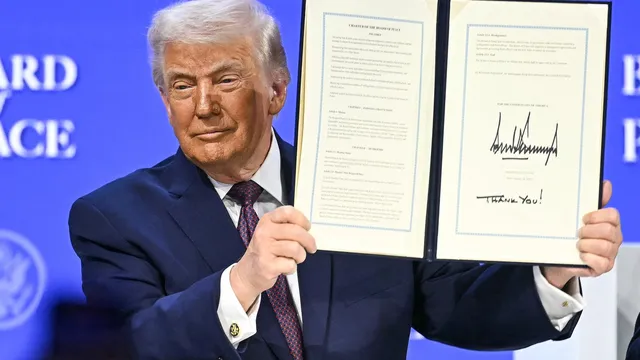
In January 2020, during the World Economic Forum in Davos, Switzerland, US President Donald Trump announced the formation of a 'Board of Peace.' This board aims to oversee a peace plan, particularly focusing on the Israeli-Palestinian conflict. However, significant nations, traditionally allied with the US, including Denmark, France, Sweden, Norway, and others, were either not offered invitations or have declined participation. Denmark notably rebuffed Trump's earlier attempt to purchase Greenland, which has contributed to rising tensions between the two nations. Trump's remarks at the forum included criticism of Denmark’s defense spending and an assertion that Americans were 'stupid' for accepting Danish sovereignty over Greenland after World War II.
The absence of key allies from the board, which Trump is expected to chair indefinitely, raises concerns about the panel's design and its potential aim to concentrate decision-making power in Trump's hands. Critics argue that the board’s broad mandate may challenge UN authority and reflect Trump's interventionist ambitions. Invitations were sent to around 60 countries, including controversial figures such as Russian President Vladimir Putin. Furthermore, Trump suggested that the board's actions might lead to replacements for existing UN functions, which has alarmed allies who are worried about the implications of such a shift in global governance.
Criticism of the board encompasses its proposed members and the implications of Trump’s rhetoric on international relations. While some countries may seek closer ties to the US through participation, others are expressing concern over Trump’s policies and style of governance. The involvement of Russia in discussions around the peace board adds an extra layer of complexity, particularly in light of tensions surrounding Russia's military actions. Overall, the reception of Trump's board highlights a significant divide in how traditional allies perceive US foreign policy under his administration, which may have long-lasting impacts on diplomatic relations.
As countries like Italy, the United Kingdom, and Poland consider their positions on participation, the future of this peace board remains uncertain, largely dependent on how US foreign policies evolve and how they are received by the global community.