

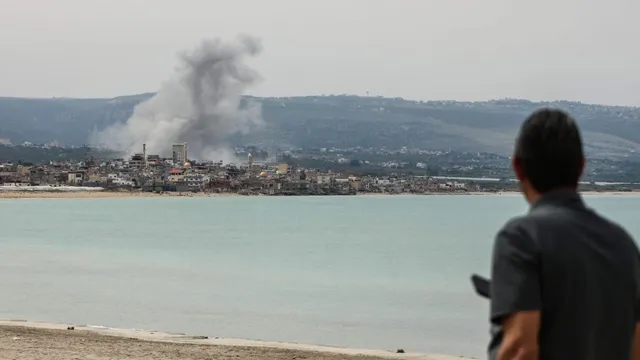
Lebanon faces severe economic crisis amid ongoing war fallout
Lebanon faces severe economic crisis amid ongoing war fallout
- Lebanon has faced an ongoing economic crisis since 2019, affecting the value of its currency and leading to widespread poverty.
- The recent U.S. and Israel conflict against Iran has further destabilized Lebanon's already fragile economy, increasing prices and displacing many residents.
- With no signs of resolution to the conflict, Lebanese citizens and businesses are struggling to cope with daily challenges, leading to significant drops in revenue and consumer spending.
Story
Since 2019, Lebanon has been engulfed in an extensive economic crisis, a scenario worsened by a recent resurgence of conflict between Israel and Hezbollah. The country's local currency, the Lebanese pound, has depreciated by over 90% against the U.S. dollar, contributing to widespread poverty affecting about half of the Lebanese population. The banking sector collapsed during this crisis, resulting in the evaporation of savings for many depositors, leaving them grappling with a weakened financial structure and escalating living costs. Apart from the economic turmoil, the war launched by the U.S. and Israel against Iran on February 28, further destabilized the region, leading to an increase in prices and a reduction in consumer spending. The ongoing effects of this conflict have displaced 1.2 million people, particularly in southern Lebanon, exacerbating the already dire humanitarian situation. Businesses face significant challenges, with many experiencing up to a 90% drop in revenue, as consumers tighten their budgets amid rising prices and uncertainty. Fuel price surges, particularly due to reliance on diesel generators for electricity, have also underscored the vulnerability of the economy to external shocks. The limited power supply provided by the cash-strapped state electricity company has forced citizens to bear the additional financial burden associated with fuel costs amidst the backdrop of war. Compounding these issues, hoarding and price gouging have become prevalent, leaving consumers with little to no options as they assess what little purchasing power they still possess. With the economic situation becoming increasingly precarious, Lebanese families and business owners are left navigating their daily lives amid uncertainty. As a nominal truce between Israel and Hezbollah has led to reduced hostilities, the larger question remains whether any relief or improvement is on the horizon. The combination of sustained conflict, economic hardship, and lack of effective governance hints at a long road ahead for Lebanon as residents strive to find stability in an environment marked by volatility.


