

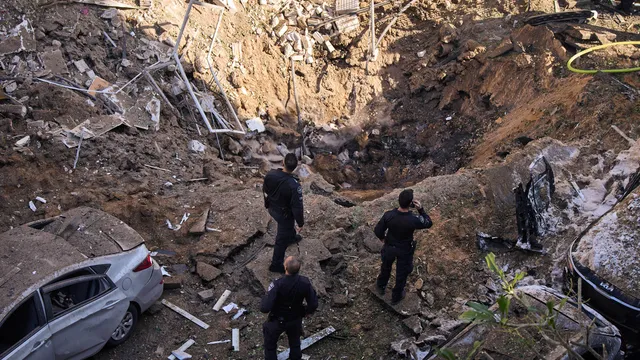
Iranian strikes injure civilians in Tel Aviv amidst ongoing war
Iranian strikes injure civilians in Tel Aviv amidst ongoing war
- Iranian attacks on Tel Aviv resulted in four civilian injuries.
- The IDF retaliated by targeting over 50 sites in Iran.
- The ongoing conflict continues to escalate, complicating civilian safety and international negotiations.
Story
In the midst of escalating conflict between Iran and Israel, at least four individuals were lightly injured due to Iranian strikes on Tel Aviv. The assaults occurred shortly after the Iranian government rejected U.S. President Donald Trump's statement regarding ongoing negotiations, labelling it as "fake news". While Trump claimed there have been productive discussions with Iranian officials, Iranian leadership, including parliamentary speaker Mohammed Qalibaf, stated that no negotiations have occurred, leaving the prospects for a quick resolution to the conflict bleak. The situation worsened as the Israel Defense Forces (IDF) retaliated by hitting over 50 targets within Iran, which included ballistic missile sites. Observers noted that uncertainty surrounding U.S.-Iran negotiations contributed to an increase in the price of Brent crude, which climbed back to approximately $100 a barrel. In a broader context, the toll on civilians has been severe, with reports of rising casualties in Iranian cities as violence continues unabated. The American military has allegedly targeted thousands of Iranian locations, further complicating the situation. Among the civilian casualties, reports have emerged of a devastating missile strike on a primary school in the town of Minab, which resulted in the deaths of dozens of children and adults - highlighting the indiscriminate nature of the violence. International humanitarian organizations are voicing concerns over the impact of ongoing military actions on civilian infrastructure, particularly in healthcare, as verified attacks on medical facilities continue to increase. In the past weeks, multiple hospitals within Iran have been damaged, leading to calls for the protection of civilian lives and adherence to international humanitarian law. As regional tensions heighten, neighboring countries have engaged as intermediaries to mitigate the crisis, illustrating the complex dynamics at play. However, the lack of direct dialogue between the U.S. and Iran adds a further layer of uncertainty, with both sides remaining adamant in their positions. The conflict's profound implications extend beyond just military engagements, impacting civilian lives profoundly and complicating the geopolitical landscape in the Middle East.


