

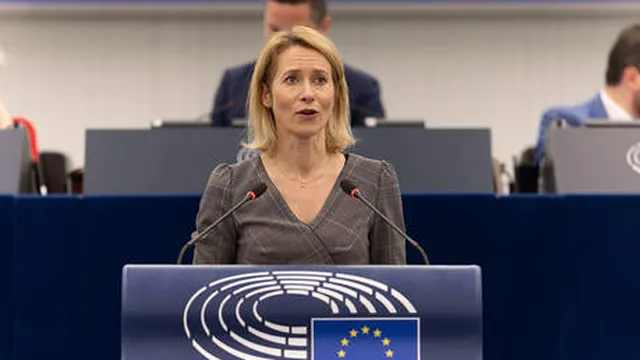
EU seeks dialogue with Russia amid ongoing tensions
EU seeks dialogue with Russia amid ongoing tensions
- The European Union has largely distanced itself from Russia, refraining from direct communication for four years amid the Ukraine conflict.
- French and Italian leaders advocate for EU involvement in dialogue with Russia, emphasizing the importance of a direct communication channel.
- Continued engagement is essential for European leaders to assert their interests and ensure they are included in negotiations related to ongoing tensions.
Story
In recent developments, European leaders have expressed a desire to re-establish communication with Russia, a move that has gained urgency following significant escalations in the Ukraine conflict. French Foreign Minister Jean-Noel Barrot emphasized the need for the European Union to take the initiative in engaging with Moscow, highlighting that the bloc has been out of the loop for four years after relations soured due to the conflict. This sentiment underscores a growing concern among EU members regarding their influence, especially in light of U.S. attempts to mediate peace talks between Ukraine and Russia without European involvement. Conversely, French President Emmanuel Macron and Italian Prime Minister Giorgia Meloni have advocated for appointing a special envoy to Russia, which they believe would ensure that the EU maintains its role in dialogues about the ongoing crisis. Macron reiterated this perspective in February 2026, noting that European leaders must reclaim their own channels of discourse rather than rely solely on outreach from the United States. Discussions are underway at a technical level, conducted transparently in consultation with Ukraine, to ensure that Europe is involved in any future negotiations. Moreover, while Russian officials have expressed interest in cooperating, they have also warned that confrontational policies from the EU will be counterproductive. Kremlin spokesman Dmitry Peskov made it clear that Russia welcomes a fresh EU Arctic policy focused on international cooperation, not confrontation. This reveals the delicate balancing act that EU and Russian leaders must navigate in order to find common ground on various strategic regional issues, emphasizing the need for mutual respect and acknowledgment of each other's security concerns. As this diplomatic landscape continues to evolve, European leaders are coming to terms with a post-conflict reality, recognizing both their responsibilities as key players in international dialogues and the need to address their past avoidance of military and security issues. This self-reflection is closely tied to Europe’s response to Russia's military actions, particularly in Ukraine, and can be seen as part of a broader reckoning with historical traumas and security challenges faced by the continent. Europe realizes that without active engagement and a coherent strategy, it risks being sidelined in pivotal discussions regarding its security and geopolitical stature.
Context
The European Union (EU) communication strategy with Russia is pivotal in navigating the complex and often contentious relationship between the two entities. The EU aims to promote stability, security, and prosperity in Europe while addressing security threats, economic challenges, and geopolitical tensions stemming from Russian policies and actions. The communication strategy serves as a framework to foster dialogue, build mutual understanding, and promote European values, all while preparing for potential adversities in a rapidly changing political landscape. The primary components of this strategy encompass diplomacy, trade, cultural exchange, and public discourse, each playing an essential role in shaping perceptions and fostering connections. In terms of diplomacy, the EU has pursued a dual-track approach that combines engagement and critical dialogue regarding Russia’s strategic objectives. High-ranking officials discuss counter-terrorism, energy security, and humanitarian issues, emphasizing the need for cooperation on shared challenges such as climate change and regional stability. This engagement is balanced by a robust stance against violations of international law, highlighting instances such as the annexation of Crimea and concerns over human rights abuses. The EU consistently communicates its position on these matters to reinforce its commitment to the principles of democracy and rule of law, ultimately aiming to influence Russia’s behavior through constructive dialogue while demonstrating unity amongst member states. Trade relations are another essential element of the EU’s communication strategy, aimed at creating interdependence that could lead to positive changes in Russia’s policy behavior. The EU has leveraged its economic clout to establish a framework of sanctions in reaction to aggressive Russian actions, targeting key sectors including finance, energy, and defense. In parallel, the EU has engaged in dialogue over potential economic partnerships that prioritize mutual benefits, fostering a clearer understanding of how cooperation can yield commercial opportunities for both parties. This economic dimension not only serves as leverage but also as a means of re-engaging Russia in responsible international conduct through trade connectivity. Cultural exchange and public discourse are key pillars in enhancing mutual understanding and human-to-human connections. The EU promotes various educational and cultural programs aimed at fostering dialogue among citizens, emphasizing the values of tolerance, democracy, and respect for human rights. By funding initiatives that foster interaction among youth and civil society, the EU strives to cultivate a shared sense of identity and foster a culture of peace, which can eventually contribute to a more stable and cooperative relationship with Russia. Effectively communicating success stories and positive developments within the EU-Russia dialogue serves to inspire hope and resilience in the face of adversity, facilitating a long-term vision for cooperation despite immediate challenges.


