

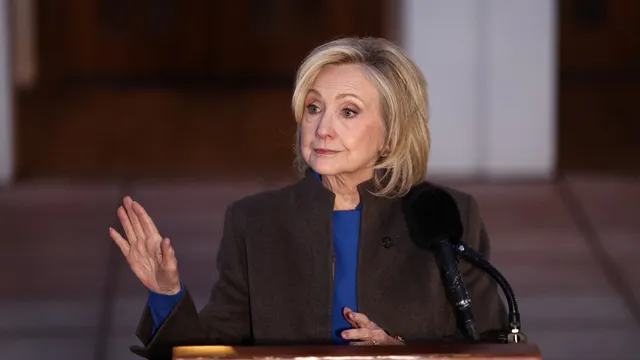
Hillary Clinton denies any knowledge of Epstein's crimes during testimony
Hillary Clinton denies any knowledge of Epstein's crimes during testimony
- Hillary Clinton testified before the House Oversight Committee, denying any personal interactions with Jeffrey Epstein.
- Her deposition involved questions that included unrelated topics, which she found unproductive.
- Both Clintons have not been accused of any wrongdoing and have underscored their lack of knowledge regarding Epstein's crimes.
Story
On February 26, 2026, in Chappaqua, New York, former Secretary of State Hillary Clinton testified before the House Oversight Committee regarding her and her husband's potential ties to convicted sex offender Jeffrey Epstein. She claimed repeatedly that she did not know Epstein and had never encountered him at any location, including his homes or offices. The committee's questioning included various unrelated topics, which Clinton criticized as a distraction from the investigation. Clinton described her horror over Epstein and Ghislaine Maxwell's criminal activities, emphasizing her commitment to uncovering the truth. Following her testimony, Bill Clinton was scheduled to provide his deposition the next day. Both Clintons have denied any wrongdoing or prior knowledge of Epstein's crimes, despite ongoing speculation and scrutiny surrounding their involvement with him. The committee's request for testimony from them was part of a broader investigation into Epstein's network and relationships, amid bipartisan concern for accountability and transparency regarding influential figures connected to Epstein. This investigation may also include questioning of individuals associated with Trump, reflecting the committee's aim to pursue a comprehensive inquiry into possible connections across the political spectrum.
Context
The history of Jeffrey Epstein's connections to political figures is a complex web that intertwines vast networks of influence, power, and controversy. Epstein, a financier and convicted sex offender, cultivated relationships with numerous high-profile individuals across various sectors, including politics, academia, and entertainment. His connections included former U.S. Presidents, royalty, and influential media personalities. Through high-profile social gatherings, private jet travel, and lavish parties hosted at his residences, Epstein was able to gain access to influential figures, which ultimately raises questions about the intersections of wealth, power, and morality. One of the most notable political figures associated with Epstein is former U.S. President Bill Clinton, who reportedly flew on Epstein's private jet multiple times during the early 2000s. While Clinton has denied any wrongdoing and claimed he was unaware of Epstein's criminal activities, his association with Epstein has significantly impacted his legacy. Furthermore, other politicians, including former President Donald Trump and British Prime Minister Boris Johnson, have faced scrutiny due to their past interactions with Epstein, generating a public discourse around accountability for high-profile individuals. Epstein's connections also extended to many prominent figures in finance and business, showcasing his ability to traverse elite circles. Notably, Epstein was known to associate with individuals such as Leslie Wexner, the former CEO of L Brands, who reportedly provided Epstein with considerable financial backing. The nature of these relationships raises critical questions about how personal and professional ties may have influenced behaviors and decisions that led to Epstein's eventual arrests and the unraveling of his alleged criminal enterprises. In conclusion, the intricate tapestry of Jeffrey Epstein's connections to political figures reveals the stark reality of how power dynamics function within society. The relationships he nurtured are not isolated incidents; rather, they reflect broader themes of privilege, access, and the potential for exploitation within high societal strata. As the judicial and social ramifications of Epstein's actions continue to unfold, they serve as a reminder of the vital importance of transparency and accountability, particularly among those in influential positions.


